

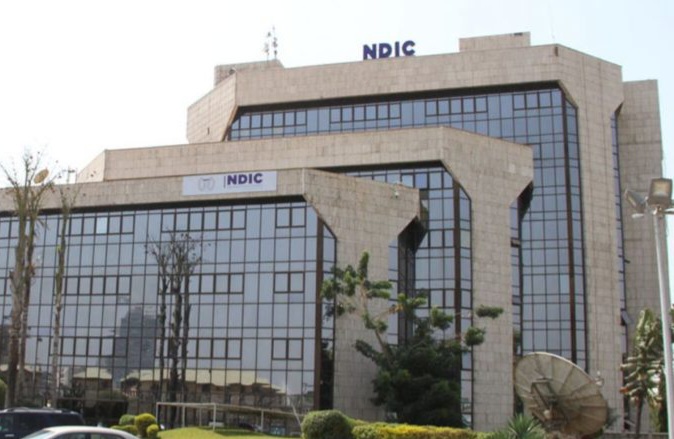
The Nigeria Deposit Insurance Corporation (NDIC) has paid a cumulative ₦69.65bn to insured depositors of failed financial institutions, as thousands of customers await the recovery of their funds.
The corporation disclosed the figure during its 2026 Customer Service Week celebration in Abuja on Thursday, highlighting its efforts to cushion the impact of bank failures on customers.
Mrs Gwa Uduak, Director of Strategy Development at the NDIC, said the corporation had also paid uninsured depositors through its bank liquidation activities.
“Cumulative payments to insured depositors have reached ₦69.65bn,” Uduak said, stressing that the payments were aimed at protecting depositors and easing the financial hardship associated with the collapse of financial institutions.
She said every payment represented a customer, family or business seeking relief and reassurance after losing access to funds deposited with a failed institution.
Figures presented at the event showed that the NDIC paid ₦1.48bn to 10,312 insured depositors of 47 failed microfinance banks as of July 31, 2026.
Among the affected institutions were Abia SME Microfinance Bank, Frontline Microfinance Bank and Goldman Microfinance Bank.
The corporation also paid ₦1.15bn to 1,082 depositors of Union Homes Savings and Loans Plc, while 8,248 depositors of Aso Savings and Loans Plc received ₦313.02m under its accelerated payment programme in 2026.
To speed up the recovery process, the NDIC said it had deployed Bank Verification Number validation through the Nigeria Inter-Bank Settlement System to identify depositors and obtain alternative bank account details for payment.
The corporation added that insured deposit payments for newly closed banks now commence within three days of the revocation of their banking licences.
The development forms part of the NDIC’s efforts to improve the speed of compensation and reduce the delays customers face when financial institutions collapse.
Speaking at the event, the NDIC Managing Director and Chief Executive Officer, Thompson Sunday, said the corporation remained committed to strengthening depositor protection and improving service delivery.
He noted that the NDIC had played a key role in sustaining confidence in Nigeria’s financial system since its establishment in 1988.
Sunday also disclosed that the corporation had launched an institutional transformation initiative known as NDIC Ascend, aimed at improving operational processes, strengthening collaboration and integrating technology into service delivery.
He said the corporation’s effectiveness depended on how quickly and efficiently it responded to depositors and other stakeholders.

However, the acting National Coordinator and Chief Executive Officer of SERVICOM, Mrs Helen Lawal, urged the NDIC to go beyond responding to complaints by anticipating customers’ needs and resolving problems promptly.
“It is important for us not to wait for customers to complain, but for us to anticipate their needs and go about solving them,” Lawal said.
She commended the NDIC for introducing its Service Level Agreement Management System to track departmental performance against agreed service delivery standards.
Earlier, the Head of the NDIC SERVICOM Unit, Mrs Chinyere Ogunsakin, said the Customer Service Week offered an opportunity to recognise employees and strengthen engagement with stakeholders.
She said the theme, The Extra Mile, underscored the need for staff to consistently exceed customers’ expectations.
The NDIC also disclosed that it provides supervisory oversight for 37 deposit money banks, 32 primary mortgage banks, 813 microfinance banks, five payment service banks and 30 mobile money operators.