Home Blog

EBOLA TWIST! UGANDA QUESTIONS SOURCE OF NIGERIA CASE

A fresh twist has emerged in Nigeria’s Ebola scare, with Uganda questioning whether an infected Nigerian woman contracted the deadly virus in its territory after travelling through the country from the Democratic Republic of the Congo (DRC).

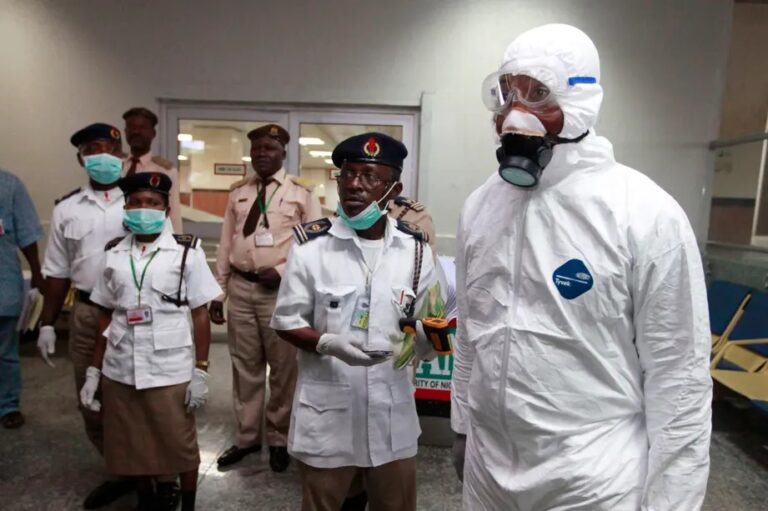
The development comes as Nigeria’s Federal Government races to contain the infection, with 44 people identified for monitoring following confirmation of the imported Ebola case in Abuja.

Ugandan authorities have indicated that the woman may have been exposed to the virus in the DRC before passing through Uganda on her journey to Nigeria.

However, the precise location where she contracted the infection remains under investigation.

The clarification has added a new dimension to the regional health emergency, which has spread across parts of Africa and triggered calls for urgent international assistance.

Nigeria’s Coordinating Minister of Health and Social Welfare, Professor Muhammad Ali Pate, confirmed the infection on Tuesday, October 20, 2026.

Pate disclosed that the patient, a woman who had recently travelled from Uganda, began experiencing symptoms on October 7.

She sought medical attention at a private hospital in Abuja on October 11, but her condition subsequently deteriorated, prompting further investigations.

Laboratory tests eventually confirmed that she had Ebola virus disease on October 20.

“The patient is a woman who had travelled to Eastern Africa, to Uganda in particular. She came back, had symptoms that commenced on the 7th of October.

“On the 11th, she attended a private facility where she was being taken care of. Her symptoms progressed, and further tests indicated that she had Ebola virus disease,” the minister said.

The patient has been isolated and is receiving medical care as health officials intensify efforts to prevent further transmission.

44 CONTACTS UNDER WATCH

Pate said 44 contacts had been identified as part of the ongoing contact-tracing exercise.

Those being monitored include healthcare workers, patients, caregivers and people who may have travelled with the infected woman or come into contact with her.

The minister appealed to anyone contacted by public health officials to provide accurate information and comply with all instructions.

“Anyone contacted during the contact tracing period that we are in, including those who may have travelled with that individual, should provide necessary information requested and follow public health advice,” he said.

There has been no confirmation that any of the 44 contacts has tested positive for Ebola.

The Federal Ministry of Health and Social Welfare, Nigeria Centre for Disease Control and Prevention (NCDC), FCT health authorities, World Health Organisation (WHO) and Africa Centres for Disease Control and Prevention (Africa CDC) are collaborating to contain the infection.

The private hospital where the patient was initially treated is also receiving support to strengthen infection prevention and control measures.

Health facilities nationwide have been urged to remain on high alert, promptly isolate suspected cases and report them to the appropriate authorities.

AFRICA CDC RAISES ALARM

Nigeria’s confirmed case comes amid a wider Ebola emergency, with the Democratic Republic of the Congo battling a major outbreak and Kenya also reporting infections.

Africa CDC Director-General, Dr Jean Kaseya, has called for urgent international support to stop the outbreak from spreading further.

In a statement titled “Ebola in Nigeria: An Urgent Call for Global Solidarity,” Kaseya disclosed that he had spoken with Pate about the Nigerian case and commended him for promptly sharing the information.

He recalled that Africa CDC had warned about the regional implications of the outbreak when it was declared on May 15, 2026.

According to him, the Bundibugyo Ebola outbreak has spread across several countries and regions, creating a serious challenge for public health authorities.

Kaseya expressed particular concern about the situation in the DRC, where the fatality rate has approached 50 per cent.

He said Africa CDC was mobilising support for Nigeria while intensifying its response in the DRC and Kenya and maintaining heightened vigilance in Uganda.

“My appeal to the international community is urgent: Act Now,” he said.

The Africa CDC chief called for immediate and flexible funding, medical supplies, diagnostic capacity, trained emergency responders and stronger community-based surveillance.

He warned that delays in providing support could cost lives and urged governments, international health agencies and development partners to coordinate their efforts.

“Africa’s health security is global health security. Stopping Ebola in Africa today means protecting the world. Nigeria has our full solidarity. Together, we must defeat this outbreak,” he said.

FG RECALLS 2014 EBOLA BATTLE

The Federal Government has urged Nigerians to remain calm but vigilant, saying the country has the public health expertise and response systems needed to manage the infection.

Pate recalled Nigeria’s successful containment of an Ebola outbreak in 2014, after the virus was introduced into Lagos by an infected traveller.

He also disclosed that a Presidential Task Force on Ebola Virus Disease had been constituted in May 2026 as part of the government’s preparedness efforts.

The minister advised Nigerians against spreading unverified information and urged the public to cooperate with contact-tracing teams.

Members of the public seeking information or wishing to report suspected cases can contact the NCDC’s toll-free line on 6232, which the minister said operates 24 hours a day, seven days a week.

WHAT NIGERIANS SHOULD KNOW ABOUT EBOLA

Ebola virus disease is a severe illness that can cause death. The current regional outbreak involves the Bundibugyo virus, a type of Ebola virus that has caused previous outbreaks in Central and East Africa.

The disease spreads mainly through direct contact with the blood or other body fluids of an infected person who has developed symptoms, or the body of someone who has died from the infection.

Transmission can also occur through contaminated bedding, clothing, medical equipment and other materials. Contact with infected animals can also expose humans to the virus.

Symptoms usually appear between two and 21 days after exposure. They include fever, severe headache, weakness, muscle pain, vomiting, diarrhoea and abdominal pain. Some patients may experience bleeding, although it does not occur in every case.

Early symptoms can resemble malaria and other common illnesses, making prompt medical assessment and laboratory testing important.

People who develop symptoms after possible exposure should immediately contact public health authorities, disclose their travel and contact history, and follow official instructions.

Ebola is not generally transmitted before symptoms develop. Early detection, isolation, contact tracing and strict infection-control measures are therefore crucial to preventing further spread.

The Federal Government said investigations and contact tracing were continuing as health authorities worked to contain the infection and prevent additional cases.
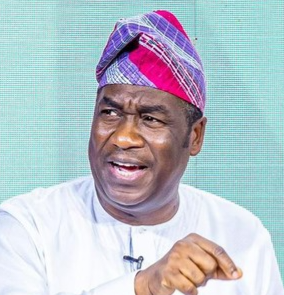

FOURTH MAINLAND BRIDGE: LAGOS BANKS ON TOLLS TO ATTRACT INVESTORS

The Lagos State Government is banking on toll revenue to attract private investors to the proposed Fourth Mainland Bridge, with Deputy Governor Obafemi Hamzat warning that reluctance by motorists to pay tolls could scare away financiers.

Hamzat said the state could not afford to fund the massive infrastructure project entirely from its coffers while also financing major rail projects, making private-sector investment critical to its delivery.

Speaking on Lagos Television on Tuesday, Hamzat, who is the All Progressives Congress governorship candidate, disclosed that the government was negotiating with prospective investors from Portugal, China and other countries.

He said the government had completed the bridge’s design and cost assessment and engaged private-sector professionals to support discussions with potential financiers.

According to Hamzat, Lagos opted for a public-private partnership arrangement rather than borrowing to fund the project, citing the financial burden additional debt could impose on the state.

“The Fourth Mainland Bridge is a fantastic project that we must build, but we cannot fund it on our balance sheet and fund rail at the same time. They are both monster projects, so we’ve been talking to investors,” he said.

However, he identified toll collection as a critical factor in convincing investors to commit their money, explaining that they would need a reliable means of recovering their investments and making profits.

“When we pay tolls on our road, and we stop it, investors are not going to come. How do they get their money? Return on investments. How will they get it?” he asked.

The deputy governor said some prospective investors had expressed concerns about motorists’ reluctance to pay tolls, particularly where toll collection had previously been discontinued.

He explained that the state was presenting traffic data and other relevant information to prospective financiers to demonstrate the expected volume of road users and the bridge’s potential to generate revenue.

The government’s position suggests that the proposed bridge’s financing will depend not only on securing investors but also on convincing them that toll collection can provide sufficient returns on their investments.

The Fourth Mainland Bridge is planned as an additional major transport route across Lagos, with the aim of easing pressure on existing roads and improving movement across the state.

However, financing and rising construction costs have remained major challenges for the project, which has been under consideration by successive state administrations.

Hamzat maintained that Lagos remained committed to delivering the bridge but did not want to shoulder the entire financial burden through public funds or additional borrowing.

Instead, the government intends to rely on private investment under a partnership arrangement in which toll revenue would help investors recover their capital.

His comments place motorists’ willingness to pay tolls among the key issues that could shape the funding and eventual delivery of the long-awaited project.

Don’t Miss Out! Join our WhatsApp Channel for instant news updates. Click here to join

ATM FRAUD: HOW I STEAL CUSTOMERS’ PINs, WIPE OUT ACCOUNTS — SUSPECT

A suspected ATM fraudster has confessed to allegedly tricking bank customers into revealing their PINs before disappearing with their cards and using the information to defraud them in Calabar, Cross River State.

The suspect, whose identity was not disclosed, reportedly preyed on unsuspecting customers who needed assistance operating Automated Teller Machines (ATMs).

The Cross River State Police Command’s Public Relations Officer, ASP Sunday Eitokpah, disclosed this in a video posted on the command’s Facebook page on Tuesday.

Eitokpah said the suspect was arrested on October 6, 2026, over alleged fraudulent activities targeting ATM users.

In the video, the suspect explained how he allegedly exploited the trust of customers who approached him for assistance at ATM points.

“I do go to the ATM machine to lie in wait for gullible customers who believe whatever I may tell them, and people that seek for help too,” he said.

He claimed that when a customer asked for help, he would manipulate the ATM transaction process and secretly retain the person’s bank card.

According to him, the unsuspecting customer would believe the card was still inside the machine while he watched as the person selected a transaction and entered their PIN.

“So, if you call for help or assistance from me, what I do is I put the ATM on the cardless transaction mode and withhold your card. You’ll be thinking your card is inside, but your card is not inside,” he said.

The suspect added that he would leave the scene after observing the customer enter and confirm their PIN, allegedly leaving with the information needed to carry out fraudulent transactions.

“And by the time you click on any of them, ask you to put your password, to put your password, and confirm your password, I will leave the premises,” he said.

The police spokesman explained that the suspect allegedly memorised customers’ PINs before leaving the ATM point with their cards. Victims would later discover that their cards were missing and their accounts had been debited.

Eitokpah further disclosed that the suspect allegedly operated with a getaway driver, who was still being sought by the police.

He said the divisional police officer in charge of the area had been monitoring the suspect and had earlier engaged bank managers in meetings aimed at tackling reported fraud around ATM points.

The police urged bank customers to be vigilant when using ATMs, warning them against surrendering their cards or disclosing their PINs to strangers offering assistance.

Customers were advised to seek help from bank officials or authorised personnel whenever they encountered difficulties using ATM machines.

Don’t Miss Out! Join our WhatsApp Channel for instant news updates. Click here to join

ATIKU BLASTS TINUBU OVER ‘BIBLICAL LECTURES’

Former Vice-President Atiku Abubakar has criticised President Bola Tinubu over his defence of petrol subsidy removal, insisting that Nigerians need affordable food, fuel and transportation rather than biblical lectures to justify their economic hardship.

Atiku, the African Democratic Congress (ADC) presidential candidate for the 2027 election, accused Tinubu of celebrating a policy that has driven up the cost of living, leaving millions of households struggling to feed their families and meet basic needs.

The former Vice-President challenged the President to focus on practical measures to ease Nigerians’ suffering instead of defending the consequences of his economic reforms with religious references.

His criticism followed Tinubu’s declaration on Monday that he had no regrets about removing petrol subsidy, warning that reversing the policy would amount to taking Nigeria back to Egypt, a reference to the biblical account of the Israelites’ escape from captivity.

In a statement issued by the Director of Strategic Communication of the ADC Presidential Campaign Council, Phrank Shaibu, Atiku said the President should explain how his administration intended to make life more affordable for ordinary Nigerians.

“You celebrate the day you made fuel more expensive, then lecture families struggling to pay for food and transport about why they must never go back.

“A mother trying to feed her children cannot pay for food with a metaphor. A worker cannot get to work on a story about the Red Sea. Nigerians are asking how you intend to make life affordable. Answer them,” Atiku said.

Tinubu had defended the subsidy removal at An Evening with the Original City Boy, an event organised by the City Boy Movement on Monday, insisting that reversing the policy would undermine the economic reforms introduced by his administration.

The President announced the removal of the petrol subsidy in his inaugural address on May 29, 2023. The decision was followed by sharp increases in petrol prices, transportation fares and the cost of goods and services, making the policy a major issue in the political debate ahead of the 2027 elections.

Atiku, however, has argued that his proposed intervention in the petroleum sector would provide relief without returning the country to the previous subsidy system.

The ADC candidate recently proposed targeted support for petroleum products refined locally and sold to Nigerian consumers. The Presidency had dismissed the proposal, questioning his understanding of governance and economic management.

Explaining his plan, Atiku said the proposed intervention would be limited, budgeted and restricted to verified petroleum products refined in Nigeria, with safeguards to prevent the abuses associated with the former subsidy regime.

“Imported fuel gets nothing. Independent auditors must track every naira, and the benefit must reach consumers in the price they pay. If it does not lower that price, it has failed its purpose,” he said.

Don’t Miss Out! Join our WhatsApp Channel for instant news updates. Click here to join

ATIKU ASSASSINATION PLOT! APC CAMPAIGN COUNCIL BREAKS SILENCE

The All Progressives Congress (APC) Presidential Campaign Council has dismissed allegations of a plot to assassinate former Vice-President Atiku Abubakar, describing the claim as baseless political drama.

Atiku, who is expected to fly the flag of the African Democratic Congress (ADC) in the 2027 presidential election, was allegedly targeted in a plot raised by Timi Frank, an ADC member.

Reacting to the allegation, Dele Alake, spokesman for the APC Campaign Council, denied any involvement by President Bola Tinubu, the Presidency or the ruling party in any plan to harm Atiku or other opposition figures.

The council challenged Frank to submit any evidence supporting his claim to the relevant security agencies for investigation, stressing that credible threats to life must be treated seriously, irrespective of political affiliation.

It also dismissed reports that security personnel attached to Atiku had been withdrawn, insisting that the former vice-president remained protected by the Nigeria Police Force and the Department of State Services (DSS).

According to the council, Tinubu had recently directed security agencies to strengthen protection for presidential and vice-presidential candidates, as well as governorship and deputy governorship candidates, ahead of the 2027 general elections.

However, the APC campaign team accused opposition figures of making inflammatory allegations to create tension and attract international attention through social media.

Alake described the assassination claim as “typical opposition rabble-rousing”, arguing that such allegations could unnecessarily heat up the political atmosphere as parties prepare for the next general election.

“Let our political competition be peaceful, lawful, and focused on the big issues that matter to Nigerians, not character assassination or wild, baseless allegations,” the statement said.

The council further urged political parties, candidates and their supporters to exercise restraint, stick to verifiable facts and avoid statements capable of threatening the peace.

It also pointed to Tinubu’s long history in opposition politics, arguing that the President understood the importance of political competition and democratic freedoms.

With political activities gathering momentum ahead of the 2027 elections, the allegation and the APC’s denial have added another layer of tension to the emerging contest between the ruling party and opposition forces.

Don’t Miss Out! Join our WhatsApp Channel for instant news updates. Click here to join

‘MEET JESUS’ BY STARVATION! KENYAN PASTOR CONVICTED OVER 191 DEATHS

A Kenyan pastor, Paul Mackenzie, has been convicted of murdering 191 people, including 190 children, after allegedly directing members of his religious sect to starve themselves and their children to death in a bizarre bid to “meet Jesus”.

The shocking verdict followed one of Kenya’s most disturbing mass-death cases, in which hundreds of bodies were discovered in shallow graves in Shakahola forest, exposing the horrifying consequences of the pastor’s extreme religious teachings.

According to the BBC, 28 other leaders of Mackenzie’s religious group were also convicted of murder. All the defendants had pleaded not guilty, repeatedly denying that anyone was forced to die.

Delivering an eight-hour judgement in the coastal city of Mombasa, Justice Diana Mochache said Mackenzie’s followers regarded him as “Jesus’s mouthpiece” and obeyed his teachings.

One of the co-accused told the court that Mackenzie had ordered his followers to enforce fasting through violence against anyone who resisted.

Those who refused to comply, the witness said, were to be forced “to go to heaven through kicks and blows”.

The court also heard that the cult gave chilling names to its burial practices, with graves in the forest described as “weddings” and the dead celebrated as having “wedded with Jesus”.

CHILDREN BURIED IN SHALLOW GRAVES

The scale of the killings emerged as investigators and workers excavated graves scattered across the vast forest.

Seventeen men recruited from a nearby town were engaged to exhume the graves, with some reportedly paid as little as $8 a day.

One of the gravediggers, identified as James, told the BBC that the discoveries left a horrifying picture of the deaths.

“Every grave we found had at least three bodies,” he said, adding that some of the remains belonged to babies only a few weeks old.

He recalled finding 12 children buried in a single grave, their bodies stacked on top of one another.

The workers also reported discovering children whose hands and legs had been tied, with their bodies wrapped in bedsheets.

Another gravedigger, Salim Karisa, said some of the victims were familiar to residents of neighbouring Shakahola because members of the sect occasionally visited to buy supplies and collect water from the River Galana.

According to him, people were sometimes transported into the forest on motorbikes, but the secretive nature of the settlement made it difficult for outsiders to understand what was happening inside.

Some victims were reportedly so weak from starvation that they died while rescuers or workers were carrying them out of the forest.

HOW PASTOR BUILT HIS FOLLOWING

Mackenzie founded Good News International Ministries in 2003, building a religious following through branches across Kenya over the next 16 years.

His church also operated a television station, Times TV, from Malindi, where his sermons were broadcast to followers.

Among his controversial teachings were claims that formal education was “evil”, healthcare was contrary to religious doctrine and digital identity cards represented “the mark of the devil”.

His son, Dan Paul Mackenzie, who said he worked as a cameraman for the church, recalled how members gathered for worship.

Children sat at the back, adults occupied the middle, and worshippers spent the morning singing religious songs before Mackenzie began preaching around noon.

Some of the sessions reportedly involved what the church described as casting out demons.

The church’s main branch closed in 2019, after which Mackenzie moved to Shakahola forest and encouraged his followers to join him there.

SURVIVOR SAYS MOTHER ABANDONED HIS MEDICINE

Among those drawn into the forest settlement was Peter Shukrani, 23, who moved there with his mother after attending Mackenzie’s church from the age of eight.

Shukrani regarded the pastor as his spiritual father, but his experience in the forest exposed the dangers of the sect’s rejection of conventional medicine.

He said he fell ill after moving to the settlement, where medication was prohibited under the group’s teachings.

His condition worsened after his mother discarded the medicines he needed, believing that only God could heal him.

“My mother would throw away all the medicine I was supposed to take because she believe that only God could heal me,” he told the BBC.

Describing their life in the forest, Shukrani said members lived in scattered mud houses, fasting for days before taking small meals.

He was eventually rescued after spending weeks bedridden and believes he would have died without intervention.

“I would have died if I wasn’t rescued from Shakahola forest,” he said.

The first remains were discovered by local herders in March 2023, by which time hundreds of people were feared to have died.

The subsequent investigation uncovered a mass-death tragedy involving victims who died from starvation and other forms of violence, including strangulation and bludgeoning.

Many of the recovered bodies remain unidentified because of decomposition. Court records have listed some victims simply as “unknown male child”, with investigators relying on grave locations and discovery dates to distinguish them.

SURVIVOR STILL DEFENDED PASTOR

Despite the horrifying accounts of suffering and death, Shukrani continued to defend Mackenzie before the verdict was announced.

He insisted that the pastor had not forced anyone to fast, arguing that followers acted according to their religious beliefs.

“Mackenzie didn’t force anyone to fast. People made those choices by themselves because of their beliefs. I still love him and he is still my pastor,” he said.

However, Mackenzie’s son believed his father should face conviction because of the authority he exercised over the followers.

“He was the leader, he was someone who they were looking [up to]. So he is a murderer of mass killing,” Dan Mackenzie said before the verdict.

The conviction marks a major development in the Shakahola forest tragedy, which shocked Kenya and drew international attention to the dangers of religious extremism and the exploitation of vulnerable followers.

Don’t Miss Out! Join our WhatsApp Channel for instant news updates. Click here to join

SHETTIMA FIRES AT ATIKU OVER ‘YOUNG MOROCCAN WIFE’

Vice President Kashim Shettima has taken another swipe at former Vice President Atiku Abubakar, making a pointed reference to “young Moroccan wives” while defending President Bola Tinubu’s economic reforms.

Although Shettima did not mention Atiku by name, his remark about critics of the administration writing about Nigeria’s economic woes from Dubai, New York or being married to young Moroccan women has fuelled speculation that the ADC presidential candidate was his target.

Atiku is known to travel between Nigeria and Dubai, where he has spent time outside the country. The reference to Morocco and a young Moroccan wife also appeared to point towards the former vice president, although Shettima did not explicitly identify the person he had in mind.

The latest remark comes amid a series of recent verbal attacks by Shettima on Atiku as the two camps prepare for the 2027 presidential election.

On October 14, at the inauguration of the All Progressives Congress (APC) Presidential Campaign Council at the Presidential Villa in Abuja, Shettima openly criticised Atiku over his repeated presidential bids, economic proposals and comments about Tinubu.

The Vice President said Atiku, who has contested the presidency several times, was “no Abraham Lincoln”, comparing his political journey to that of the late Kenyan opposition figure Oginga Odinga, whose son, Raila Odinga, also made repeated unsuccessful bids for Kenya’s presidency.

Shettima also took issue with Atiku’s references to Tinubu by his first name, insisting that the President deserved respect because of the office he occupies.

“You can call him Bola. If you like, you can call him Adekunle. But the truth is that he is the President and Commander-in-Chief of the Armed Forces of the Federal Republic of Nigeria,” Shettima said.

He further questioned Atiku’s economic credentials and mocked what he described as a shift in the former vice president’s ideological position over his proposal for production subsidies.

“A change in ideological wardrobe cannot balance a national budget,” the Vice President said in a pointed criticism of Atiku’s economic proposals.

The APC campaign council inauguration also saw Shettima attack former Anambra State governor Peter Obi, the presidential candidate of the Nigeria Democratic Congress (NDC), over his economic prescriptions, describing him as a master of “bogus statistics and incoherent economic prescriptions”.

The renewed exchanges suggest that the ruling party is preparing to confront its leading opposition figures directly on the economy and their suitability to lead the country.

In the latest instance, Shettima defended Tinubu’s economic reforms, arguing that Nigeria could have suffered a complete economic collapse had the President failed to take what he described as far-reaching decisions.

“The same people that are crying wolf, if the President had not taken those far-reaching decisions, Walahi, I am not talking to you as a politician. I am talking to you as a Nigerian; our economy would have collapsed,” he said.

He continued: “These people, by now, would be writing epistles on a collapsed economy from the comfort of their homes in Dubai, in New York, or in marriage with their young Moroccan wives. I have not mentioned anybody’s name.”

The pointed reference to Morocco, coupled with the mention of Dubai and New York, has raised the possibility that Shettima was directing his remarks at Atiku, who is now the ADC’s standard-bearer for the 2027 election.

However, the Vice President did not expressly identify the person he was referring to, leaving the identity of his unnamed target open to interpretation.

Shettima maintained that Tinubu deserved commendation rather than condemnation, despite the hardship Nigerians have experienced since the introduction of the administration’s economic reforms.

He cited economic growth of 4.43 per cent in the last quarter and foreign reserves hovering around $60bn as evidence that the economy was recovering.

“Remember how far we have come. It’s only those who have been in the deepest valley that will appreciate how magnificent it is to be on a mountain top,” he said.

The Vice President acknowledged that Nigerians had endured difficult times but insisted that the situation could have been worse without the President’s decisions.

He also promised that the government would introduce measures to address agricultural challenges and reduce food prices, while urging young Nigerians to take the administration’s message to the streets.

With Tinubu seeking re-election and Atiku emerging as the ADC’s presidential candidate, Shettima’s repeated criticisms of the former vice president point to an increasingly combative political contest ahead of the 2027 polls.

Don’t Miss Out! Join our WhatsApp Channel for instant news updates. Click here to join

TINUBU REVEALS WHAT SEYI DIDN’T ASK HIM FOR

President Bola Tinubu has revealed that his son, Seyi Tinubu, never asked him for a political office or title despite his involvement in mobilising young Nigerians.

The President said Seyi chose to reach out to young people, listen to their concerns and organise them without demanding any official position in return.

Tinubu made the revelation on Monday evening at a political gathering tagged Together Till 2027: An Evening with Original City Boy, where he publicly praised his son’s approach to youth mobilisation.

According to the President, Seyi did not approach his political activities as an opportunity to secure a government appointment but instead invested his time in building relationships with young Nigerians.

“He did not ask for a title or an office. He went to the young people, your age mates, your group. You listened to them and organised them,” Tinubu said.

The President expressed pride in his son’s efforts, describing his engagement with young people as a demonstration of humility and commitment.

However, Tinubu warned Seyi against resting on his achievements, insisting that he expected even greater dedication from him.

“I am proud of all of you. But I will tell you what every father tells a son: you have only started. Do more, not less. Serve harder. Set an example that your own children, my grandchildren, will be proud to follow,” he said.

Seyi has been associated with youth mobilisation through the City Boy Movement, one of the groups campaigning for his father’s re-election in the 2027 presidential election.

The President’s remarks came as he acknowledged the contributions of young supporters to his political movement, while urging them to sustain their involvement.

He told the youths that the future of Nigeria belonged to their generation and encouraged them to take an active role in shaping the country’s political direction.

“The future of this country does not belong to me, and it does not belong to my generation. It belongs to you,” Tinubu said.

The President’s comments offered a glimpse into how he views his son’s political activities, highlighting his claim that Seyi has pursued youth engagement without asking his father for a formal political position.

Don’t Miss Out! Join our WhatsApp Channel for instant news updates. Click here to join

DANGOTE ADMITS: OUR GENERATION FAILED NIGERIA, AFRICA

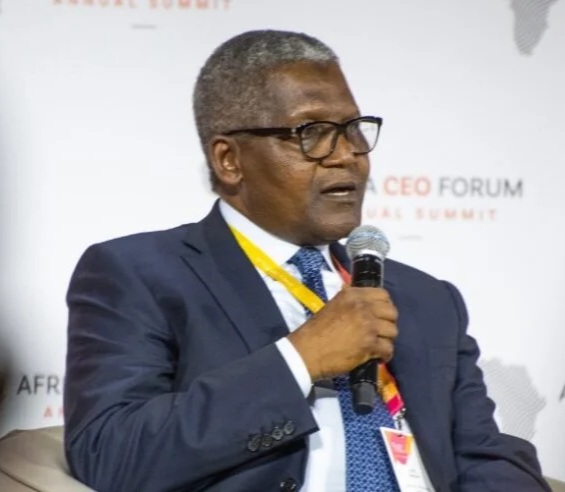
Africa’s richest man, Aliko Dangote, has admitted that his generation has not done enough for Nigeria and Africa, declaring that young people represent the future and deserve greater opportunities to learn from older business leaders.

Dangote made the frank admission while responding to content creator Adebayo Ridwan, popularly known as Bae U Barbie, who challenged him to take his message directly to younger Nigerians through a YouTube interview.

“Honestly, the future that we have is actually you, the youth. Our generation, really, has not done very well for Nigeria or Africa. That’s the truth,” Dangote said.

He added that older Nigerians needed to sit down with younger people and share their experiences, rather than leave them to learn about the country’s development and challenges from a distance.

“So we need to sit down with some of you and discuss our own experience with you,” he said.

The exchange took place at the Vision 2030 event on Monday, October 19, after Bae U urged the billionaire to appear on his programme, Curiosity Made Me Ask.

The content creator argued that many of Dangote’s previous media appearances had been on platforms that younger Nigerians did not ordinarily watch, even though they were interested in his businesses and potential investment opportunities.

Bae U specifically pointed to the interest among young Nigerians in Dangote’s planned company investment offering, arguing that the billionaire needed to engage the generation that wanted to learn about and participate in his business journey.

He clarified that he was not asking Dangote to sack his media team but wanted the industrialist to make time for his programme.

Dangote agreed that younger audiences deserved more attention and indicated that he would honour the invitation.

“We will come,” he assured the content creator, although no specific date for the proposed appearance was announced in the reports reviewed.

The billionaire also explained why he readily agrees to take photographs with members of the public despite his status and demanding schedule.

He recalled accompanying his late grandfather to Washington when he was younger, where they met prominent personalities and requested photographs with them.

The experience, he indicated, influenced his willingness to oblige people who approach him for pictures today.

Dangote’s comments provide a rare moment of reflection from one of Africa’s most powerful businessmen, particularly his candid assessment of the generation that has presided over much of the continent’s post-independence development.

His remarks also raise a question about the responsibility of established business leaders: beyond building successful companies, how much should they do to guide the younger generation and help create opportunities for those coming behind them?

For Bae U, Dangote’s acceptance of the invitation could open the door to a more direct conversation with young Nigerians about wealth creation, business decisions, leadership and the lessons behind the building of one of Africa’s largest industrial empires.

Don’t Miss Out! Join our WhatsApp Channel for instant news updates. Click here to join

I CAN SLEEP ANYWHERE, SHOWER AND LEAVE — DANGOTE

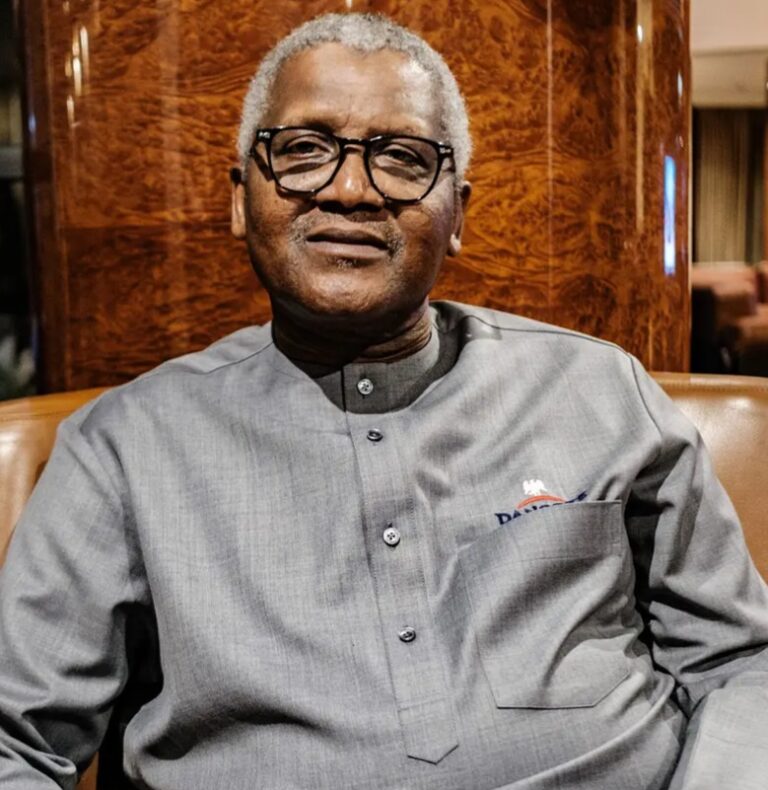
Africa’s richest man, Aliko Dangote, has emphasised humility and a simple lifestyle, saying his wealth doesn’t stop him from adapting to basic living conditions.

Dangote spoke at the Vision 2030 event on Monday, where he also honoured an invitation from popular content creator Adebayo Ridwan, known as Bae U Barbie, to appear on his YouTube show, Curiosity Made Me Ask.

According to the billionaire, living simply matters, and no one should let success or money make them feel bigger than others.

“And also to show people that, look, in life, you have to be as simple as you can, because anybody can be anybody,” he said.

Dangote stated that despite his status, he can comfortably stay anywhere and manage with whatever is available.

“Today, if you take me to anywhere, if you take me to the worst hotel, I can sleep, I can have my shower, I can leave,” he said.

“So because life is about simplicity, and make sure that, look, don’t take yourself up there,” he added.

He cited his friendship with the Prime Minister of Ethiopia as an example of simplicity in leadership, noting that the prime minister served for eight years without a driver.Dangote recalled asking him, during a trip to commission a fertiliser plant, why he had no driver, and he said his wife drives him.

The remarks followed an invitation from Bae U, who told Dangote that younger Nigerians want to hear directly from business leaders like him. Still, they mostly don’t watch the platforms where he has previously interviewed.

In his response, Dangote said the youth represent the future and older generations owe them honest conversations about their experiences.

“Honestly, the future that we have is actually you, the youth. Our generation, really, has not done very well for Nigeria or Africa. That’s the truth,” he said.

He added, “So we need to sit down with some of you and discuss our own experience with you.”

Dangote noted that young Nigerians have continued to show him support and respect, which is why he is always willing to take pictures with members of the public.

He recalled meeting notable personalities in Washington with his late grandfather when he was young and asking for photographs, an experience that shaped his approach to relating with people.

MINISTER REVEALS FG’S PLAN TO INTRODUCE 5% FUEL TAX

The Federal Government has revealed plans to introduce a five per cent tax on petroleum products, but implementation will be delayed until the economy stabilises and Nigerians’ incomes improve enough to accommodate the additional cost.

Minister of Finance and Coordinating Minister of the Economy, Taiwo Oyedele, disclosed this during an interview on the sidelines of the 2026 annual meetings of the International Monetary Fund and World Bank in Bangkok, Thailand.

Oyedele said the government would activate the proposed fuel surcharge at the appropriate time, insisting that it was not interested in imposing additional financial pressure on Nigerians already struggling with the rising cost of living.

The proposed levy, which is provided for in Nigeria’s tax framework, has faced opposition from organised labour and business groups over fears that it could trigger another round of increases in transportation, production and consumer prices.

According to Oyedele, revenue generated from the tax would be used to support road infrastructure and establish a fuel reserve to help cushion the impact of future price shocks.

“At the appropriate time, when the economy has stabilised and income level will be able to accommodate it, those taxes will come. Not because we want to impose taxes,” the minister said.

He argued that rather than attempting to control prices artificially, the government should focus on growing incomes faster than prices rise.

“The objective should be that instead of trying to suppress prices, which hasn’t worked for us, it hasn’t worked for any country in the world, not one, think about how to grow income faster than prices rise,” he said.

Oyedele added that the approach was intended to improve living standards, promote prosperity and expand Nigeria’s middle class.

The planned five per cent surcharge has previously generated strong opposition, particularly from the Trade Union Congress, which rejected the proposal in September 2025 and threatened nationwide industrial action.

In a statement signed by its President, Festus Osifo, and Secretary-General, Nuhu Toro, the union warned that another levy would deepen the hardship caused by petrol subsidy removal, inflation and the depreciation of the naira.

“Strike action is firmly on the table,” the union declared.

The Association of Small Business Owners of Nigeria also expressed concern that the additional charge could increase operating costs for businesses and worsen the financial difficulties facing households.

The government has traced the surcharge to the Federal Roads Maintenance Agency Amendment Act of 2007, which provides for funding road maintenance through petroleum-related revenue.

Former Finance Minister Wale Edun explained that 40 per cent of the proceeds would go to the Federal Roads Maintenance Agency, while 60 per cent would be allocated to state road maintenance agencies.

The government has maintained that incorporating the provision into its tax reforms was intended to harmonise existing legal provisions.

Explaining the proposed fuel reserve, Oyedele said it would help the government moderate prices if unexpected developments disrupted the petroleum market.

He added that the government could temporarily waive the tax during future price shocks to ease the burden on consumers.

The minister stressed that the surcharge could not take effect without a formal order published in the Official Gazette by the finance minister.

“The good thing is that the law says that tax cannot come into effect until there is a gazette. There has to be an order published in the gazette by the finance minister, which means we can’t do it in secret,” he said.

The proposed surcharge framework exempts household kerosene, cooking gas, compressed natural gas and clean or renewable energy products.

On June 16, 2026, the government had dismissed reports that it was introducing fresh taxes on petroleum products following recommendations in an IMF consultation report. It said the VAT waiver on petroleum products remained in place and that no process to activate the fuel surcharge was then under consideration.

Oyedele also compared Nigeria’s proposed arrangement with fuel taxation in other countries, noting that taxes account for between 20 and 80 per cent of pump prices in some jurisdictions, while several African countries impose multiple charges on petroleum products.

The fuel tax debate comes against the backdrop of President Bola Tinubu’s announcement of petrol subsidy removal during his inauguration on May 29, 2023, a decision that triggered sharp increases in pump prices and widespread complaints over the cost of transportation and essential goods.

Oyedele explained that the government initially managed the transition between subsidy removal and foreign exchange reforms to reduce the immediate impact on Nigerians.

According to him, government support for petrol prices and foreign exchange was completely removed in October 2023.

With the five per cent surcharge still requiring a formal ministerial order before implementation, the government says it will wait until economic conditions and income levels can accommodate the additional charge.

Don’t Miss Out! Join our WhatsApp Channel for instant news updates. Click here to join

APC’S BIGGEST PROBLEM IS WITHIN, NDUME DECLARES

Senator Ali Ndume has thrown his weight behind Vice President Kashim Shettima’s warning that the All Progressives Congress (APC) faces a bigger threat from internal divisions than from opposition parties ahead of the 2027 general elections.

Ndume, who represents Borno South Senatorial District, said the ruling party had more problems within its ranks than outside, warning that the struggle for power and the politics of personalities were overshadowing ideas and policy debates.

The senator described Shettima’s warning as a blunt assessment of the party’s situation, arguing that the opposition’s tough rhetoric and resilience were not the APC’s biggest problem.

“I think the Vice President was just blunt. We have more problems within than without because, seeing that the opposition, quite alright, they are both resilient, tough and talking big, but it’s not the major problem,” Ndume said.

He argued that politicians across party lines often shared similar backgrounds, with their differences driven largely by political platforms and the struggle to control power.

Ndume warned that the growing emphasis on personalities instead of ideas and practical solutions was dangerous, accusing politicians of taking Nigerians for granted.

His remarks came after Shettima raised the alarm over internal contradictions within the APC, declaring that divisions within the ruling party worried him more than the opposition’s political strength.

The Vice President spoke on Saturday in Abuja at the unveiling of the campaign headquarters of Arewa for Asiwaju (A4A), a northern coalition supporting the re-election bid of President Bola Tinubu and Shettima.

“Honestly, I am not afraid of the Peoples Democratic Party (PDP). I am not afraid of a diminished Peter Obi. But I am more afraid of internal contradictions within our household,” Shettima said.

He stressed that unity among APC members would be critical to the party’s chances in the next elections, insisting that internal cohesion was necessary for electoral victory.

“If we unite as a people, as a family, we will conquer,” he added.

Shettima also cautioned northern political leaders against campaigning for Tinubu at the presidential level while working against APC governors seeking re-election in their respective states.

“There is no point in championing the cause of the presidential election and then undermining the governor in the gubernatorial election. Honestly, it will not go down well with the system,” he warned.

The Vice President urged party members to close ranks behind APC governors, National Assembly members and Tinubu, stressing that the party must resolve its internal differences if it hopes to secure victory in the 2027 elections.

Don’t Miss Out! Join our WhatsApp Channel for instant news updates. Click here to join

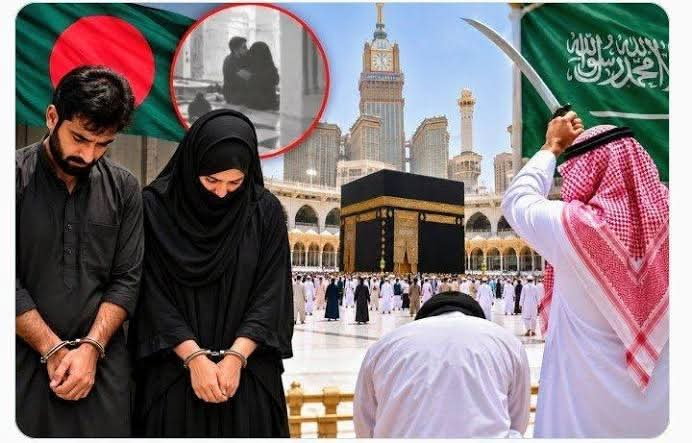
SAUDI EXECUTES 2 BANGLADESHIS OVER ‘IMMORAL ACT’ IN MECCA MOSQUE

Saudi Arabia has executed two people identified as Bangladeshi nationals over what authorities described as “immoral acts” inside a mosque in Mecca, triggering outrage and a diplomatic push by Bangladesh for answers.

The two were identified as Nazrul Islam Abdul Basir and Siti Akhtar. Their executions were carried out on October 14, 2026, after a court convicted them and the sentences were upheld by the relevant judicial authorities, according to reports citing Saudi Arabia’s Interior Ministry.

But a shocking claim circulating on social media that the pair were newlyweds executed simply for exchanging a kiss on the forehead remains unsubstantiated.

Saudi authorities have not publicly disclosed the precise nature of the alleged acts that led to the death sentences. There is also no reliable confirmation that the two were married, had travelled to Mecca for a honeymoon or kissed as an expression of gratitude to Allah.

The executions have raised further questions because Bangladesh’s consulate in Jeddah said it was not notified before the sentences were carried out.

According to Bangladeshi news outlet bdnews24.com, the consulate contacted Saudi authorities through diplomatic channels to establish the identities of the two individuals, the allegations against them and the circumstances surrounding their deaths.

Bangladesh subsequently raised the matter with the Saudi ambassador in Dhaka, handing him a copy of its earlier diplomatic note seeking clarification.

The case has left important questions unanswered, including the exact conduct for which the pair were convicted and why Bangladesh’s diplomatic mission says it was not informed of the proceedings or executions.

VIRAL CLAIMS UNDER SCRUTINY

A fact-check by Bangladeshi outlet The Dissent found no credible evidence supporting the viral account that the pair were newlyweds sentenced to death for a forehead kiss.

The investigation also found that claims that their bodies had been returned to Bangladesh were being circulated alongside footage that did not establish that the coffins shown contained the two executed individuals.

The story has therefore become a cautionary example of how unverified details can spread around a genuine and deeply troubling news event.

While the executions themselves have been reported by multiple news organisations, the romantic honeymoon narrative and the alleged forehead kiss cannot responsibly be presented as established facts.

For now, the confirmed account is stark enough: two people were executed in Saudi Arabia over an offence described by authorities only as an immoral act inside a mosque, while their purported home country is demanding further information about the case.

Don’t Miss Out! Join our WhatsApp Channel for instant news updates. Click here to join

LAGOS WASTE CRISIS! SANWO-OLU ORDERS LAWMA MD TO RESIGN

Lagos State Governor Babajide Sanwo-Olu has reportedly asked the Managing Director of the Lagos Waste Management Authority (LAWMA), Dr Muyiwa Gbadegesin, to resign following mounting complaints over heaps of refuse littering roads, streets and drainage channels across the state.

The Punch Online report, citing an unnamed source within the agency, said the governor was unhappy with the slow pace of waste evacuation despite earlier directives to tackle the growing sanitation crisis.

According to the report, Sanwo-Olu’s decision followed his dissatisfaction with the state of affairs after visiting the Olusosun dumpsite in Ojota about a month ago.

The source claimed that the governor had directed the immediate implementation of measures to address the problem after declaring a state of emergency on waste management.

However, with refuse reportedly continuing to accumulate across several communities, the governor was said to have asked Gbadegesin to step down over the weekend.

“The governor was upset when he observed that the situation had not improved despite his clear directive,” the source reportedly said.

The source further claimed that the LAWMA boss had been appealing to the governor to reconsider the decision and had reached out to some prominent Lagosians to intervene on his behalf.

The reported development comes amid months of complaints by residents over worsening waste collection, with refuse heaps allegedly left unattended along major roads, residential streets and drainage channels.

Communities affected by the problem reportedly include Mushin, Egbeda, Surulere, Ajegunle, Ikorodu, Ojo, Obalende, Apapa and Mile 2.

The mounting waste has raised concerns about environmental pollution, public health risks, blocked drainage channels and the impact of poor sanitation on businesses and the image of Lagos.

In September, Sanwo-Olu declared a state of emergency on waste management after inspecting the Olusosun dumpsite, where he met with stakeholders to assess the challenges confronting the sector.

The governor, accompanied by his deputy, Dr Obafemi Hamzat, called for immediate, medium-term and long-term measures to improve waste collection and disposal across the state.

Sanwo-Olu acknowledged the slow pace of refuse evacuation, blaming part of the problem on the failure of Private Sector Participation (PSP) waste operators to meet their obligations in the preceding weeks.

He also disclosed that waste compaction operations were ongoing at the Olusosun and Solous 3 dumpsites, while recent fire incidents at the facilities had disrupted operations.

According to the governor, completing the ongoing projects would enable the dumpsites to receive about 450 trucks of municipal waste daily, effectively doubling the capacity available to PSP operators.

Despite the proposed interventions, complaints over refuse accumulation have persisted in several parts of Lagos, putting the state’s waste management system under renewed scrutiny.

As of the time of the report, there was no official statement confirming the reported resignation directive from the Lagos State Government or LAWMA.

Don’t Miss Out! Join our WhatsApp Channel for instant news updates. Click here to join

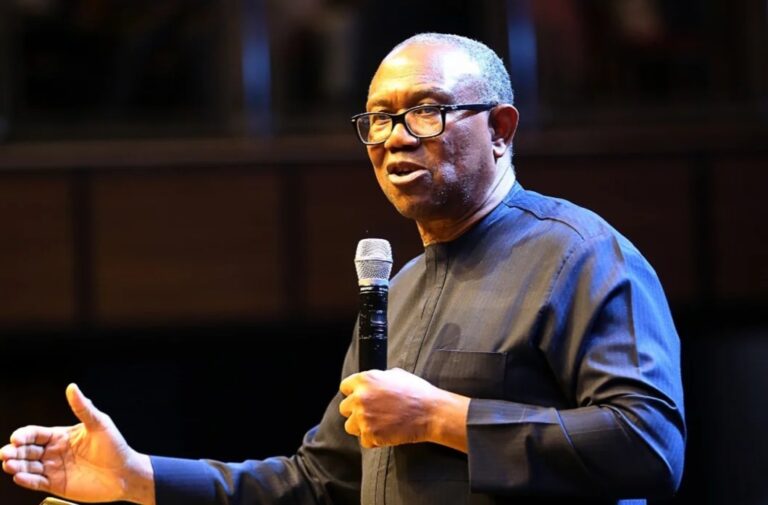
2027: PETER OBI TELLS NIGERIANS IN UK TO STOP SENDING MONEY HOME

Peter Obi, presidential candidate of the Nigeria Democratic Congress (NDC) for the 2027 election, has urged Nigerians living in the United Kingdom to stop sending money to relatives back home as part of efforts to force a change in the country’s leadership.

Obi made the appeal during a town hall meeting with supporters in the UK on Sunday, urging Nigerians in the diaspora to back his presidential ambition and support a candidate he believes can tackle corruption and Nigeria’s economic woes.

The former Anambra State governor, who is seeking to unseat President Bola Tinubu in 2027, argued that Nigerians must reject a political system he blamed for the diversion of public funds and the country’s deteriorating public services.

Addressing his audience, Obi asked them to tell relatives seeking financial assistance that the country needed a change in leadership before the cycle of hardship could be broken.

“You have people at home who are begging you for money. Tell them no. Let’s put somebody who has proven…” he said.

Obi, however, admitted that he was not perfect, describing himself as a potentially less corrupt alternative to other political leaders.

“I’m not a saint, but at least I have said something,” he said, challenging other former governors to show that they had saved up to 10 per cent of the amount he claimed to have saved while in office.

“So, let’s start with this one who is maybe less corrupt. We are not saying it is all, but let’s not pretend it is not happening,” he added.

The former governor maintained that Nigeria could only make progress when citizens stood up against corruption and demanded accountability from those in power.

According to him, money allegedly diverted by public officials could have been used to build schools, hospitals and other essential infrastructure.

“That is how the countries change. Countries change by people saying, ‘Hey, wait a minute, enough of this.’ And we know what our problem is,” Obi said.

“It is that money that they are sharing, that money they are using to buy properties, that is why they don’t build school. It is why they don’t build hospital.”

He also lamented what he described as the growing practice of public officials accumulating properties and wealth while ordinary Nigerians struggle to access basic services.

Obi contrasted the situation with what he said was the experience of previous generations, when public institutions were more accessible and public funds were not allegedly diverted on the scale he described.

His remarks come as political parties and presidential aspirants intensify mobilisation ahead of the 2027 general elections, with Nigerians abroad increasingly becoming an important constituency for political support and campaign mobilisation.

BACKLASH OVER REMARK

However, Obi’s appeal triggered criticism on social media, with some X users accusing him of encouraging Nigerians abroad to abandon relatives who depend on them for financial support.

An X user, @Mobola_A_Star, accused Obi of seeking diaspora support for his presidential ambition while discouraging Nigerians abroad from sending money to their families.

“So, he wants the donation of diaspora people, but the same diaspora people shouldn’t send money home again till he wins,” the user wrote.

The user also questioned whether the appeal reflected the mindset of a responsible leader, describing it as a campaign strategy built on fear and hopelessness.

Another user, @NduEbitea, condemned the suggestion, arguing that Nigerians should not be encouraged to stop supporting their parents and siblings because of political ambitions.

“Senseless talk. So, because of your desperate bid to become president, people should not support their parents and siblings again? Can you imagine this man?” the user wrote.

Similarly, @B_Mizack attacked Obi over the remarks, while @Deshysmalls suggested sarcastically that the former governor might have had too much Guinness before making the statement.

Another critic, @koobakedah, described the appeal as desperation and hypocrisy, arguing that family members in Nigeria would continue to need financial assistance from relatives abroad regardless of who governed the country.

The user questioned how Obi expected ordinary Nigerians to cope if diaspora remittances were withheld until the 2027 election.

Meanwhile, @abbeykool accused the former governor of promoting division, while @osazenoo and @olohunjuedani also criticised the remarks.

The backlash highlights the sensitivity surrounding diaspora remittances, which many Nigerian households rely on to pay for food, education, healthcare and other essential needs, as political campaigns gather momentum ahead of the 2027 presidential election.

Don’t Miss Out! Join our WhatsApp Channel for instant news updates. Click here to join

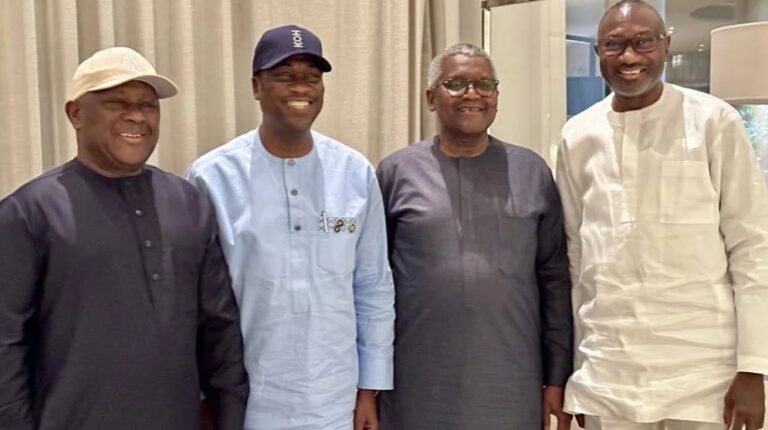
OTEDOLA RECALLS SHARING BUNK BED WITH HAMZAT 49 YEARS AGO

Billionaire businessman Femi Otedola has revealed that he shared a bunk bed with Lagos State Deputy Governor Obafemi Hamzat during their boarding school days nearly five decades ago.

Otedola made the revelation after hosting a dinner in honour of Hamzat, who emerged as the All Progressives Congress (APC) governorship candidate for the 2027 Lagos State election.

In a post on his X account on Monday, the billionaire described Hamzat as a longtime friend whose character he had come to know over the years.

“Yesterday, I hosted dinner in honour of @DrObafemiHamzat, the incoming Governor of Lagos State. A man of the highest integrity, with whom I shared a bunk bed at boarding school 49 years ago,” Otedola wrote.

He said his longstanding relationship with Hamzat had given him insight into the deputy governor’s character, which he described in terms of honesty, sincerity, fairness and strong moral principles.

The dinner attracted some of Nigeria’s wealthiest businessmen, including Africa’s richest man, Aliko Dangote, and BUA Group chairman, Abdul Samad Rabiu.

Hamzat clinched the APC governorship ticket in May after polling 657,917 votes in the party’s Lagos primary, defeating his challenger, Olanrewaju Jim-Kamal, who secured one vote, according to the announced results.

The deputy governor, who has held office since 2019 under Governor Babajide Sanwo-Olu, is preparing to contest the 2027 election as he seeks to succeed his principal when Sanwo-Olu’s second term ends.

Don’t Miss Out! Join our WhatsApp Channel for instant news updates. Click here to join

BREAKING: EX-DELTA GOVERNOR EMMANUEL UDUAGHAN IS DEAD

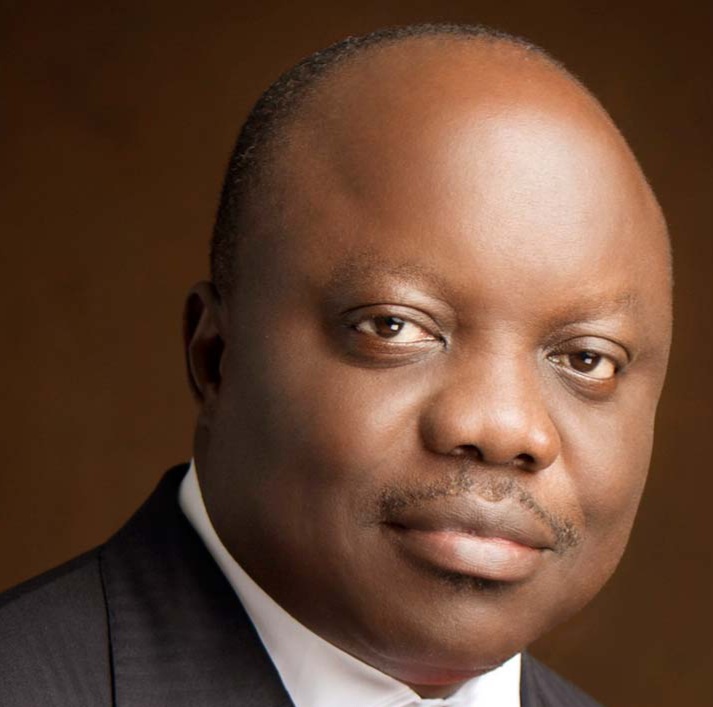
Former Delta State Governor, Dr Emmanuel Eweta Uduaghan, has died at the age of 71.

Uduaghan reportedly died on the morning of Monday, October 19, 2026, according to reports citing a statement by his family.

The family announced his death in a statement signed by Toju Anire Uduaghan, expressing deep sorrow over the loss of the former governor.

The statement described Uduaghan as a beloved father, brother, uncle and patriarch whose passing had left an immeasurable void in the family.

Uduaghan, a medical doctor turned politician, governed Delta State from May 2007 to May 2015 under the platform of the Peoples Democratic Party.

Before becoming governor, he served as Delta State Commissioner for Health and Secretary to the State Government.

His death comes months after reports of his demise circulated on social media in June, only for his family and the Delta State Government to dismiss them as false.

The latest reports, however, indicate that the former governor’s family has now confirmed his passing, throwing the state’s political community into mourning.

Further details surrounding his death were not immediately available as of the time of filing this report.

Don’t Miss Out! Join our WhatsApp Channel for instant news updates. Click here to join

BABY THEFT DRAMA! HOSPITAL STAFF, PATIENTS CATCH SUSPECT IN LAGOS

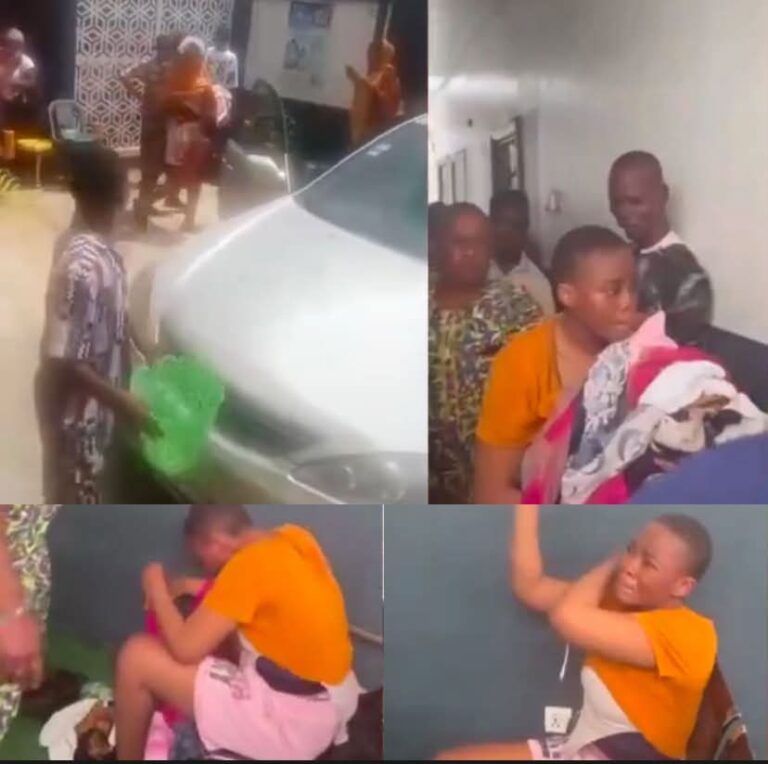
Hospital workers and patients at P and G Hospital, Abule-Egba, Lagos State, have foiled an alleged attempt by a woman to steal a newborn baby.

The suspect was reportedly caught on Saturday after allegedly disguising herself as a pregnant woman in a bid to carry out the act.

She was said to have stuffed pieces of cloth under her clothes to create the impression that she was pregnant, while another woman allegedly posed as someone who had come to assist her with delivery.

The plot reportedly unravelled when hospital workers and patients became suspicious and confronted the suspect.

Videos circulating on social media showed the woman being restrained by a crowd as the pieces of cloth used to fake her pregnancy fell to the floor.

In one of the clips, a man dressed in traditional attire was seen slapping the suspect across the face as others questioned her over the alleged attempt.

Another video showed the woman being held and led into a car.

The Lagos State Police Command confirmed on Sunday that the suspect had been taken into custody, while efforts were ongoing to track down her alleged accomplice, who was said to have fled.

The command’s spokesperson, Abimbola Adebisi, said the suspect would be charged to court after the conclusion of investigations.

“The alleged perpetrator is currently in custody, while efforts are ongoing to apprehend the accomplice and charge the case to court as soon as the investigation is concluded,” Adebisi said.

Don’t Miss Out! Join our WhatsApp Channel for instant news updates. Click here to join

WOMAN DIES IN MYSTERY HOUSE FIRE, HUSBAND ARRESTED

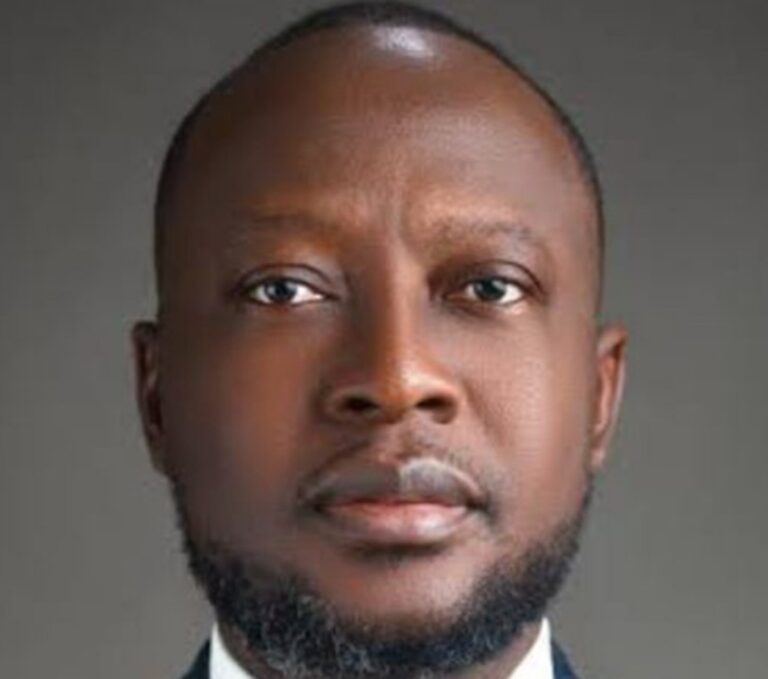
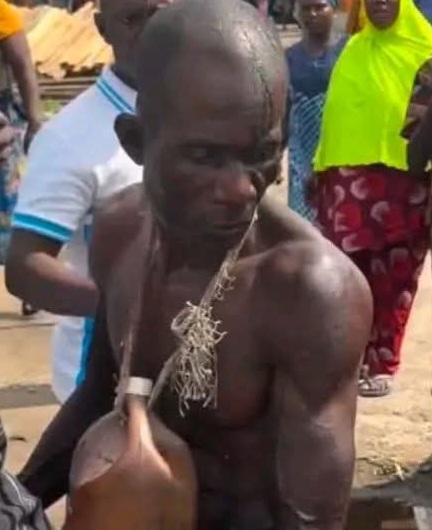
A 40-year-old woman, Igbagbo Erobe, has died in a mysterious house fire in Ogun State, with the police arresting her 56-year-old husband, Madarikan Emehinola, over suspected arson.

The incident occurred in the Igbo-Edu area of Ogun Waterside Local Government Area, leaving investigators to unravel the circumstances surrounding the woman’s death.

The Ogun State Police Command said the case was reported at the Abigi Divisional Police Headquarters on Sunday, October 18, 2026, after information reached the police that a house had been set ablaze, resulting in the woman’s death.

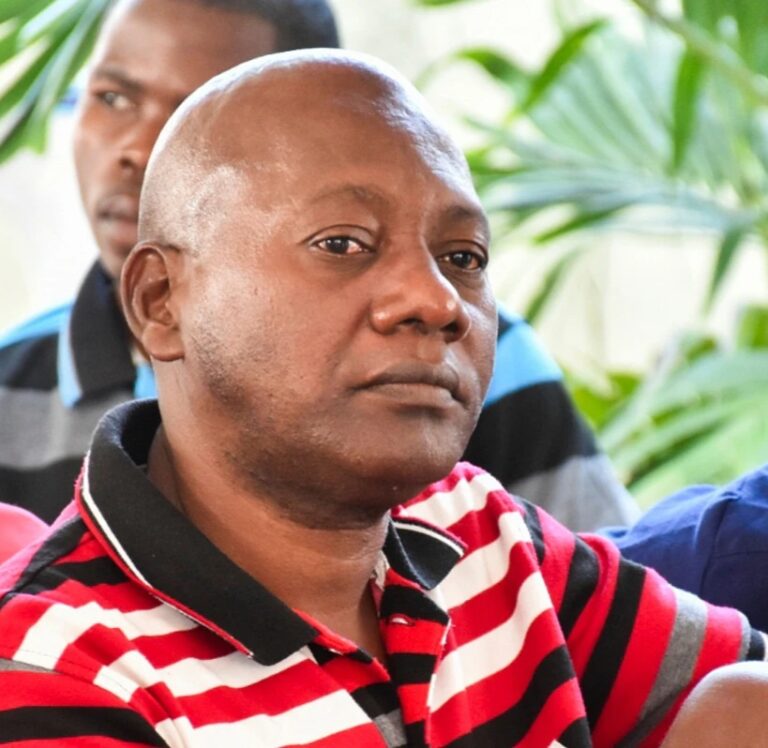
The command’s spokesperson, DSP Oluseyi Babaseyi, confirmed the incident in a statement issued on Sunday, disclosing that Emehinola(pictured above) had been taken into custody in connection with the suspected arson.

“The Ogun State Police Command has a 56-year-old man, Madarikan Emehinola, in custody in connection with a suspected arson incident that claimed the life of his 40-year-old wife, Igbagbo Erobe,” the statement said.

The police disclosed that the deceased’s body had been deposited at a mortuary for a post-mortem examination.

The case is being processed for transfer to the State Criminal Investigation Department, Eleweran, Abeokuta, for further investigation.

Ogun State Commissioner of Police, Bode Ojajuni, assured the public that the incident would be thoroughly investigated and handled professionally in accordance with the law.

He reiterated the command’s commitment to protecting lives and property, adding that allegations involving serious crimes would receive appropriate investigative attention.

The police also urged members of the public to report suspicious activities and provide credible information that could assist crime prevention and ongoing investigations.

However, the command has yet to disclose the cause of the fire, the circumstances leading to the woman’s death or any possible motive behind the suspected arson.

Don’t Miss Out! Join our WhatsApp Channel for instant news updates. Click here to join

2027: OPPOSITION’S ONE-CANDIDATE PLAN CRUMBLES AS KWANKWASO REJECTS ATIKU DEAL

The battle to unite Nigeria’s opposition behind a single presidential candidate against President Bola Tinubu in 2027 suffered a major setback yesterday as Senator Rabiu Kwankwaso declared that Peter Obi would not step down for former Vice-President Atiku Abubakar.

Kwankwaso, the vice-presidential candidate of the Nigerian Democratic Congress (NDC), also dismissed allegations that he and Obi were working towards a last-minute withdrawal from the race to pave the way for an alliance with the ruling All Progressives Congress (APC).

The former Kano State governor described the claims as unfounded, accusing the African Democratic Congress (ADC) Presidential Campaign Council of engaging in unnecessary attacks against him, Obi and the NDC.

“Let me state clearly and unequivocally: we will not withdraw our candidature for the ADC or any other party,” Kwankwaso declared in a post on his X handle.

He insisted that the NDC presidential ticket remained committed to the race, expressing confidence in its capacity and readiness to lead the country.

“The OK ticket is neither working for nor acting on behalf of the APC or any of its candidates,” he added.

Kwankwaso further ruled out any possibility of withdrawing in favour of Atiku or another opposition candidate, describing suggestions to that effect as political blackmail.

The development has dealt another blow to ongoing efforts to forge a united opposition front capable of mounting a strong challenge to Tinubu in the 2027 presidential election.

ATIKU, OBI FACE OFF AGAIN

The disagreement has exposed widening cracks among opposition leaders who had been exploring ways to avoid splitting their votes in the next presidential contest.

Atiku and Obi were running mates on the platform of the Peoples Democratic Party (PDP) in the 2019 presidential election before their political paths diverged.

While Atiku retained the PDP presidential ticket in 2023, Obi defected to the Labour Party (LP) and emerged as a major challenger to the former vice-president and Tinubu.

Both candidates eventually lost to Tinubu, who contested on the platform of the APC.

Ahead of the 2027 election, however, renewed efforts were made to bring the two opposition figures together in a broader coalition against the incumbent president.

Atiku subsequently left the PDP for the ADC, with Obi and his supporters also moving to the party before the former Anambra State governor later defected to the NDC.

Obi eventually teamed up with Kwankwaso on the NDC ticket, with the former Labour Party presidential candidate as the presidential flagbearer and Kwankwaso as his running mate.

The development complicated the coalition negotiations, as both Obi and Atiku remained potential presidential contenders, with neither side willing to concede the ticket to the other.

G-100 COALITION UNDER PRESSURE

One of the latest initiatives to unite the opposition has been spearheaded by the G-100, a group convened by former Director-General of the Progressive Governors Forum, Salihu Lukman.

Lukman had disclosed in recent interviews that discussions had expanded beyond the ADC and NDC to include four other political parties.

The group hopes to build a broad alliance ahead of the January 16, 2027 presidential election, with the ultimate goal of rallying opposition parties behind a common candidate.

“The G-100 would come out and tell Nigerians this is the direction, and everybody will queue,” Lukman said, expressing optimism that more political parties would join the initiative.

However, the latest exchange between the ADC and NDC suggests that reaching an agreement may prove more difficult than anticipated.

With Atiku and Obi both maintaining their presidential ambitions, the coalition faces the challenge of persuading one of the leading contenders to make way for the other without triggering further defections or deepening divisions.

KWANKWASO FIRES BACK AT ADC

In his statement, Kwankwaso accused the ADC Presidential Campaign Council of attempting to mislead NDC supporters with claims that Obi would eventually withdraw from the race in Atiku’s favour.

He said the NDC would rather present its candidates’ competence, credibility, capacity and records of achievement to Nigerians than engage in attacks against political opponents.

The former governor also challenged the ADC campaign team to respond to allegations reportedly levelled against Atiku by Vice-President Kashim Shettima instead of concentrating its criticism on the NDC leadership.

Kwankwaso criticised both the APC-led government and the ADC, arguing that neither had presented the kind of alternative Nigerians needed.

He portrayed the NDC ticket as a credible option with support across Northern and Southern Nigeria, promising to tackle insecurity, education, agriculture, infrastructure, healthcare and economic challenges.

He also urged Nigerians to support the NDC, describing the party as a formidable opposition platform.

ADC ACCUSES KWANKWASO OF PLAYING APC’S GAME

The ADC, however, has rejected Kwankwaso’s defence, accusing him of repeatedly attacking Atiku instead of directing his criticism at Tinubu’s administration.

The party’s Presidential Campaign Council Director of Media and Publicity, Kola Ologbondiyan, described Kwankwaso’s response as diversionary, questioning why the NDC vice-presidential candidate had made the ADC flagbearer a target.

“Why is Senator Kwankwaso making our candidate the issue instead of confronting the ruling APC?” Ologbondiyan asked.

He argued that opposition leaders should concentrate on holding the ruling party accountable for the country’s challenges rather than engaging in public disputes among themselves.

“For the avoidance of doubt, the ADC cannot and will not be distracted by Senator Kwankwaso,” he added.

Ologbondiyan further alleged that Kwankwaso was attacking the ADC in an attempt to curry favour with the APC, an accusation the NDC vice-presidential candidate has denied through his insistence that his ticket is not working for the ruling party.

The ADC spokesman maintained that his party would remain focused on mobilising Nigerians around its promise to provide an alternative to the Tinubu administration.

With the two opposition camps trading accusations and refusing to back down, the prospect of presenting a single candidate against Tinubu remains uncertain, raising fresh questions about whether the opposition can resolve its differences before the 2027 election.

Don’t Miss Out! Join our WhatsApp Channel for instant news updates. Click here to join