
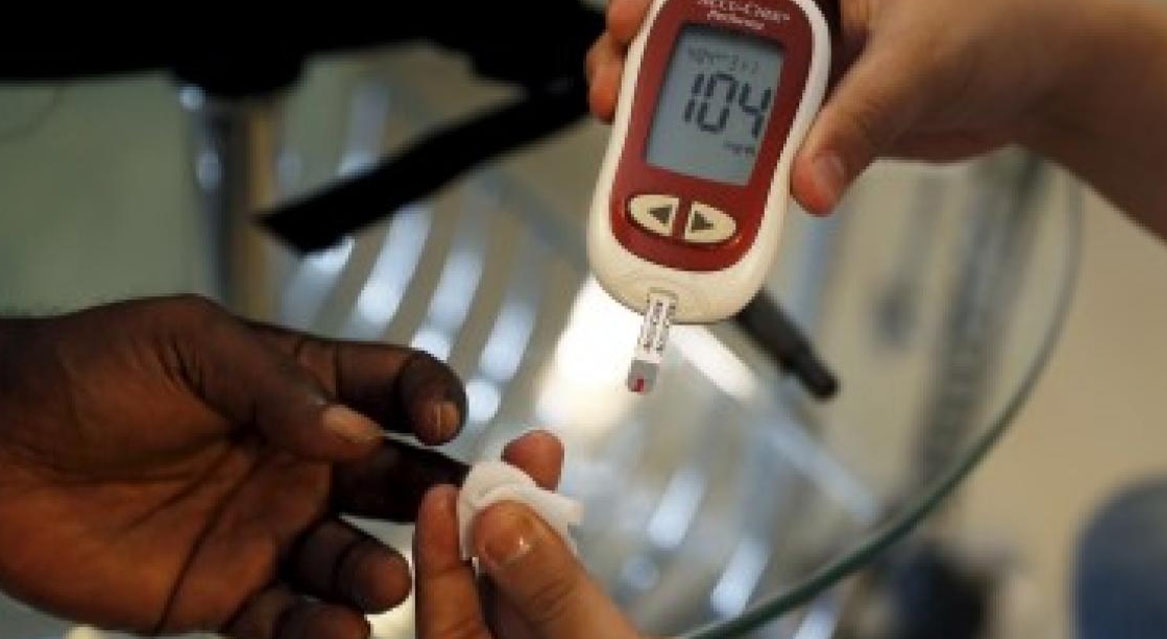
Nigeria is facing a severe shortage of medical specialists, with only about 150 to 200 endocrinologists available to care for an estimated 15 million people living with diabetes, raising concerns about access to diagnosis and treatment.
The shortage, worsened by the migration of medical professionals abroad, inadequate diagnostic facilities and poor welfare, is placing enormous pressure on the few specialists remaining in the country.
A report by PUNCH newspaper, from which Orijoreporter sourced this story, highlights the widening gap between Nigeria’s growing burden of chronic diseases and its capacity to provide specialist healthcare.
Endocrinologists are doctors who diagnose and treat conditions affecting the body’s hormones, including diabetes, thyroid disorders, obesity and other metabolic diseases.
President of the Endocrine and Metabolism Society of Nigeria, Prof. Andrew Uloko, disclosed that the number of practising endocrinologists in the country had remained between 150 and 200, despite the increasing demand for their services.
He blamed the situation partly on the continued departure of specialists in search of better salaries, improved working conditions and opportunities for professional development overseas.
“Our figure still revolves around 200. Sometimes you come across documentation that we are somewhere between 150 and 200. That’s our number currently in the country,” Uloko told PUNCH Healthwise.
He warned that the shortage was becoming increasingly difficult to manage as diabetes and other non-communicable diseases continued to affect more Nigerians.
According to him, the problem extends beyond the number of available specialists to include the poor distribution of doctors and the lack of equipment required for effective diagnosis and treatment.
Uloko said endocrinologists were concentrated mainly in major cities, where specialist hospitals, laboratories and other diagnostic facilities were more readily available.
This leaves many rural communities and underserved areas with little or no access to specialist care, forcing patients to travel considerable distances to obtain consultations and investigations.
Even in urban centres, he said, the number of available specialists remained inadequate, while primary and secondary healthcare facilities rarely had endocrinologists.
The EMSON president identified the North-East, South-West and North-Central as regions with relatively low numbers of specialists, although the South-West was believed to have the highest concentration.
He explained that endocrinology required specialised investigations and laboratory equipment that were unavailable in many healthcare facilities, making it difficult for doctors to practise effectively in some parts of the country.
The inadequate infrastructure, he added, also contributed to the migration of specialists to countries where they could access better-equipped hospitals and improved working conditions.

Uloko lamented that the few centres with endocrinologists were overwhelmed by patients referred from different locations, further increasing waiting times and the pressure on medical personnel.
Describing the workload, he said: “Workload is stupendously heavy. You practically do not even have time for yourself.”
He called on the government to improve doctors’ remuneration and welfare while investing in diagnostic and laboratory facilities, particularly at secondary healthcare centres.
According to him, strengthening these facilities would reduce the burden on teaching hospitals and save patients the cost and stress of travelling between states for treatment.
Uloko expressed hope that the government would recognise the urgent need to train and retain more endocrinologists in Nigeria.
2,400 endocrinologists needed to meet global benchmark
The scale of the crisis is further underscored by estimates from the National President of the Diabetes Association of Nigeria, Prof. Ejiofor Ugwu, who said the country needed at least 2,400 endocrinologists to adequately serve its population.
Ugwu put Nigeria’s current number of practising specialists at between 120 and 150, warning that the deficit was undermining the management of diabetes and other hormone-related disorders.
Using an estimated population of 240 million, he said the country was operating far below the specialist-to-population ratio required for effective healthcare delivery.
According to him, the shortage means one endocrinologist may be responsible for approximately 1.6 million people, compared with one specialist for every 70,000 people in the United Kingdom and one for every 35,000 to 40,000 in the United States.
He lamented that the situation was particularly difficult for rural dwellers, many of whom struggle to obtain specialist consultations.
Ugwu warned that patients with diabetes, thyroid disorders and other endocrine conditions in underserved communities sometimes turn to herbal centres and prayer houses or depend on general practitioners who may not have the specialist expertise required to manage complicated cases.
He disclosed that a typical clinic session at his teaching hospital could attract between 80 and 120 patients, despite having only two consultant endocrinologists working alongside trainees.
The workload, he said, was far beyond what specialists could reasonably handle while giving patients adequate attention.
Ugwu maintained that an endocrinologist should ideally attend to no more than 10 patients daily, with consultations requiring between 20 and 30 minutes for proper medical history, examination, diagnosis and treatment planning.
He warned that excessive patient numbers could leave doctors exhausted and reduce the time available to assess individual cases.
The DAN president urged the government to invest in healthcare facilities and specialist training, arguing that improved local services would also reduce the need for Nigerians to seek treatment abroad.
Cancer crisis: Fewer than 100 oncologists available
The shortage of endocrinologists is only one part of Nigeria’s wider specialist healthcare crisis, with cancer treatment also facing a severe manpower deficit.
Figures from the Federal Ministry of Health’s National Cancer Control Programme indicate that Nigeria records approximately 124,000 new cancer cases and more than 80,000 cancer deaths annually.
The International Agency for Research on Cancer’s 2024 estimates also highlight the enormous global burden of the disease.
Yet, according to the Association of Radiation and Clinical Oncologists in Nigeria, the country has fewer than 100 radiation and clinical oncologists.
President and Chief Executive Officer of the Nigerian Cancer Society, Prof. Abidemi Omonisi, said effective cancer treatment depended on a multidisciplinary team that included oncologists, pathologists, oncology nurses, pharmacists, medical physicists and other trained professionals.
However, the country is also grappling with a shortage of pathologists, who play a crucial role in identifying cancer through the examination of tissue samples.
Omonisi said Nigeria had fewer than 200 trained pathologists, leaving a substantial gap between available personnel and the country’s needs.
He also disclosed that although 400 oncology nurses had been trained and licensed as of November 2025, fewer than 200 were still practising in Nigeria, with more than 200 having migrated abroad.
The Nigerian Cancer Society president further put the number of oncology pharmacists still practising in the country at 168.
The figures point to a broader challenge: even when patients are able to reach a hospital, shortages of the different professionals required for diagnosis and treatment can complicate their care.
24 million Nigerians face kidney disease burden
Nigeria’s kidney care system is also under pressure, with an estimated 24 million people affected by chronic kidney disease and only about 200 to 250 practising nephrologists, according to the PUNCH Healthwise report.
Nephrologists are specialists who diagnose and manage kidney diseases, including conditions that can progress to kidney failure and require dialysis or transplantation.
With one in 10 Nigerian adults estimated to be living with chronic kidney disease, the limited number of specialists raises concerns about early detection, effective treatment and long-term monitoring.
The reported figures suggest that the country has roughly one nephrologist for every 96,000 to 120,000 people affected by kidney disease.
The combination of inadequate facilities and a shortage of trained personnel threatens to make access to specialist treatment even more difficult, particularly for patients who cannot afford private healthcare or repeated journeys to major teaching hospitals.
Brain drain deepens healthcare emergency
Across diabetes, cancer and kidney care, the recurring challenge is the widening gap between the number of patients requiring treatment and the specialists available to provide it.
The migration of trained health workers, commonly referred to in Nigeria as the Japa trend, has further weakened the workforce, while limited diagnostic facilities and poor working conditions discourage some specialists from remaining in the country.
The consequences extend beyond hospital waiting rooms. Delayed diagnosis, inadequate follow-up and difficulties accessing specialist investigations can complicate the management of chronic illnesses that require sustained medical attention.
The experts are therefore calling for a combination of expanded specialist training, better remuneration, improved working conditions and investment in hospitals and diagnostic laboratories.
Without these measures, Nigeria risks leaving millions of people dependent on an overstretched healthcare system, with the burden falling particularly heavily on patients in rural and underserved communities.
Source: PUNCH newspaper, as sourced by Orijoreporter.
Don’t Miss Out! Join our WhatsApp Channel for instant news updates. Click here to join