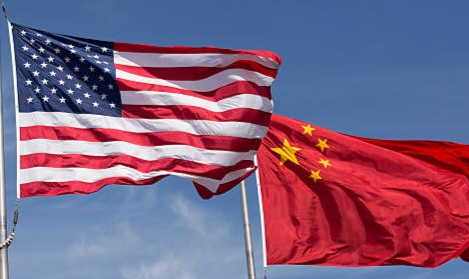
China has accused the United States of deliberately smearing its image after Washington designated Beijing-funded Confucius Institutes on American university campuses as national security threats.
China’s Foreign Ministry condemned the move on Monday, describing it as targeted discrimination against the cultural centres, which promote Chinese language learning and cultural exchange.
Ministry spokesman Guo Jiakun said Beijing opposed the “targeted smearing and stigmatisation” of the institutes, insisting that educational cooperation between China and the US benefits citizens of both countries.
He warned that such exchanges should not be disrupted, arguing that closer educational ties would help improve mutual understanding between the two countries.
The diplomatic row follows Washington’s long-standing suspicion that the institutes serve as propaganda platforms for the Chinese Communist Party rather than merely promoting language and culture.
The US has imposed funding restrictions on the centres since 2025 over national security concerns.
On Friday, US Defence Secretary Pete Hegseth said his department had dismantled dozens of similar organisations over a two-month period, alleging that some had resurfaced under different names while pursuing the same objectives.
He described the rebranded organisations as a threat to US national security.
China, however, maintains that its educational and cultural programmes should not be subjected to what it considers politically motivated attacks.
Established over the past two decades, Confucius Institutes have spread to more than 150 countries, according to the organisation overseeing their operations.
The centres offer Chinese language classes and cultural programmes and have been presented by Beijing as its answer to institutions such as Germany’s Goethe-Institut and the British Council.
Chinese President Xi Jinping has previously described the institutes as a symbol of his country’s commitment to world peace and international cooperation.
Despite that ambition, the centres have faced growing opposition in several countries amid concerns about foreign influence and interference in academic affairs.
Dozens of institutes have closed in countries including France, Sweden, Australia and Canada following similar allegations, deepening the controversy surrounding Beijing’s global cultural outreach.