

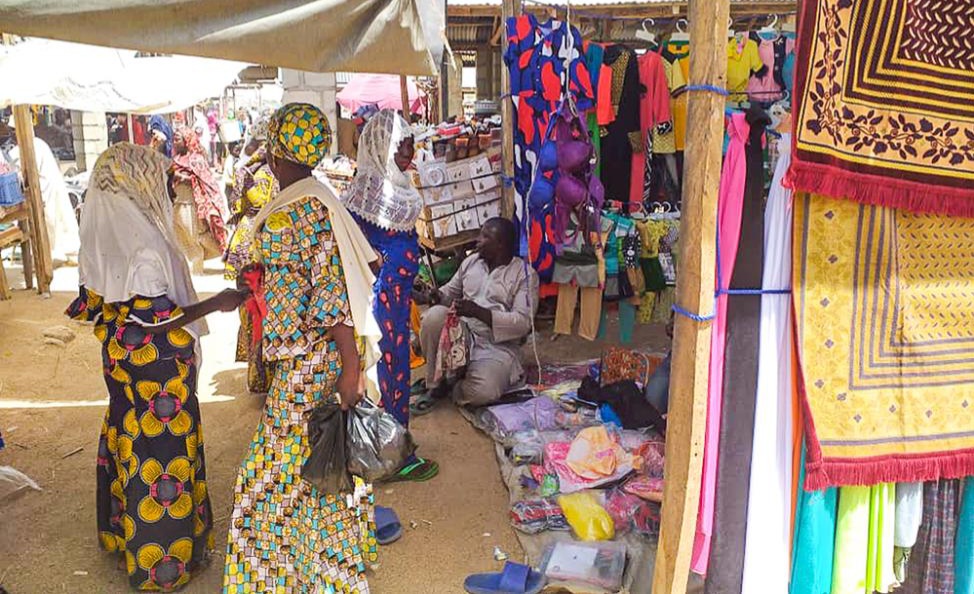
Traders in Borno State are crying foul over the circulation of counterfeit N1,000 notes, saying the fake currency is eating into their profits and creating distrust in the markets.
The alarm was raised by traders at the Kwaya Kusar Grains Market in Kwaya Kusar Local Government Area during separate interviews with the News Agency of Nigeria (NAN) on Saturday.
According to the traders, the problem is not restricted to Kwaya Kusar, as counterfeit N1,000 notes are also reportedly circulating in markets across Biu and Bayo Local Government Areas, where they regularly purchase farm produce.
They said the development was disrupting commercial activities and making traders increasingly suspicious of the cash they receive from customers.
One of the affected traders, Ibrahim Yusuf, a grain dealer from Gombe Main Market who visited Kwaya Kusar to buy maize, said he had fallen victim to fake currency twice.
Yusuf recalled that about three weeks earlier, he had gone to Biu Grain Market to purchase bags of maize and received four counterfeit N1,000 notes without realising it.
He said he only became suspicious while in transit when he was about to pay his driver and noticed that one of the N1,000 notes felt unusually light and different from genuine currency.
After discovering three more fake notes among the cash he had withdrawn, Yusuf said he contacted the person who had given him the money to complain.
He explained that his profit was already slim, averaging between N3,000 and N4,000 per bag after transportation costs. Since he had bought three bags, he expected to make about N12,000, but the discovery of N4,000 in fake notes had effectively wiped out a significant part of his profit.
Yusuf called on the government and relevant authorities to raid markets in Biu, Kwaya Kusar and Shani rural areas, identify the source of the counterfeit notes and remove them from circulation.
He stressed that urgent action was needed as farmers had begun harvesting their produce, a development expected to significantly increase trading activities in the markets.
Another trader, Alhaji Hassan Mai-Dawa, said he had also received a counterfeit N1,000 note from a Point-of-Sale operator in Kwaya Kusar.
According to him, the fake notes were only discovered when he attempted to deposit the money in a bank.
Mai-Dawa explained that many traders in the area did not accept transfers, leaving customers and other traders dependent on cash withdrawals from POS operators.
He said he had encountered a similar problem at Biu Market and warned that many traders were unable to distinguish between genuine and counterfeit notes, resulting in fake currency being unknowingly recirculated alongside genuine money.

A rice trader, Mrs Hauwa Aminu, also said she had repeatedly noticed unusual-looking new N1,000 notes among the cash she received but initially paid little attention because other people accepted them from her.
She recalled a recent incident in which she nearly engaged in a fight with a customer who returned to demand a refund after depositing money with her the previous day.
Aminu said she gave the customer some of the cash in her possession, but he rejected some of the notes. She insisted that she was not responsible for producing the currency, but the disagreement became heated.
She said the customer had since stopped returning to her shop, highlighting how the counterfeit notes were damaging trust among traders and their customers.
Aminu urged the government to deploy officials to rural markets to monitor the circulation of fake currency, identify those behind it and make arrests.
The traders warned that unless the authorities act quickly, the counterfeit notes could spread further as trading activities increase during the harvest season.I can also make it more sensational and punchy, with a stronger newspaper-style lead and headline options.
Don’t Miss Out! Join our WhatsApp Channel for instant news updates. Click here to join