
Assets seized from alleged criminal enterprises are being transformed into schools and other productive ventures as part of the Federal Government’s recovery drive, the Economic and Financial Crimes Commission has said.
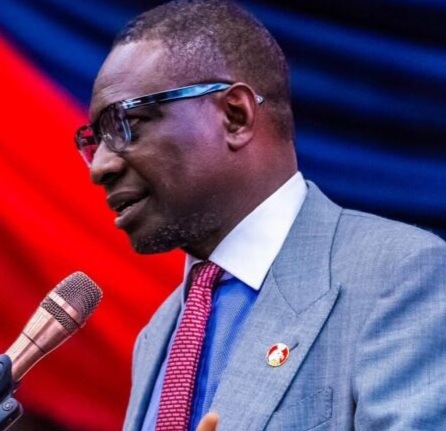
EFCC Chairman, Ola Olukoyede, disclosed that one of the biggest recoveries has already been converted into a full-fledged federal university, giving thousands of young Nigerians access to higher education.
According to Olukoyede, the former NOK University in Kachia, Kaduna State, was forfeited to the Federal Government and subsequently transformed into the Federal University of Applied Sciences, Kachia (FUASK).
He said the institution had moved from being a forfeited asset to a functioning public university, with 1,909 students matriculating in December 2025.
Olukoyede made the disclosure in a video and accompanying post on his official X account on Friday while highlighting the EFCC’s enforcement record.
He said the transformation meant that an asset recovered from alleged criminal activity was now providing opportunities for young Nigerians who might otherwise have struggled to gain access to university education.
The EFCC boss said the new university was also expected to generate wider economic benefits for Southern Kaduna, including jobs and other opportunities for residents.
But the Kaduna university is not the only educational institution caught up in the EFCC’s asset-recovery drive.
Olukoyede revealed that another private university in Kebbi State had recently been finally forfeited to the Federal Government.
Although he did not name the institution, his description points to Rayhaan University, whose permanent and temporary sites, radio station and other properties were among assets forfeited following an EFCC case involving a former Attorney-General of the Federation.
Olukoyede drew attention to the massive residence reportedly constructed for the university’s vice-chancellor, describing the property as extraordinarily large.
The EFCC chairman said the case demonstrated the scale of assets that could be recovered when the commission follows the money and traces properties allegedly acquired through illicit means.
Beyond universities, Olukoyede said the EFCC had secured the forfeiture of 10,053 assets between October 2023 and July 2026.
The recovered assets, he said, included real estate, land, vehicles, electronics, schools, factories, hotels, oil rigs, barges, machinery and aircraft, as well as 102 tonnes of solid minerals.
Disposals from the recovered assets have so far generated ₦12.07 billion for the Federal Government, according to the EFCC chairman.

Olukoyede said the commission’s recovery efforts were not simply about taking property away from alleged offenders, but about putting recovered wealth back into productive use.
He said the strategy could strengthen government revenue, protect the financial system and discourage others from engaging in economic crimes.
The EFCC chairman also disclosed that the commission had recovered ₦1.233 trillion in naira, alongside funds in foreign currencies, and secured 10,872 convictions between October 2023 and July 2026.
The figures form part of the commission’s broader enforcement scorecard under Olukoyede, with the EFCC seeking to demonstrate that recovered assets can be converted into tangible benefits for Nigerians rather than remaining idle after forfeiture.
Don’t Miss Out! Join our WhatsApp Channel for instant news updates. Click here to join