Former Kaduna State Governor, Nasir El-Rufai, has admitted lying when he claimed that opposition figures were listening to telephone conversations of National Security Adviser (NSA), Nuhu Ribadu, saying he made the allegation to unsettle the government.
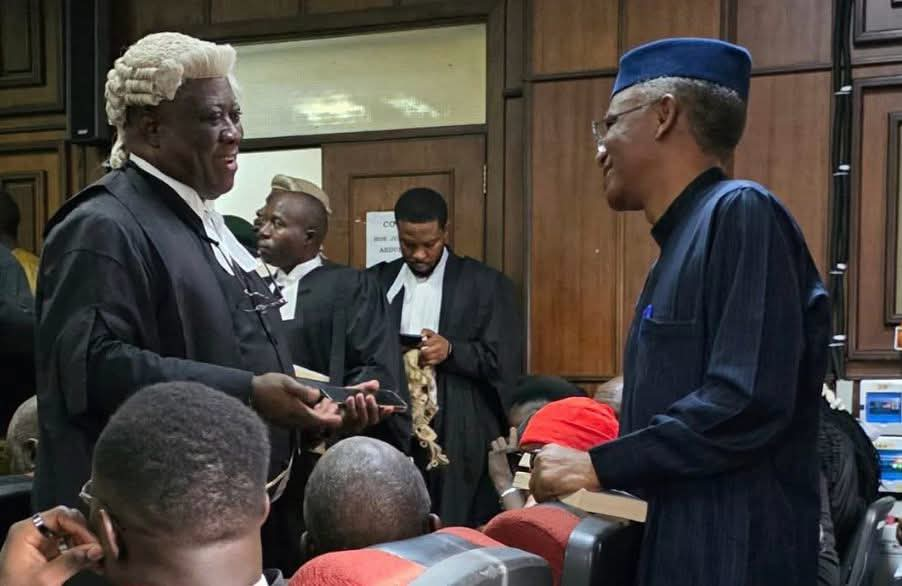
El-Rufai made the startling admission on Wednesday while opening his defence before the Federal High Court in Abuja in his ongoing trial by the Department of State Services (DSS) over alleged interception of Ribadu’s telephone conversations and other offences.
The former governor, who is currently in detention, had during an interview on Arise Television on February 13 claimed that Ribadu ordered his attempted arrest, alleging that he knew about the directive because opposition figures were monitoring conversations of government officials.
When asked how he obtained the information, El-Rufai had boldly declared: “He made the call because we listen to their calls.”
However, confronted with the recorded interview in court yesterday, El-Rufai admitted that his claim was not factual but a deliberate political statement designed to make those in power uncomfortable.
“What I wanted to say was that the government was monitoring opposition figures and that we knew what they were doing.
“I used the word ‘tap’ as political rhetoric to make them uncomfortable. It was rhetorical, not literal. It was linguistic flourish, just to make the government uncomfortable,” he told the court.
His lawyer, Paul Erokoro, had reminded him that the interviewer warned during the programme that intercepting telephone conversations without authorisation was illegal.
Responding, El-Rufai insisted that he was accusing the government of unlawfully monitoring opposition figures, not claiming that opposition politicians were involved in illegal surveillance.
“I was referring to the government violating the law and not someone else doing it,” he said.
He further explained that the word ‘we’ referred to himself and other prominent opposition figures, insisting that none of them had tapped Ribadu’s telephone.
According to him, information about an alleged plot to abduct and detain him came from a mutual friend whose identity he refused to disclose, citing the need to protect his source.
El-Rufai said the friend later visited him and disclosed that he had not actually intercepted Ribadu’s telephone conversations.
He claimed he told the friend that he already knew, explaining that his television statement was merely intended to unsettle the government.
The former governor denied having any involvement in telephone interception, insisting that he lacked both the technical expertise and equipment required for such an operation.
On his relationship with Ribadu, El-Rufai said he had known the NSA since 2003 when, as Director-General of the Bureau of Public Enterprises (BPE), he assisted in establishing the Economic and Financial Crimes Commission (EFCC) by providing office accommodation and funds.
He, however, said their relationship deteriorated after Ribadu contested the 2011 presidential election, explaining that he supported Muhammadu Buhari, whom he considered a better candidate.
El-Rufai alleged that Ribadu’s present hostility towards him was connected to his opposition to President Bola Tinubu’s re-election ambition.
During cross-examination by prosecuting counsel, Oluwole Aladedoye (SAN), the former governor, who disclosed that he obtained a law degree from the University of London, refused to identify the opposition figures he had referred to as ‘we’ during the television interview.
He also declined to reveal the identity of the individual who allegedly informed him about a meeting involving Ribadu, Kaduna State Governor Uba Sani and the Chairman of the Independent Corrupt Practices and Other Related Offences Commission (ICPC), where they allegedly agreed to ensure his arrest.
El-Rufai said he learnt of the alleged plot before returning from Cairo on February 12.
He maintained that he resisted attempts by DSS operatives to arrest him at the airport because they failed to present a valid arrest warrant.
The former governor insisted that every other statement he made during the Arise Television interview was factual, apart from his claim about tapping Ribadu’s telephone.
He maintained that he never stole public funds and knew nothing about the disappearance of activist Abubakar Idris, popularly known as Dadiyata, during his tenure as Kaduna governor.
He, however, admitted that all the fundamental rights enforcement suits he filed over the alleged search of his residence with a defective warrant had been dismissed by the FCT High Court and the Federal High Court.
At the end of the cross-examination, Aladedoye told the court that Erokoro had approached him before proceedings to seek assistance in securing the appearance of Ribadu and the ICPC chairman as defence witnesses.
He said he informed the defence lawyer that the matter was beyond his control.
Erokoro subsequently told the court that he would file the necessary applications to compel their appearance.
Justice Joyce Abdulmalik adjourned the case until February 15 and 16 for El-Rufai to continue his defence.
Don’t Miss Out! Join our WhatsApp Channel for instant news updates. Click here to join