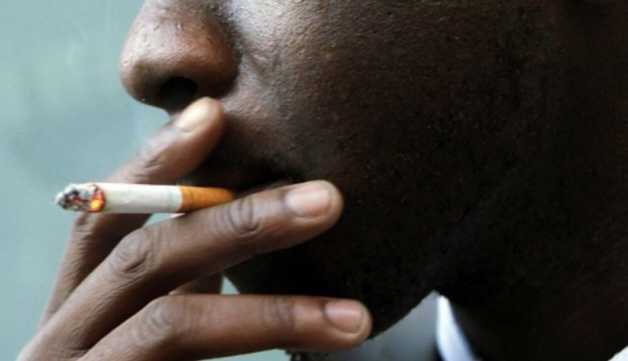
Nigeria’s tobacco-control community has raised the alarm over a controversial bill seeking to amend the National Tobacco Control Act (NTCA) 2015, describing the proposed legislation as a dangerous assault on public health and a major setback in the fight against tobacco and nicotine addiction.
The coalition, comprising the Nigeria Tobacco Control Alliance (NTCA), Corporate Accountability and Public Participation in Africa (CAPPA), Gatefield Impact, Youth Coalition Against Cancer, Nigerian Cancer Society, Call Off Cancer Initiative, Association of Resident Doctors, Abuja, A New Thing International Foundation, Oncology Nursing Society of Nigeria, Development Initiative for Society Health, Centre for Youth Inclusion and Development, and Civil Society Legislative Advocacy Centre, demanded the immediate recall of the bill.
In a joint statement issued on Thursday, the organisations warned that the legislation must not be allowed to proceed regardless of its current administrative stage after passage through the National Assembly.
They also urged President Bola Ahmed Tinubu to withhold assent if the bill eventually reaches his desk.
The coalition accused the proposed National Tobacco Control Act (Amendment) Bill, 2025 of doing the opposite of what its title suggests, arguing that rather than strengthening tobacco regulation, it would dismantle important safeguards contained in the 2015 law and create a more commercially friendly environment for tobacco and nicotine companies.
According to the groups, the proposed law would effectively give newer nicotine products freedoms that are not available to conventional cigarettes.
‘TOBACCO BILL WILL EXPOSE CHILDREN TO VAPES’
One of the coalition’s biggest concerns is the proposed relaxation of restrictions on tobacco advertising, promotion and sponsorship.
The groups particularly kicked against provisions that could reopen advertising opportunities through so-called adult publications, online platforms, points of sale and events classified as being for adults.
They described the proposed definition of an “adult publication” as dangerously weak, noting that a publication could qualify even where only 50 per cent or more of its readership is above 18.
This, they warned, means that up to half of the readership could still be 18 or younger, while advertisements for vapes, heated tobacco products and nicotine pouches could legally appear in such publications.
The coalition said the provision was completely out of touch with Nigeria’s youthful population.
Citing UNICEF data, the groups noted that more than 60 per cent of Nigerians are below 30, over 70 per cent are under 35 and 43 per cent are aged 15 or younger.
They also cited a Nigerian Communications Commission study which found that 93 per cent of surveyed children aged 11 to 16 and 45 per cent of those aged four to 10 accessed the internet using their own phones.
The coalition warned that the proposed advertising regime could therefore create a legal gateway through which tobacco and nicotine marketing would reach children and teenagers through newspapers, magazines, blogs and social media.

VAPES AT YOUR DOORSTEP?
The groups also sounded the alarm over provisions they said would open the door to online sales and home delivery of non-combustible tobacco and nicotine products.
While the 2015 law prohibits tobacco sales through the internet, mail and other remote channels, the coalition said the proposed amendment would permit online purchases, courier deliveries and other forms of remote sales of non-combustible products.
The bill would also allow the products to be displayed behind retail counters and permit vaping-product sampling inside enclosed points of sale.
The coalition argued that the provisions would effectively create a complete commercial chain — advertise online, display and sample in shops, sell online and deliver directly to consumers’ homes.
It rejected the argument that mandatory age-verification systems would adequately protect children.
According to the groups, digital age checks can easily be bypassed through fake declarations, borrowed identity documents, third-party purchases or simply having another person receive a delivery.
They warned that Nigeria currently lacks the enforcement capacity to monitor every social-media advert, online transaction, retail display and courier delivery.
‘HEATED TOBACCO IS STILL TOBACCO!’
The coalition also took aim at what it described as an “absurd” attempt by the bill to create a legal distinction between tobacco products and non-combustible products.
According to the groups, the proposed legislation defines non-combustible products to include heated tobacco products but then excludes all non-combustible products from the definition of tobacco products.
They argued that the effect would be that a product containing actual tobacco could cease to legally qualify as a tobacco product simply because it is heated instead of burned.
The organisations said this contradicted the World Health Organization Framework Convention on Tobacco Control, which recognises heated tobacco products as tobacco products requiring tobacco-control measures.
They warned that Nigeria could become a dangerous precedent in global tobacco regulation if the provision becomes law.
‘CIGARS IN CHEAPER FIVE-PACKS’
The coalition also attacked proposed changes to packaging requirements.
It noted that the 2015 Act requires smoked tobacco products to be sold in intact packages containing at least 20 sticks.
However, the groups said the amendment would retain the 20-stick requirement for cigarettes while allowing cigars to be sold in packs of just five.
They warned that smaller packs could make cigars cheaper and more accessible to consumers.
The proposed bill also restricts nicotine-pouch warnings to text covering no more than 10 per cent of the front of the package, while vaping and tobacco-heating devices themselves would not be required to carry health warnings, according to the coalition.
The groups further alleged that important penalty provisions contained in the existing law had been deleted, potentially creating uncertainty over sanctions for violations.
‘TOBACCO FIRMS COULD HIDE PRODUCT SECRETS’
Another major flashpoint is the bill’s proposed treatment of confidential product information.
The coalition alleged that the proposed legislation would give tobacco and nicotine companies the statutory right to classify certain product information as “trade secrets”.
It argued that the provision could prevent independent researchers, public health experts and civil society organisations from examining potentially dangerous chemicals and other hazards associated with the products.
The groups said this would represent a major departure from the existing law’s commitment to transparency and could also conflict with the principles of the Freedom of Information Act.
They further criticised a provision that would give the Minister of Health broad powers to exempt non-combustible products from certain statutory requirements on undefined “public interest” grounds.
According to the coalition, such sweeping discretion could create opportunities for corporate lobbying and regulatory capture.
‘WHO CLEARED THIS BILL?’
The organisations questioned how a bill they said was presented as a tobacco-control measure could simultaneously weaken health warnings, reduce restrictions, remove or dilute penalties and reopen advertising and distribution channels.
They demanded the immediate public release of every version of the bill, committee reports, public hearing records, stakeholder memoranda, voting records and related correspondence.
The groups also questioned whether the expanded version of the bill, including its new Third Schedule, was subjected to adequate public consultation.
They argued that a public hearing conducted on an earlier version could not be regarded as sufficient scrutiny of a substantially altered bill.
The coalition called on the Federal Ministry of Health and Social Welfare to publicly state its position.
It said that if the ministry was bypassed during the legislative process, it should demand an immediate recall of the bill.
But if the ministry approved the legislation, the groups said it must explain how the controversial provisions are compatible with Nigeria’s public-health obligations and international treaty commitments.
Similar demands were directed at the Attorney-General of the Federation, national regulatory agencies and the National Tobacco Control Committee.
TINUBU GETS WARNING
The coalition also sent a direct message to President Tinubu.
It urged the President to reject the bill outright if it reaches the Presidency, warning that signing it would undermine Nigeria’s tobacco-control regime.
The groups declared that allowing the tobacco and nicotine industry to gain new advertising, promotional and distribution opportunities could not be reconciled with the administration’s Renewed Hope agenda.
The coalition insisted that tobacco and nicotine products should instead be regulated under a single, strong and product-neutral framework.
It demanded continued bans on advertising, promotion, sponsorship, retail displays, promotional sampling and remote sales, alongside strong health warnings, independent product assessments and clear, enforceable penalties.
The organisations also called on health professionals, civil society groups, the media, development partners and Nigerians to join the campaign against the proposed amendment.
They concluded with a blunt warning:
“This bill is a grave error. It must be recalled, rejected and stopped.”
Don’t Miss Out! Join our WhatsApp Channel for instant news updates. Click here to join
ALSO READ:
LAGOS HEALTH CRISIS! Sanwo-Olu Cries Out Over 40,000-Doctor, 40,000-Nurse Shortage
1.5M LAGOSIANS NOW INSURED! Sanwo-Olu Reveals Health Insurance Boom