
Amid fresh controversy over alleged illegal kidney harvesting and human trafficking in Nigeria, a consultant surgeon has declared that there is no fixed price for a human kidney.
Consultant Plastic Surgeon, Dr Torngee Malu, said kidney donation should not be treated like an ordinary commercial transaction, insisting that the focus should be on saving lives rather than putting a price tag on human organs.
Malu made the clarification on Tuesday while appearing on Channels Television’s Morning Brief.
Asked how much a person should receive for donating a kidney through legal channels, the surgeon said the law could allow reimbursement or compensation but does not prescribe a fixed monetary value for a kidney.
According to him, determining what constitutes adequate compensation is difficult, particularly where a relative voluntarily donates a kidney to a loved one.
He said kidney failure affects both rich and poor Nigerians, making it inappropriate to reduce organ donation to a question of how much money a donor should receive.
Malu stressed that the crucial questions should be who needs the kidney, who is willing to donate and whether the donation is being carried out legally and safely.
‘Kidney harvesting is highly technical’
The surgeon also dismissed the impression that anyone with basic surgical knowledge could simply remove a kidney, explaining that the procedure requires highly specialised expertise and proper medical facilities.
He said even a general surgeon could not simply undertake kidney harvesting without the necessary specialist training.
Malu described the kidney as one of the body’s deeply situated organs, requiring a specialist team to remove it safely.
He further explained that legitimate transplantation involves extensive medical tests, donor-recipient matching and separate specialist teams for harvesting and transplantation.
According to him, the kidney must also be transferred quickly after removal because prolonged storage can render it unusable.
Kidney trafficking or legitimate donation?
Malu urged Nigerians to distinguish between lawful kidney donation and organ trafficking, arguing that misinformation could blur the line between the two.

He maintained that the allegations currently generating controversy should be properly investigated before conclusions are drawn.
His comments come against the backdrop of a police investigation into an alleged organ-trafficking network in Nasarawa State.
The police said four suspects were arrested on August 19 during a sting operation at Auta Balifi in the Karu Local Government Area of the state.
Those arrested were Emmanuel Ode, 23; Dr Benjamin Oyime, 48, a nephrologist and consultant to Wellington Hospital, Life Camp, Abuja; Dr Daniel Otukpa, 53, also a nephrologist and Acting Director of Clinical Services at the hospital; and David Idoko, 25.
The Force Public Relations Officer, CSP Ani Iniedu, alleged that Ode confessed to recruiting victims under false pretences.
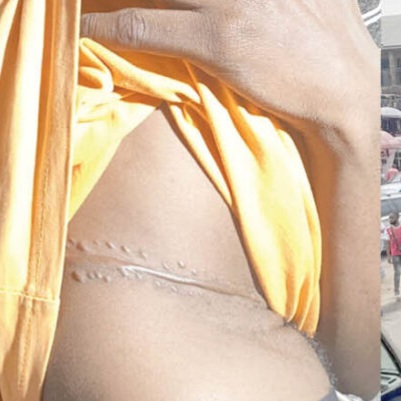
Police further alleged that one victim was lured to Wellington Hospital in April 2026, where his kidney was allegedly harvested after he was paid $1,250.
Another alleged victim was said to have undergone a similar procedure in 2022.
The Force claimed that the suspects and their alleged accomplices targeted vulnerable young people, exploiting their financial difficulties to obtain consent for illegal organ harvesting.
The police said investigations were still ongoing, with efforts underway to identify and arrest other persons allegedly connected to the suspected network.
The allegations have intensified public concern over organ trafficking in Nigeria, particularly the alleged exploitation of financially vulnerable people for body organs.