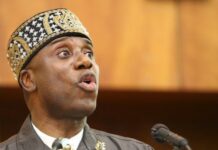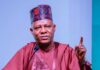

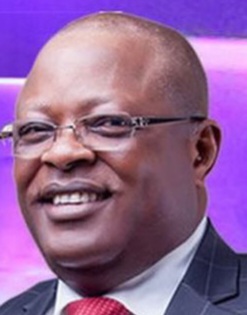
Minister of Works, David Umahi has been accused of threat to life.
Umahi’s accuser is Segun Olawoye, Founder and Publisher of ObjecTV Media.
Olawoye popularly called O’Law accused the Minister of sending him threat message through WhatsApp.
He made this accusation at a press conference on Thursday tracing the genesis of his problem with the former Ebonyi governor to a discreet video recording of a controversial meeting on the Lagos-Calabar coastal highway project.
O’Law claimed the message was sent on Sunday, March 8, 2026, from a number later confirmed to belong to the minister.
“The unbridled use of threats by those in power to suppress free press has resurfaced again,” O’Law stated.
The journalist explained that the WhatsApp message initially contained a TikTok video about a legal case involving the sharing of a private conversation.
He claimed the minister followed up with a warning regarding his discreet recording of their prior meeting.
The message allegedly read: “U came to my office and secretly videoed our conversations and shared. U have no right to do that with all the respect I gave to u… I still give you opportunities to do so on my terms but if you don’t, then.”O’Law reportedly replied politely, offering to discuss the matter directly with Umahi, but the minister allegedly responded curtly, refusing further dialogue.
The journalist explained that the dispute traces back to August 2025, when protests erupted over the controversial realignment of the Lagos section of the Lagos-Calabar coastal highway.
The project, overseen by President Tinubu’s administration, sparked tensions over alleged displacement of communities and compensation disputes.WinHomes Estate, led by CEO Stella Ukengu, was among those affected.
Protesters demanded fair compensation for residents and investors.“Based on my experience as a journalist who had covered protests that degenerated into violence in the past, where journalists’ equipment was seized or destroyed irreparably, I immediately activated my discreet recording gadget to preserve evidence in case the situation deteriorated,” he said.
Some of the protesters then got invited to meet Umahi.O’Law, acting as a journalist observer, recorded the interactions during a meeting between the minister and selected representatives.
During the meeting, Umahi reportedly began by boasting, “I’m a dangerous man,” and stated that the estate’s land would not be restored.He allegedly also hinted at placing a toll gate on the remaining land.
Attempts to negotiate a resolution, including involving diaspora investors, appeared initially promising.However, Umahi later reversed his stance publicly, denying prior agreements and allegedly threatening legal action against the estate owner.

O’Law insisted he had not published any part of the recording but noted that portions of the video were later shared by the estate owner to support her claims.The journalist cited additional intelligence suggesting potential surveillance of his devices, prompting him to change his SIM card and phone.
He also referenced past controversies involving Umahi, including missing personnel during his tenure as governor of Ebonyi State.
O’Law shared concerns over the alleged disappearance of a worker named Obanla, who was reportedly detained on the minister’s orders but later released.
Following the press briefing, O’Law pledged to release more parts of the recorded meeting to ensure public accountability.
He urged Nigerians and the international community to monitor his safety and called on them to act if he stops posting for more than 48 hours without explanation.He emphasized that he is currently safe and healthy, with no personal or professional disputes that could justify harm against him.
O’Law concluded: “If anything happens to me, Engr. David Nweze Umahi, the Minister of Works, who has declared himself ‘a dangerous man,’ should be held responsible.”
Copies of O’Law’s statement have been sent to multiple institutions, including the U.S. Embassy, British High Commission, National Human Rights Commission, and media rights organizations.