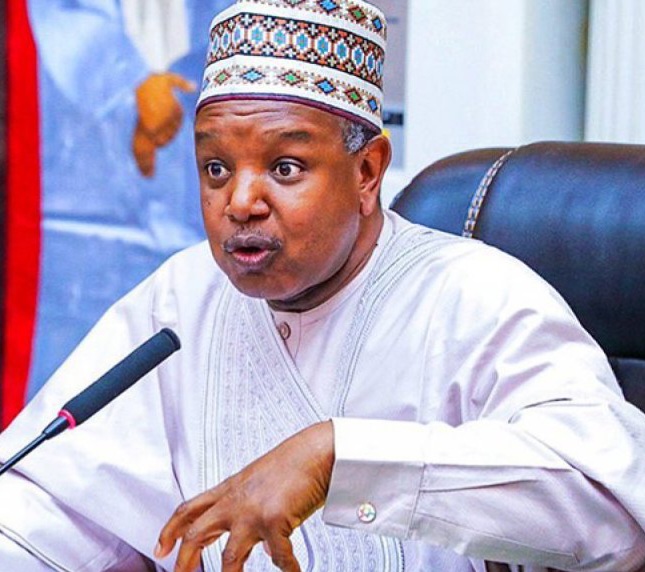
Nigeria’s huge population is putting pressure on the country’s finances, with the Minister of Budget and Economic Planning, Senator Abubakar Bagudu, admitting that Nigeria has the smallest national budget among the world’s 10 most populous countries.
Bagudu said the situation had made it necessary for Nigerians to have a serious conversation about how the government could raise more money to fund development.
The minister spoke on Monday in Abuja at a Senate Press Corps Capacity-Building Workshop on protecting the national budget from unlawful insertions.
According to him, the key question should no longer be only about how the budget is shared but also about whether the size of the budget itself is enough for Nigeria’s population and development needs.
“I would like to say that out of the top 10 most populous countries in the world, we have the smallest national budget,” Bagudu said.
He asked whether Nigeria should continue operating with its current level of public spending or find ways to mobilise more resources.
The former Kebbi governor said the push for increased revenue was particularly important as the Federal Government pursues its long-term economic ambition, including the plan to build a $1tn economy.
He linked the challenge to President Bola Tinubu’s Renewed Hope Agenda and Agenda 2050, saying the country’s economic ambitions would require difficult decisions on revenue, spending and borrowing.
Bagudu also warned journalists against rushing to label unfamiliar budget provisions as illegal insertions without investigating their origins, purposes and beneficiaries.
He urged the media to examine how individual allocations entered the budget and the constitutional processes behind them before drawing conclusions.
“We are dealing with human processes and human errors. Therefore, vigilance is necessary, and the media and legislative oversight should remain vigilant,” he said.
The minister maintained that budget scrutiny remained crucial, but said accountability should be balanced with an understanding of the wider development challenges facing the country.
He also urged caution in reporting sensitive budget information where disclosure could affect national security or other strategic interests.
Bagudu said citizens’ confidence and understanding were also important as government and lawmakers take decisions on taxation, spending and borrowing.
He reminded journalists that the National Assembly has a constitutional role in the budget process and called for stronger public understanding of how the Executive and legislature shape the nation’s spending plan.
“While insisting on holding public officials to account, how careful are we to ensure that we do not lose sight of the bigger picture?” he asked.
Meanwhile, Nigeria’s rising budget figures underline the scale of government spending.
The combined budgets of the 36 states and the Federal Capital Territory rose from N27.22tn in 2025 to N40.14tn in 2026, a 47.5 per cent increase.
However, the share earmarked for capital projects dropped from 73.24 per cent to 64.34 per cent, even though the actual capital allocation rose from N19.94tn to N25.83tn.
At the Federal level, the 2026 budget stands at N68.32tn.
The figures highlight the dilemma facing policymakers: Nigeria’s spending has grown substantially, but Bagudu says the country still needs a much larger revenue base if it is to match its population and achieve its long-term development ambitions.
Don’t Miss Out! Join our WhatsApp Channel for instant news updates. Click here to join