
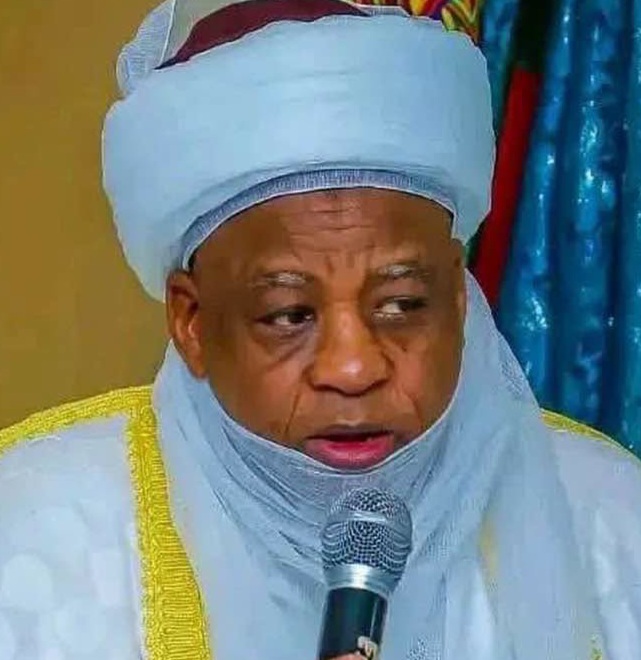
The Sultan of Sokoto, Alhaji Sa’ad Abubakar III, has warned politicians and public officials against using allegedly stolen public funds to sponsor pilgrims to Mecca and Jerusalem.
The Sultan said corrupt money could not become acceptable simply because it was spent on religious activities.
He spoke on Wednesday at the opening of a stakeholders’ meeting organised by the Nigeria Inter-Religious Council (NIREC) in Abuja.
The Sultan challenged religious leaders to take a more active role in the fight against corruption, urging them to work closely with anti-graft agencies.
According to him, religious devotion should not be used as a cover for corruption.
He said, “You cannot steal money and send people to Jerusalem or Mecca with corrupt funds and think God will accept your deeds. God is not corrupt, so you cannot use corrupt money for Hajj or anything else.”
Abubakar also called on the Economic and Financial Crimes Commission to pursue corruption cases without regard to the political, religious or social status of suspects.
He said nobody facing corruption allegations should be shielded because of his or her religious position or personal connections.
“Whoever is involved—our brothers, sisters, fathers, or friends should face the law,” he said.
The Sultan added that the EFCC should be allowed to perform its duties without political interference.
He also warned religious leaders against using their pulpits and religious platforms to inflame political tensions, particularly during election periods.
Rather than attacking political leaders, he urged clerics to pray for those in government and promote peace and unity.
On religious tolerance, the Sultan said Nigerians should move beyond merely “tolerating” one another and strive for genuine understanding between Christians and Muslims.
“I don’t want you to just tolerate me,” he said, stressing that genuine understanding would make it easier for Nigerians to work together despite their religious differences.
Abubakar praised NIREC for providing a platform for sustained Christian-Muslim dialogue, saying such engagement remained important to national peace and development.

He also commended the outgoing Executive Secretary of NIREC, Prof. Cornelius Omonokhua, for his eight years of service to the council.
Meanwhile, Prof. Adedibu Ojerinde, Chairman of the Interfaith Anti-Corruption Advisory Committee, outlined plans to deepen the use of religious platforms in the fight against corruption.
Ojerinde said the Interfaith Anti-Corruption Manuals Project was designed to mobilise churches and mosques in promoting ethical conduct and discouraging corruption.
He said the manuals, originally inaugurated in 2014 and re-inaugurated in January 2024 by President Bola Tinubu, had been expanded to address emerging challenges including cybercrime, money laundering and vulnerabilities among young people.
Ojerinde said the handover of the manuals to NIREC marked the beginning of their practical implementation, with religious leaders expected to incorporate anti-corruption messages into Friday sermons and Sunday services.
The meeting was attended by Christian and Muslim leaders, government officials, security representatives and journalists. (NAN)