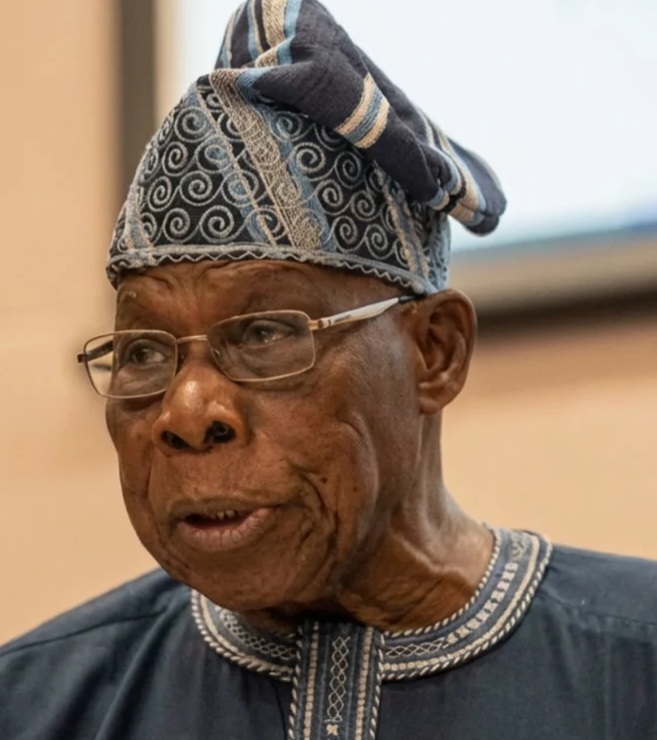
Former President Olusegun Obasanjo has called on African countries to rethink the democratic system they practise, arguing that the model largely inherited from the West does not adequately reflect the continent’s history, culture and political realities.
Obasanjo made the call yesterday while chairing the 2026 Goodluck Jonathan Foundation Democracy Dialogue in Bauchi, where political leaders, constitutional experts and civil society actors examined the challenges confronting democracy in Nigeria and across Africa.
The former president warned that blindly copying Western democratic structures had contributed to a winner-takes-all political culture in which political opponents are treated as enemies rather than legitimate participants in governance.
He said Africa needed to develop a democratic system that reflected its own peculiarities instead of simply reproducing foreign political arrangements.
“The democracy we practice has no African context, no African content,” Obasanjo declared.
According to him, the failure to accommodate Africa’s political realities has made opposition politics particularly bitter, with those outside government often treated as threats that must be destroyed.
“When you talk about loyal opposition in an African setting, opposition means enemy. Then do you have a loyal enemy? So, what do you do with your enemy? You crush him and destroy him, and that is what we have,” he said.
Obasanjo also criticised the first-past-the-post electoral system, saying it gives a candidate who wins by even a single vote the power to take virtually everything, leaving the interests of those who voted against him with little consideration.
“If you beat me by one vote, then you take it all and whatever I have does not matter,” he said.
The former president argued that such a system was particularly problematic in a diverse country like Nigeria, where political competition can easily become a struggle for total control of government.
He therefore advocated a broader rethink of democratic governance in Africa, insisting that the continent’s political system must take its history, culture, diversity and values into account.
Obasanjo also warned Nigerians against allowing the country’s diversity to become a source of division, stressing that the different ethnic, religious and cultural groups remain central to the nation’s identity.
“Nigeria is what it is because of our diversity. Remove diversity out of Nigeria and you will probably have the Republic of Oduduwa or the Republic of Danfodio. That will not be Nigeria. That diversity must be nourished and taken care of,” he said.
He further condemned the growing influence of money and inducements in Nigerian politics, while expressing concern over the limited representation of women in political leadership since the return to democratic rule in 1999.
Obasanjo’s intervention effectively shifted the debate from merely fixing Nigeria’s elections to questioning whether the democratic model itself is suitable for African societies.
He maintained that Africa should not remain trapped in a system designed elsewhere, particularly when that system continues to fuel political exclusion, fierce competition for power and hostility between government and opposition.
His position came amid wider concerns raised at the dialogue over electoral credibility, weakening democratic institutions, political exclusion and declining public confidence in the democratic process.
The event was attended by former President Goodluck Jonathan, former Vice-President Namadi Sambo, Bauchi State Governor Bala Mohammed, former governor and presidential candidate Peter Obi, constitutional experts and civil society representatives from across Africa.
Don’t Miss Out! Join our WhatsApp Channel for instant news updates. Click here to join
ALSO READ: