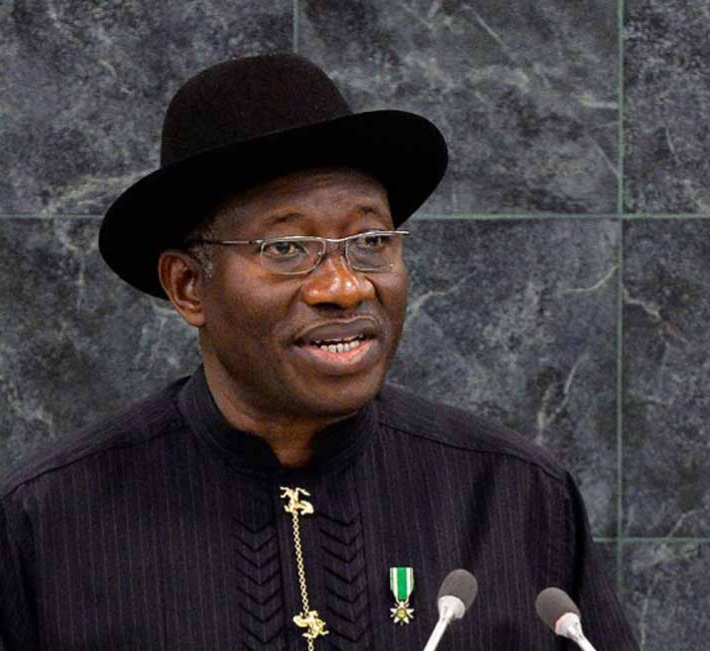
Former President Goodluck Jonathan has raised the alarm over Nigeria’s growing dependence on the judiciary to settle electoral disputes, warning that the country’s democracy could be weakened if political contests continue to end up in court.
Jonathan spoke yesterday at the 2026 Goodluck Jonathan Foundation Democracy Dialogue in Bauchi, where he joined former President Olusegun Obasanjo and former governor and presidential candidate Peter Obi in examining the state of democracy in Nigeria and Africa.
While Obasanjo questioned whether the Western model of liberal democracy was suitable for Africa and Obi warned about the weakening of key democratic institutions, Jonathan focused on what he described as Nigeria’s unusual culture of post-election litigation.
The former president said election disputes had become so widespread that politicians now appear to regard litigation as part of the electoral process.
He described Nigeria’s situation as “extremely different” from that of most other African countries, saying the scale of election litigation in the country was “uncommon” and “anomalous.”
Jonathan recalled an encounter during his time as vice-president when a former deputy president of South Africa expressed surprise that Nigerian politicians routinely headed to court after losing elections.
According to him, while an independent judiciary remains essential to democracy, excessive judicial involvement in political disputes could undermine the political process and weaken public confidence in democratic institutions.
He raised particular concerns about courts becoming involved in internal affairs of political parties, including disputes over party primaries and the emergence of candidates.
“Courts now determine who becomes a party’s candidate and, in some cases, which political party should be recognised,” Jonathan said.
He argued that political parties should primarily be responsible for choosing their candidates, with the courts stepping in only where there are clear violations of the law.
Jonathan further suggested that in some highly controversial electoral disputes, allowing voters to return to the ballot box could be a better option than allowing prolonged legal battles to determine political outcomes.
“In some highly controversial cases, it is better for the election to go back to the people,” he said.
The former president’s intervention came against the backdrop of wider concerns about the credibility of Nigeria’s elections, the independence of democratic institutions and the increasing role of the judiciary in determining political outcomes.
Obasanjo, who chaired the dialogue, argued that Nigeria had adopted a democratic model that did not adequately reflect the country’s historical, cultural and political realities.
He said the system had encouraged a winner-takes-all mentality in which political opponents were often treated as enemies rather than legitimate participants in governance.
Obasanjo also criticised the first-past-the-post electoral system, arguing that winning an election by even a single vote could give a candidate almost total control of political power.
He called for a democratic model that takes Africa’s history, culture and diversity into account, while warning against allowing ethnic, religious and cultural differences to become sources of division.
Obasanjo also condemned the growing influence of money and inducements in politics and lamented the poor representation of women in political leadership.
On his part, Obi warned that the weakening of Nigeria’s electoral and judicial institutions could have serious consequences for future generations.
Recalling his own legal challenge to the outcome of the presidential election, Obi said he had spent three years in court and received favourable judgments from judges he said he had never met.
He, however, expressed concern that institutions created to protect democracy were increasingly being weakened by political interests.
The former Anambra State governor questioned alleged electoral malpractice, the involvement of some academics in electoral controversies, changes to electoral laws and the conduct of some religious leaders who openly support politicians accused of wrongdoing.
“Where is our nation going?” Obi asked.
He warned that the continued abuse and weakening of democratic institutions could eventually take its toll on future generations.
“We need to reverse this, because the abuse we are allowing today will take its revenge on our children,” he said.
Jonathan stressed that democracy goes beyond elections, describing it as an ecosystem involving political parties, electoral bodies, security agencies, the judiciary, civil society, the media, observers and voters.
The former president and other speakers therefore called for urgent reforms aimed at strengthening democratic institutions, restoring confidence in elections and reducing the reliance on courts to determine political outcomes.
The dialogue was attended by former Vice-President Namadi Sambo, Bauchi State Governor Bala Mohammed, constitutional experts and civil society representatives from across Africa.
Don’t Miss Out! Join our WhatsApp Channel for instant news updates. Click here to join
ALSO READ:
2027: Goodluck Jonathan Camp Stunned as INEC Lists Onor As PDP Presidential Candidate
PDP WAR DEEPENS AS FACTION HANDS IN JONATHAN’S FORMS TO INEC