

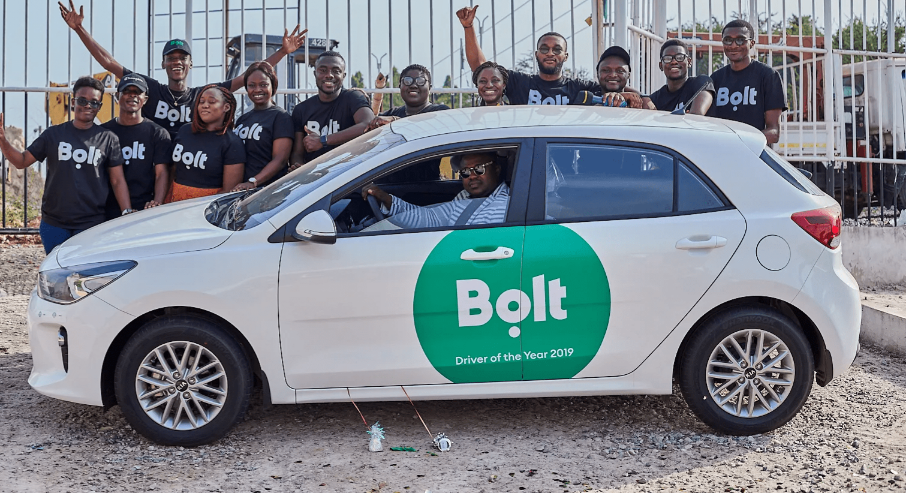
Barely hours after Uber pulled the plug on its Nigerian operations, rival ride-hailing giant Bolt has moved to reassure Nigerians that it is not going anywhere.
Bolt on Wednesday declared its continued commitment to Nigeria, promising to strengthen its operations, support its drivers and riders, and create more opportunities in the country’s increasingly competitive mobility market.
Teddy Appa-Dankyi, Senior General Manager, Bolt West Africa, said Nigeria remained a key market for the company despite the uncertainty triggered by Uber’s departure.
He said Bolt had built a strong network of riders and driver-partners in the country and would continue working to improve its services and expand opportunities.
The reassurance came on the same day Uber officially ended its operations in Nigeria and Uganda, bringing its 12-year presence in Nigeria to an abrupt close.
Uber, which launched in Lagos in 2014 before expanding to other Nigerian cities, said the decision followed a review of its business priorities and investment strategy across Africa.
The company, however, stressed that its withdrawal was limited to Nigeria and Uganda and was not a retreat from Africa altogether. It currently retains operations in Egypt, Ghana, Kenya and South Africa.
Uber’s exit comes amid mounting pressure on the ride-hailing industry, with rising fuel costs, inflation, currency instability and other operating challenges increasing the cost of doing business in Nigeria.
Interestingly, Uber also clarified that its Nigerian exit had nothing to do with the recent Federal Airports Authority of Nigeria (FAAN) directive concerning e-hailing operations at airports.
Bolt acknowledged that the sudden change in the industry could leave stakeholders wondering what comes next, but insisted that it was taking the long-term view.
The company said it would continue working with drivers, riders, regulators and other stakeholders to build what it described as a reliable and sustainable transportation ecosystem.
For Uber users, the shutdown means the platform is no longer available for new rides in Nigeria. The company said its customer support would remain available for 21 days after the shutdown to handle outstanding enquiries and transition-related matters.
Uber’s departure also follows its exit from Côte d’Ivoire in 2025 and Tanzania earlier in 2026, making the Nigerian and Ugandan withdrawals part of a wider reshaping of its African footprint.
With Uber now out of the race, attention is turning to Bolt and other players as they battle for riders, drivers and market share in Nigeria’s competitive e-hailing space.
For Bolt, the message is clear: Uber may have left, but Bolt is staying put.

Don’t Miss Out! Join our WhatsApp Channel for instant news updates. Click here to join