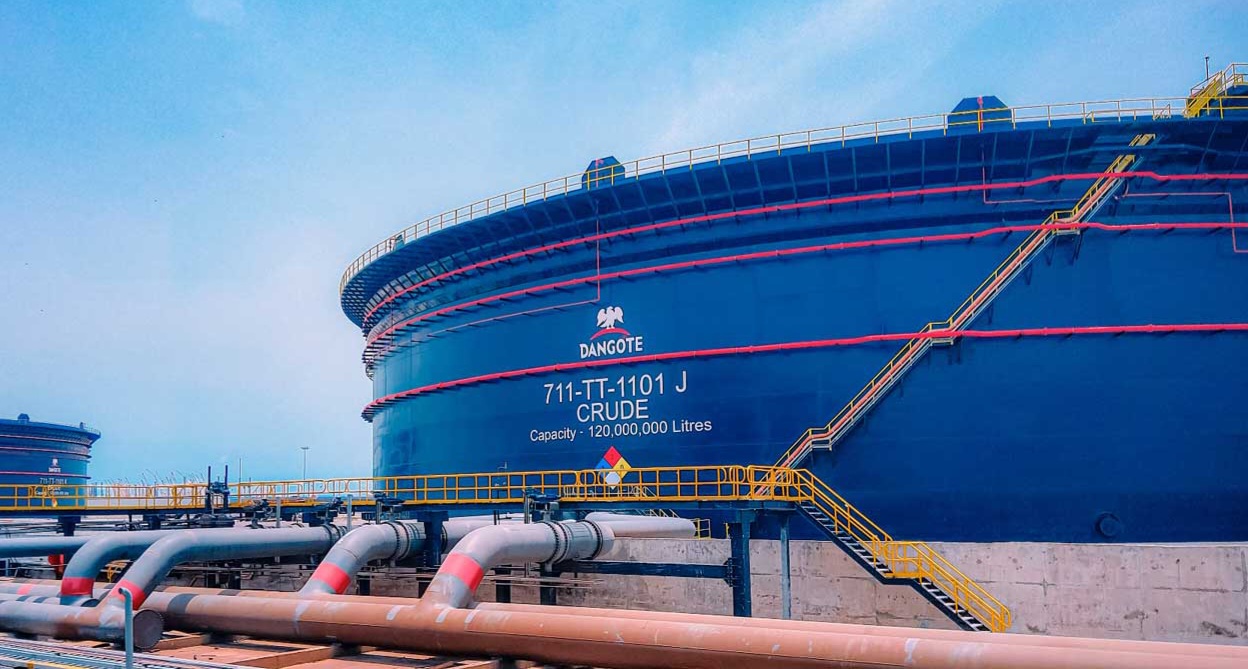
The Dangote Petroleum Refinery has broken its silence on the controversy over 15.5 million barrels of crude oil reportedly offered to it by local producers, insisting that the real story is far different from the impression created by the figures.
The refinery said it did not simply reject 15.5 million barrels of Nigerian crude as widely reported, arguing that the crucial questions were whether the crude was genuinely available and whether it was being offered at commercially viable prices.
The controversy followed data from the Nigerian Upstream Petroleum Regulatory Commission (NUPRC), which indicated that 15.5 million barrels of crude offered to the refinery under the Domestic Crude Supply Obligation (DCSO) framework in the second quarter of 2026 were not accepted.
But Dangote has now pushed back against the narrative, saying the reported volume did not tell the full story of the refinery’s struggle to secure affordable Nigerian crude.
Group Vice President, Oil & Gas and Fertiliser, Dangote Industries Limited, Devakumar Edwin, said the refinery was ready and willing to buy Nigerian crude, but could not be expected to purchase oil that was either unavailable in reality or offered at prices far above prevailing market benchmarks.
‘WE WANT NIGERIAN CRUDE’
Edwin said Dangote’s position was straightforward: the refinery wanted Nigerian crude in sufficient quantities and at competitive prices.
He explained that the refinery needed commercially viable crude supplies to sustain its operations and keep refined petroleum products affordable for Nigerians.
“Our position is straightforward. We are ready and willing to purchase Nigerian crude oil, provided it is available in sufficient volumes and at competitive market prices,” he said.
According to him, the issue was therefore not a blanket rejection of domestic crude but the commercial conditions attached to some of the offers.
The refinery said it had consistently raised concerns over inadequate access to domestic crude and had recently encountered situations where crude was offered at prices significantly above international market benchmarks.
DANGOTE BLAMES MIDDLEMEN
The refinery also revealed another major headache — the involvement of intermediaries in domestic crude transactions.
Edwin said a substantial portion of the crude allocated to Dangote under the DCSO arrangement had been sourced through International Oil Companies (IOCs) and third parties rather than directly from Nigerian upstream producers.
He said the extra layers of intermediaries often came with additional premiums and transaction costs.
That, according to him, could make Nigerian crude more expensive than alternative supplies available on the international market.
“When additional layers of intermediaries introduce premiums, the cost of crude acquisition increases significantly, affecting the overall economics of domestic refining,” Edwin said.
He warned that the impact would eventually be felt by consumers because higher crude acquisition costs could translate into higher prices for refined petroleum products.
‘OFFERED’ CRUDE NOT ALWAYS AVAILABLE
Dangote also disclosed that its experience under the DCSO framework had not always matched what appeared on paper.
The refinery said that, excluding cargoes supplied under NNPC term contracts, it had concluded negotiations for only a limited number of DCSO cargoes since the arrangement began.
In some instances, the company said, cargoes earmarked for domestic refining had already been committed to other buyers before negotiations with Dangote even began.
This, the refinery argued, exposed a major weakness in the current domestic crude supply system.
It said a crude cargo being listed or nominally offered did not necessarily mean that it was available to the refinery under workable commercial terms.
‘WE SUPPORT DCSO’
Dangote was also quick to distance itself from any suggestion that it was opposed to the Domestic Crude Supply Obligation.
The refinery said it strongly supported the objectives of the policy, particularly its goal of ensuring that Nigerian crude supports domestic refining.
Its complaint, it said, was about how the policy was being implemented.
Edwin also raised concerns about aspects of the Petroleum Industry Act (PIA) framework, saying counterparties could withdraw from negotiations without a structured review process or adequate safeguards.
According to him, such uncertainty could undermine the effectiveness of the domestic crude supply system.
‘NIGERIANS WILL PAY THE PRICE’
The refinery warned that the failure to secure adequate quantities of competitively priced Nigerian crude could have consequences beyond Dangote’s operations.
It said expensive domestic crude ultimately affects the economics of refining and could increase the cost of petroleum products.
Dangote maintained that reliable access to competitively priced crude was essential if Nigeria was to maximise its refining capacity, reduce dependence on imported petroleum products and conserve foreign exchange.
The company said a functional domestic crude supply system would also ensure that more value was retained within Nigeria.
For Dangote, therefore, the 15.5 million-barrel controversy is not about refusing Nigerian crude.
The refinery insists it is about whether the crude was actually available, whether it could be secured in sufficient volumes and whether the price made commercial sense.
And with the refinery insisting that it remains ready to buy Nigerian crude, the controversy over who rejected what — and why — appears far from over.
Don’t Miss Out! Join our WhatsApp Channel for instant news updates. Click here to join
ALSO READ:
DANGOTE GIVES AWAY ONE-THIRD OF HIS FORTUNE IN STUNNING CHARITY PLEDGE
Judge’s Absence Stalls Hearing in Dangote Refinery’s Suit Against FG Over Fuel Import Licences