

The Federal Government has called on governors of the 19 states with confirmed cases of diphtheria to reintroduce face mask-wearing at public gatherings.
It said the advice was necessary because the confirmed cases had soared to 8,406.
The cases were recorded in 114 Local Government Areas (LGAs) in 18 of 36 states and Abuja.
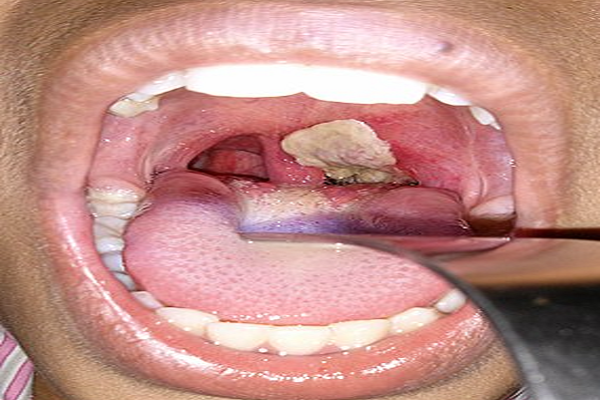
Diphtheria is a highly contagious vaccine-preventable disease caused by strains of bacteria called Corynebacterium. It causes difficulty in breathing, heart rhythm problems and death.
At a news conference yesterday, the Executive Director of the National Primary Health Care Development Agency (NPHCDA), Dr Faisal Shuaib, and NCDC Director-General, Dr. Ifedayo Adetifa, said out of the 8,406 confirmed cases, 6,202 (73.7 per cent) were of victims aged between one year and 14 years.
The news conference was also attended by World Health Organisation (WHO) Deputy Country Representative, Alexander Chimbaru and Country Director of the United States Centres for Disease Control and Prevention (USCDC), Mary Boyd.
Shuaib, who is also the co-chair of the National Emergency Task Force and Coordination for Diphtheria in Nigeria, called on “governors of the affected states to institute face-covering requirements, such as facemasks in public gatherings.”
He said: “Diphtheria is an airborne disease. Like COVID-19, we can reduce air contact with the bacteria by adopting non-pharmaceutical interventions, such as the use of facemasks, hand-washing and physical distancing from affected persons. However, this should be done in a way that does not stigmatise or discriminate against sick people.
“Accordingly, I would like to call on governors of the affected states to institute face-covering requirements, such as facemasks in public gatherings. By so doing, we can add another intervention to slow the progress of the outbreak.”
Shuaib added that the government believes that vaccination remained the most potent weapon against diphtheria.
He explained that Nigeria has two vaccines — Pentavalent which is administered to children aged six weeks to four years, and the Tetanus-diphtheria (Td) for children aged between four years and 14 years.
According to him, in recent months, the government has launched rapid and comprehensive vaccination campaigns across the affected states.
Shuaib said: “Kano, as the epicentre of this outbreak, has been at the forefront of our vaccination efforts. Working with the state governments, we implemented Rounds One and Two of the vaccination campaign in five high-burden local government areas (LGAs) in February and April 2023 respectively.”