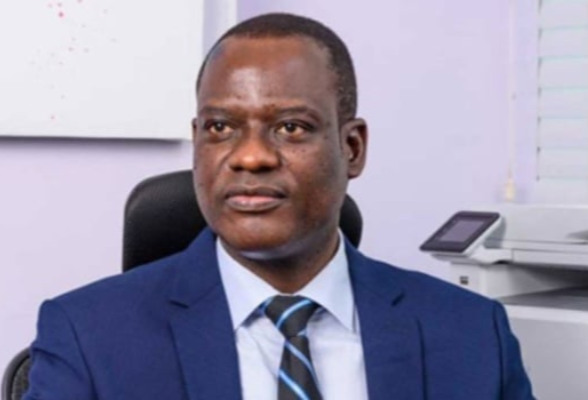
The Minister of Finance and Coordinating Minister of the Economy, Taiwo Oyedele, has come under scrutiny over his educational background after Bolaji Abdullahi, spokesperson of the African Democratic Congress (ADC), questioned whether he has the right academic training to manage Nigeria’s economy.
Abdullahi made the remarks on Monday during an interview on Channels Television’s Politics Today, while discussing the Federal Government’s 30-day petrol price reduction initiative.
The ADC spokesman argued that managing an economy required specialised expertise, insisting that accounting and economics involved different approaches to assessing economic challenges.
“I’m not saying he’s incompetent, but I think he doesn’t have the right education,” Abdullahi said.
He maintained that decisions on fuel subsidies and other economic interventions were not merely technical matters but were also shaped by ideological beliefs about the role of government in protecting citizens from economic hardship.
According to him, the way an accountant examines an economy differs from the approach of an economist, while development economists may also interpret economic problems differently from classical economists.
“We need people who are trained to do this job to do it,” he added.
Abdullahi, however, sought to distance his criticism from a personal attack on Oyedele, acknowledging the minister’s intelligence and professional accomplishments.
“No, I’m not going personal. Like I said, I have utmost respect for him. And I think he’s quite a smart guy. I’m not taking that away from him,” he said.
Oyedele holds a Higher National Diploma in Accountancy and Finance from Yaba College of Technology and a bachelor’s degree in Applied Accounting from Oxford Brookes University in the United Kingdom.
He also completed executive education programmes at the London School of Economics, Yale University, the Gordon Institute of Business Science and Harvard Kennedy School.
Before his appointment as Minister of State for Finance, Oyedele spent 22 years at PricewaterhouseCoopers (PwC), where he rose to become the firm’s first fiscal policy partner and Africa tax leader.
His professional experience includes tax policy and fiscal matters, areas central to the Federal Government’s revenue and economic reform agenda.
The controversy comes as the Tinubu administration faces continuing public pressure over petrol prices, inflation and the rising cost of living.
Last Thursday, Oyedele announced a 30-day petrol price reduction initiative at filling stations operated by the Nigerian National Petroleum Company Limited (NNPC).

He said the arrangement would allow the government to sell petrol at cost, stressing that it was not a return to the fuel subsidy regime.
The minister also said transporters would receive priority under the initiative, which the government presented as a temporary measure to ease transportation costs.
The announcement has reopened the debate over the extent to which the government should intervene in petrol pricing following the removal of fuel subsidy.
Former Vice-President Atiku Abubakar has also criticised the initiative, accusing President Bola Tinubu of adopting a proposal similar to his own plan for targeted support to reduce fuel costs while limiting the intervention to 30 days.
Atiku said the President had previously described him as ignorant of economic policy when he proposed targeted relief, adding that the administration had dismissed his proposal as unworkable.
The latest exchange has brought renewed attention to the economic ideas guiding the government’s policies and the qualifications of those responsible for implementing them.
Don’t Miss Out! Join our WhatsApp Channel for instant news updates. Click here to join