
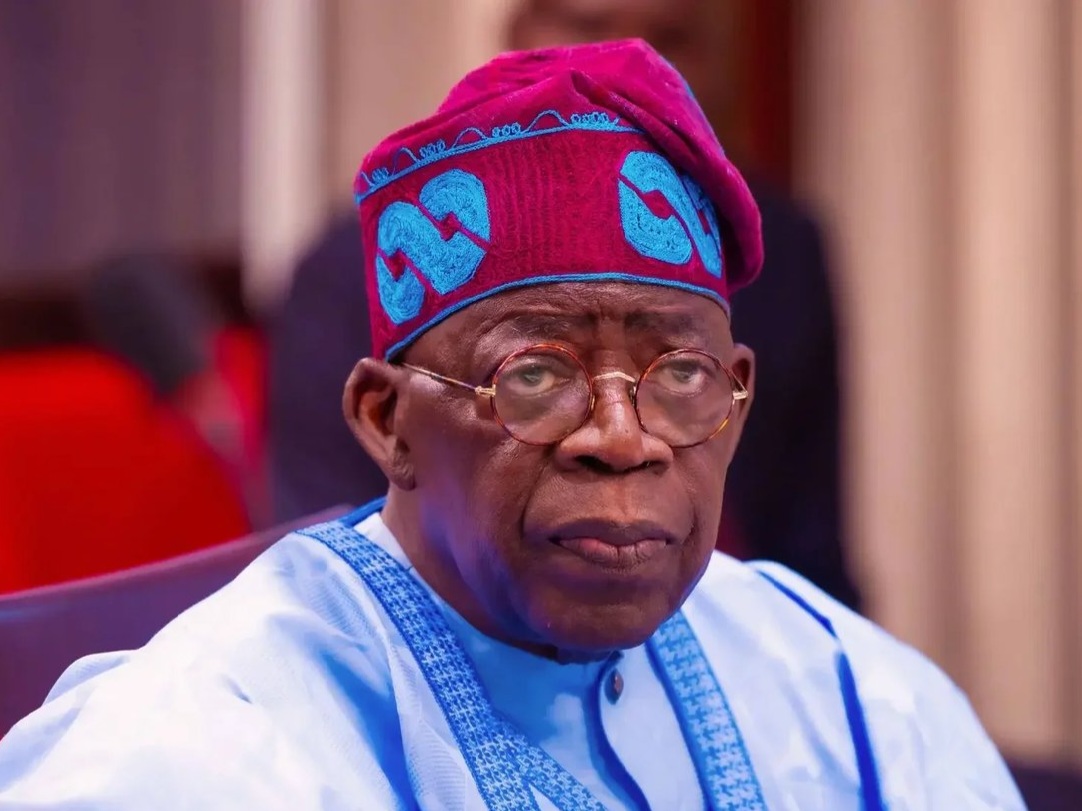
President Bola Tinubu has given a United States court four reasons why his unredacted records with the Federal Bureau of Investigation and the Drug Enforcement Administration should remain out of the public domain.
Tinubu’s lawyers urged the US District Court for the District of Columbia to reject a bid by American transparency activist Aaron Greenspan to obtain the records under the US Freedom of Information Act.
In court filings published on Saturday, the President’s legal team argued that US freedom-of-information and privacy laws protect the documents from disclosure, insisting that Greenspan had failed to establish any legitimate public interest that would outweigh Tinubu’s privacy rights.
The lawyers also alleged that the request was driven by political motives and amounted to an attempt to obtain documents bearing the President’s name for use in Nigeria’s political arena.
The legal team, comprising Christopher Carmichael, Victor Henderson and Oluwole Afolabi, further argued that the records were protected under exemptions covering personal information contained in law-enforcement files.
Why Tinubu wants the records withheld
Tinubu’s lawyers presented four main arguments in asking the court to keep the records from public view.
First, they maintained that the FOIA and the US Privacy Act provide legal protection for sensitive law-enforcement and personal information.
Second, they argued that Greenspan had failed to demonstrate a public interest recognised under US law that would justify overriding Tinubu’s privacy rights.
Third, they contended that the request was essentially aimed at obtaining private information about Tinubu for political purposes in Nigeria.
Fourth, they argued that allegations of a secret prosecution, government misconduct or an agreement by US authorities not to prosecute Tinubu were speculative and unsupported by evidence.
Greenspan had argued that his request was justified because Tinubu is the sitting President of Nigeria and his decisions directly affect more than 230 million Nigerians.
But Tinubu’s lawyers rejected the argument that Nigerians’ interest in the President’s past automatically amounted to a public interest recognised under US freedom-of-information law.
They also dismissed the argument that the records were relevant to determining Tinubu’s fitness for office, maintaining that such an interest was not one that FOIA required the court to balance against the President’s privacy rights.
Lawyers cite US Supreme Court ruling

The President’s legal team relied on a 1989 US Supreme Court decision, Department of Justice v. Reporters Committee for Freedom of the Press, to argue that FOIA was primarily designed to enable the public to understand the activities of government agencies, rather than provide access to private information about individuals stored in government files.
According to the lawyers, Greenspan’s request was largely focused on obtaining records containing Tinubu’s name and did not demonstrate that disclosure would reveal misconduct by the FBI, DEA or any other government agency.
They urged the court not to permit the FOIA process to become a tool for digging into the private affairs of an individual simply because that person occupies a powerful political position.
The lawyers further argued that Greenspan had produced no evidence proving that any alleged government wrongdoing had taken place.
They described suggestions of a secret prosecution or an undisclosed agreement by US authorities as speculative and said allegations made without supporting evidence were insufficient to compel the release of law-enforcement records.
The Tinubu-US drug controversy
The dispute over Tinubu’s US records has its roots in a 1993 civil forfeiture case that resurfaced prominently during the build-up to the 2023 presidential election.
A US District Court in Illinois ordered the forfeiture of about $460,000 held in an account linked to Tinubu after US authorities alleged that the money represented proceeds of narcotics trafficking or was connected to prohibited financial transactions.
The controversy became a major campaign and legal issue, with the opposition arguing that the forfeiture raised questions about Tinubu’s eligibility to contest the presidency.
The All Progressives Congress, however, maintained during the presidential election litigation that the case was a civil forfeiture proceeding and did not amount to a criminal conviction.
The Labour Party and its then presidential candidate, Peter Obi, argued that the forfeiture had constitutional implications for Tinubu’s eligibility.
But in September 2023, the Presidential Election Petition Court held that the petitioners had failed to establish that Tinubu had been arrested, arraigned, convicted or sentenced in a criminal case in the United States.
Despite the ruling, demands for the release of additional US records relating to Tinubu have continued.
‘Records wanted for Nigerian politics’
Tinubu’s lawyers also attacked what they described as the political motivation behind Greenspan’s request.
They argued that Greenspan’s filings showed that his overriding objective was to obtain government documents containing Tinubu’s name.
The legal team said FOIA should not be used to mine government databases for personal information simply because the individual concerned is a political office holder.
They also rejected claims that previously disclosed information had eliminated Tinubu’s privacy rights.
According to the lawyers, the fact that details surrounding the 1993 forfeiture case had entered the public domain did not mean that every other piece of information contained in law-enforcement files had lost its protected status.
They argued that an individual could still have privacy rights over information that had never previously been disclosed.
FBI, DEA records at centre of battle
Greenspan is seeking extensive records relating to Tinubu, including what he described as the entire FBI file on the President and FBI Form 302 interview records concerning him from 1992 to 1993.
The case took a major turn in April 2025 when US District Judge Beryl Howell ordered the FBI and DEA to lift their so-called Glomar responses.
The agencies had previously declined to confirm or deny whether records responsive to Greenspan’s requests existed.
Judge Howell subsequently directed the agencies to process the requested records, subject to applicable legal exemptions.
The FBI has since sought to withhold portions of the material, citing exemptions relating to law-enforcement information, individual privacy, investigative methods and the safety of people who could be identified through the records.
Importantly, the ongoing FOIA case is a dispute over access to US government records. It is not itself a criminal prosecution of Tinubu and does not amount to a judicial finding that he committed a drug-trafficking offence.
ADC, NDC: Nigerians deserve the truth
Opposition groups, however, have kicked against Tinubu’s attempt to prevent the release of the records, insisting that Nigerians have a right to know more about the President’s past.
African Democratic Congress spokesperson Bolaji Abdullahi described the President’s opposition to the release as suspicious arguing that Tinubu should welcome the disclosure if he had nothing to hide, saying the release would give him an opportunity to clear his name and remove the controversy surrounding the records.
He said the President should be the one demanding the release of the documents if he was confident that they contained nothing damaging to him or Nigeria’s image.
Similarly, the Nigeria Democratic Congress National Publicity Secretary, Osa Director, spoke in the same vein remarking Nigerians deserved to know the truth and urged Tinubu to allow the records to be released.