
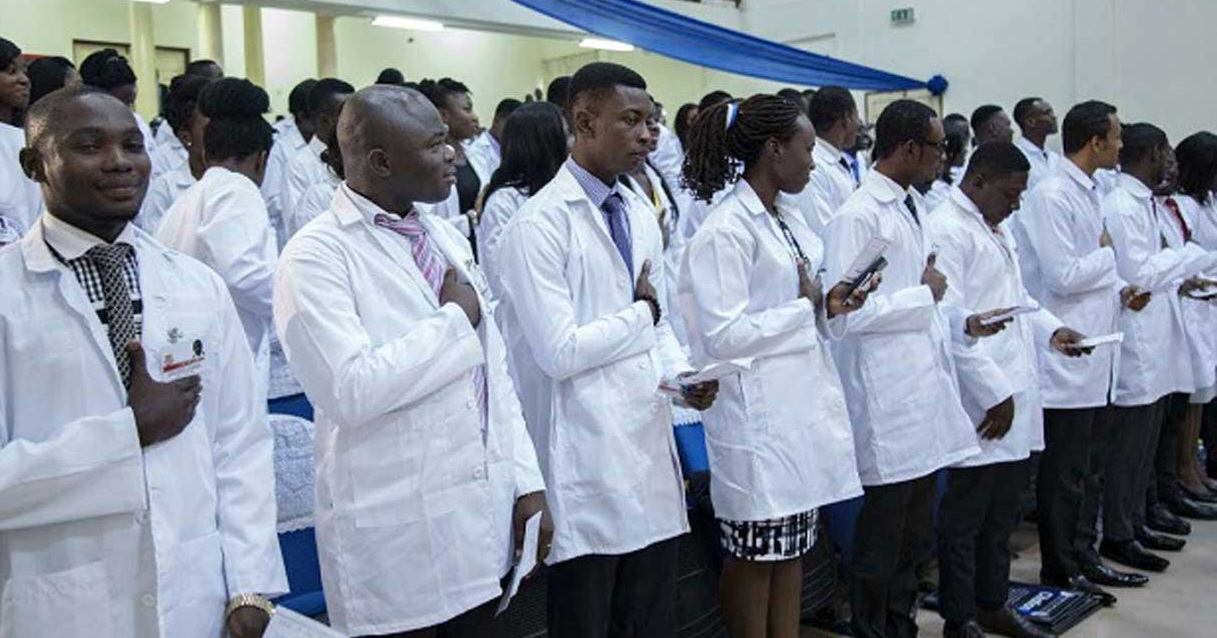
Medical lecturers at the University College Hospital, Ibadan, have warned the Federal Government against increasing admission quotas for medical students without first providing enough facilities and teaching manpower.
The lecturers, under the Medical and Dental Consultants Association of Nigeria, UCH Chapter, said admitting more students into already overstretched institutions could weaken the quality of medical training.
The warning was issued by the chapter’s Chairman, Dr Oluseyi Akande, during the association’s biennial press briefing in Ibadan as part of activities for its 2026 Annual General Meeting.
Akande said the government’s decision to raise admission quotas for Colleges of Medicine was understandable given the shortage of doctors in the country.
However, he cautioned that the policy could backfire if the additional students were not matched with adequate classrooms, laboratories, clinical facilities and lecturers.
He said the Federal Government had commenced interventions aimed at expanding infrastructure in institutions affected by the increased intake, but expressed concern over the slow pace of implementation.
According to him, the additional structures required at the College of Medicine, University of Ibadan, were yet to be completed despite the increase in student admission since last year.
Akande urged the government to speed up the projects and strengthen monitoring to ensure they were delivered as planned.
He also called for urgent recruitment of more medical lecturers and other personnel, noting that consultants were already juggling teaching, residency training and clinical duties.
The situation, he said, had been worsened by the mass migration of healthcare professionals and the poor state of primary and secondary healthcare facilities across the country.
Akande argued that training additional medical students was labour-intensive because medicine was largely taught through apprenticeship and hands-on clinical experience.
He therefore urged the government to introduce appropriate incentives and improved remuneration for lecturers taking on extra responsibilities, suggesting that the existing earned-allowance system could be adapted for this purpose.
UCH, others need governing boards
The MDCAN chairman also called for the immediate constitution of boards of management for federal tertiary hospitals, including UCH.
He said the absence of the boards for more than two years had slowed decision-making and affected the effective administration of the institutions.

According to him, while Chief Medical Directors handle the day-to-day running of the hospitals, the boards are expected to provide policy direction, approve major decisions and ensure the hospitals have the necessary equipment and facilities.
He said leaving such responsibilities largely to the coordinating Minister of Health had created delays because of the minister’s numerous responsibilities.
Akande urged the Federal Government to constitute the boards without further delay.
Doctors face salary delays
The association also raised the alarm over prolonged salary delays affecting newly employed consultants and doctors transferred to UCH.
Akande blamed bureaucratic bottlenecks involving the Office of the Head of the Civil Service of the Federation and the Accountant-General’s office for the delays.
He said some doctors had gone for months without receiving their salaries after leaving previous jobs to take up new appointments.
The situation, he warned, was frustrating affected doctors, hurting morale and undermining productivity.
MDCAN called for the decentralisation of the Integrated Personnel and Payroll Information System to allow institutions to process salaries more quickly.
UCH awaits 2025 equipment funds
The lecturers further appealed to the Federal Government to release funds approved in the 2025 budget for the purchase of life-saving equipment for UCH.
Akande said the hospital was still awaiting funds for several critical items needed for clinical services, medical training and research.
He urged the government to release the money promptly, warning that the hospital could not effectively perform its responsibilities without adequate equipment.
‘Stop attacking health workers’
The association also condemned violence against doctors and other healthcare workers, urging patients and their relatives to seek legal redress whenever they felt dissatisfied with treatment.
Akande said health workers were often blamed for poor outcomes despite operating under difficult conditions, including inadequate or obsolete equipment and unreliable electricity supply.
He warned that attacks on medical personnel could further demoralise an already depleted workforce and worsen the country’s shortage of skilled healthcare professionals.
The MDCAN chairman commended recent efforts by the Federal Ministry of Health to tackle violence against healthcare workers.
He also congratulated members of the association as they commenced activities for their 2026 AGM, which include a scientific conference, sporting activities, courtesy visits, the AGM proper, a luncheon and thanksgiving service.
Don’t Miss Out! Join our WhatsApp Channel for instant news updates. Click here to join