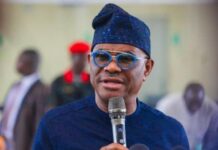


Nigerian scholar Ogochukwu Chidiebere Nweke has delivered a blunt message to African leaders, warning that the continent can no longer blame its problems on colonialism as corruption, poor governance and lack of accountability continue to undermine its development.
Ogochukwu Chidiebere Nweke spoke in Accra, Ghana, while delivering the lead lecture at the annual event commemorating the legacy of Nigeria’s nationalist icon, Dr Nnamdi Azikiwe, popularly known as the “Zik of Africa.”
Addressing an audience comprising diplomats, academics, traditional leaders, business figures, students and members of the organising committee, Nweke challenged African leaders to confront the failures within their own societies.
He argued that while colonialism left a damaging legacy, many of Africa’s present-day problems are being sustained by Africans themselves.
Nweke illustrated his point with examples of public funds being mismanaged, infrastructure projects abandoned despite huge allocations, and hospitals and schools failing to deliver basic services despite government funding.
He stressed that such failures could no longer simply be blamed on outsiders.
According to him, when a road contract is paid for repeatedly but the road remains uncompleted, or when a hospital has a budget but no medicine, “we are not being robbed by strangers. We are being robbed by our own.”
The scholar also warned against celebrating unexplained wealth, saying African societies must begin asking not only how much money people possess but also how they acquired it.
‘No Peace Without Accountability’
Nweke linked corruption and poor governance directly to the continent’s struggle for peace and development.
He argued that peace should not be defined merely as the absence of violence, insisting that a truly peaceful society must guarantee justice, security, employment, education and basic opportunities for its citizens.
“There is no peace without accountability,” he declared, warning that a society where powerful people steal public resources without consequences cannot claim to have achieved genuine peace.
Nweke also highlighted the problem of illicit financial flows, noting that billions of dollars leave Africa every year through corruption, tax evasion, manipulated trade transactions and outright theft.
He described financial transparency as essential to rebuilding public trust and ensuring that Africa’s resources are used for the benefit of its people.
Africa Must Tell Its Own Story

Beyond governance, Nweke urged Africans to reclaim control of their history and challenge narratives that have portrayed the continent as backward or dependent.
Using the popular proverb that “until the lion learns to write, every tale will glorify the hunter,” he said Africa had for centuries been forced to view itself through stories written by others.
He reminded his audience of the achievements of ancient African civilisations, including the Mali Empire, Great Zimbabwe, Timbuktu and the Benin Kingdom.
Nweke said the purpose of remembering Africa’s past greatness was not to encourage nostalgia but to inspire confidence in what the continent can achieve again.
He stressed that Africans must become the authors of their own future rather than remaining passive subjects of other people’s narratives.
Nweke Links Zik, Nkrumah To African Unity
The Nigerian scholar also used the occasion to highlight the historic relationship between Azikiwe and Ghana’s first president, Kwame Nkrumah.
He recalled that both men studied at Lincoln University in the United States and that Azikiwe played an influential role in Nkrumah’s intellectual and political development.
Nweke said their relationship demonstrated that the struggle for African independence was never restricted by national borders.
He described the decision to hold the lecture in Accra, the home of Nkrumah, while honouring Azikiwe, as a powerful symbol of the enduring ties between Nigeria and Ghana.
According to him, the friendship between the two African nationalist icons offered valuable lessons for a continent still struggling to deepen regional integration.
AfCFTA Opportunity
Nweke also pointed to the African Continental Free Trade Area as a major opportunity for Africa to translate the vision of its founding leaders into practical economic integration.
He said the continent must move beyond exporting raw materials and begin building stronger regional value chains, markets and industries.
He, however, warned that African integration would only survive if ordinary citizens could feel its benefits.
He cited recent strains within ECOWAS, including the withdrawal of Mali, Burkina Faso and Niger, as evidence that regional organisations must deliver tangible results for ordinary Africans.
‘A New Nigeria Is Possible’
Turning to Nigeria, Nweke acknowledged the country’s enormous challenges but insisted that its potential remains too great to be written off.
He pointed to Nigeria’s huge population, youthful workforce, technology sector, entertainment industry, diaspora community and growing industrial capacity as evidence of what the country can achieve.
He, however, acknowledged the problems of insecurity, corruption, poverty and the migration of young Nigerians seeking better opportunities abroad.
Still, Nweke maintained that “a new Nigeria is possible.”
He identified unity, accountability, transparency and the rejection of greed as critical foundations for transforming the country.
‘Stop Waiting For A Saviour’
Nweke reserved his final appeal for Africa’s young people, urging them to stop waiting for political saviours and take responsibility for shaping the continent’s future.
He said the younger generation must choose between simply complaining about Africa’s problems and becoming the generation that builds solutions.
Returning to his opening metaphor, Nweke declared that the African “lion” had finally learned to write.
“The pen is in our own hand at last,” he said, challenging Africans to decide what story they would write with it.
He urged the continent’s youth to build an Africa worthy of the legacies of Azikiwe, Nkrumah, Timbuktu and Benin, insisting that Africa’s greatest chapter is yet to be written.
“Africa’s morning is not behind her. It lies ahead,” Nweke declared.
Don’t Miss Out! Join our WhatsApp Channel for instant news updates. Click here to join
ALSO READ:
Kano Islamic scholar under attack for alleged blaspheming of Prophet Muhammad
FCMB awards varsity scholarship to 7-yr-old girl using ATM light to do school assignment