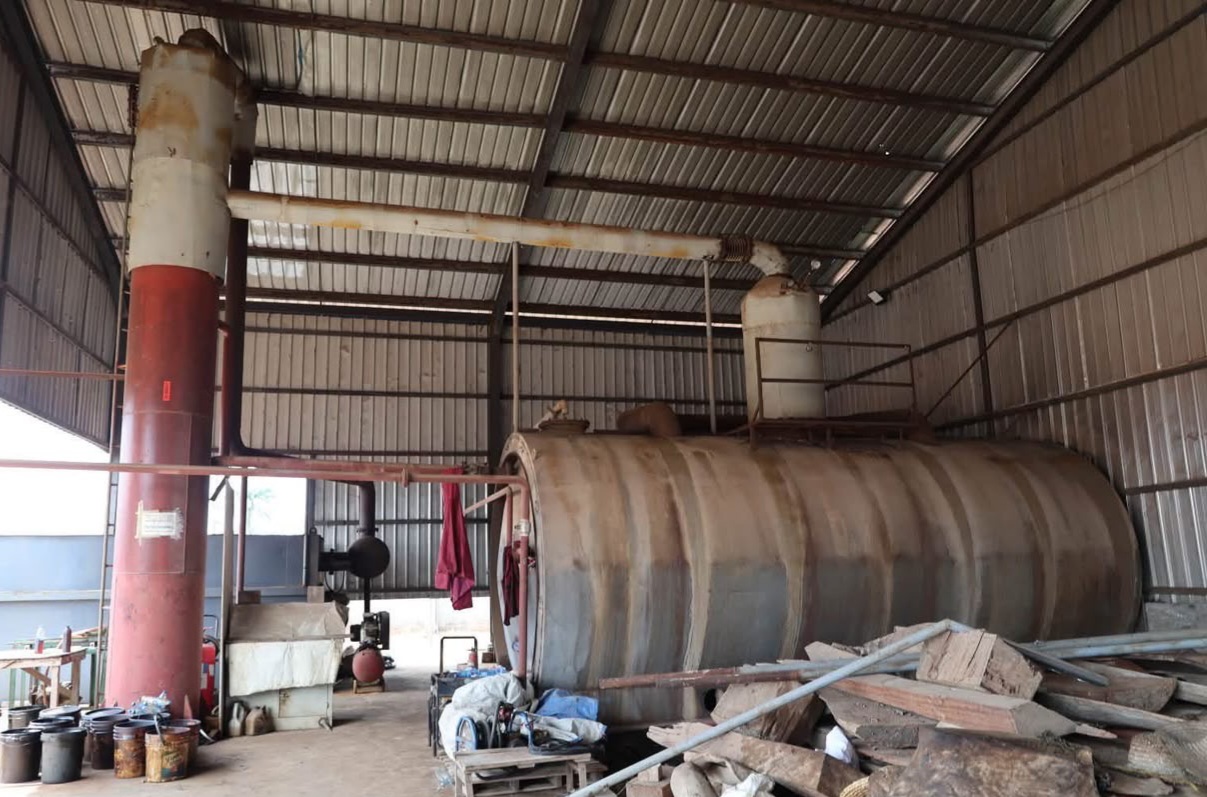
A suspected illegal oil refinery uncovered in Ogun State had an underground storage tank capable of holding more than 90,000 litres of petroleum products, raising fresh concerns over the scale of illicit oil operations in the country.
The facility, discovered at Ogere Remo in Ikenne Local Government Area, occupied more than three hectares of land and was equipped with locally fabricated storage tanks, separation chambers, underground heating systems and cooling facilities.
The Ogun State Coordinator of the Nigerian Midstream and Downstream Petroleum Regulatory Authority, Dr Atilola Akinyemi, disclosed this on Wednesday during a joint inspection of the facility with officials of the Economic and Financial Crimes Commission.
Akinyemi described the installation as a crude but technically designed operation that had been running without approval from any regulatory agency.
He said the operators had attempted to replicate a standard refinery using underground heating systems, silos and other equipment while deliberately bypassing government regulations.
The NMDPRA official, however, cautioned against describing the recovered products as diesel, also known as Automotive Gas Oil, saying laboratory tests were needed to establish their actual composition.
He warned that allowing unverified products from the facility into the market could damage vehicle engines and pose risks to motorists.
Akinyemi added that all recovered products and materials had been confiscated by the Federal Government pending laboratory analysis.
He also questioned how the operators obtained their petroleum feedstock and warned that the authority would not allow illegal refining activities to thrive in Ogun State.
Further investigations by the EFCC have revealed that the suspected operators allegedly sourced sludge oil, popularly called black sludge, from Warri, Delta State, and Port Harcourt, Rivers State, before transporting it to Ogere for processing.
The commission said the sludge oil was subjected to intense heat, allowing lighter petroleum components to pass through chambers and filters in a process believed to produce Automotive Gas Oil for commercial sale.
The refinery was discovered on Saturday, October 31, following intelligence gathering and surveillance by operatives of the EFCC’s Lagos Zonal Directorate 2.
The facility was reportedly deserted when the operatives arrived, although they recovered waste products from the refining process and discovered underground tanks, two of which contained substances suspected to be diesel.
The discovery came after the commission’s earlier crackdown on four illegal lithium-processing plants in the same Ogere area. Premium Times Nigeria +2
Speaking during Wednesday’s inspection, the EFCC Zonal Director, Lagos Zonal Directorate 2, Bawa Usman Kaltungo, said the operation followed information supplied by a Nigerian whistleblower.
He explained that the commission first conducted surveillance to authenticate the intelligence before EFCC Chairman Ola Olukoyede ordered a sting operation.
Kaltungo disclosed that another suspected location was also being investigated, raising the possibility of further discoveries.
He expressed concern over the immigration status of some foreign nationals arrested in connection with the investigation, saying some allegedly could not produce their passports, while others had visas that expired about three months earlier.
The EFCC director added that investigators were probing the ownership of companies allegedly linked to the operation, with some of the ultimate owners reportedly based in China.
Meanwhile, the Director of the EFCC’s Department of Proceeds of Crime Management, Gbolahan Latona, warned that illegal refining activities could undermine legitimate investments in Nigeria’s petroleum industry and deprive the country of government revenue.
He said the commission would pursue the recovery of assets established to be proceeds of crime and ensure they were put to productive use in line with the law.
Latona cited the conversion of Nok University, following its forfeiture to the Federal Government, into the Federal University of Applied Sciences, Kachia, as an example of the commission’s asset recovery initiative.
He said the Ogun facility could also be considered for recovery and reuse, subject to investigations and the necessary legal processes.
The EFCC assured that suspects found culpable would be prosecuted, adding that investigations would extend to individuals and interests allegedly financing the operation from outside Nigeria.
Don’t Miss Out! Join our WhatsApp Channel for instant news updates. Click here to join