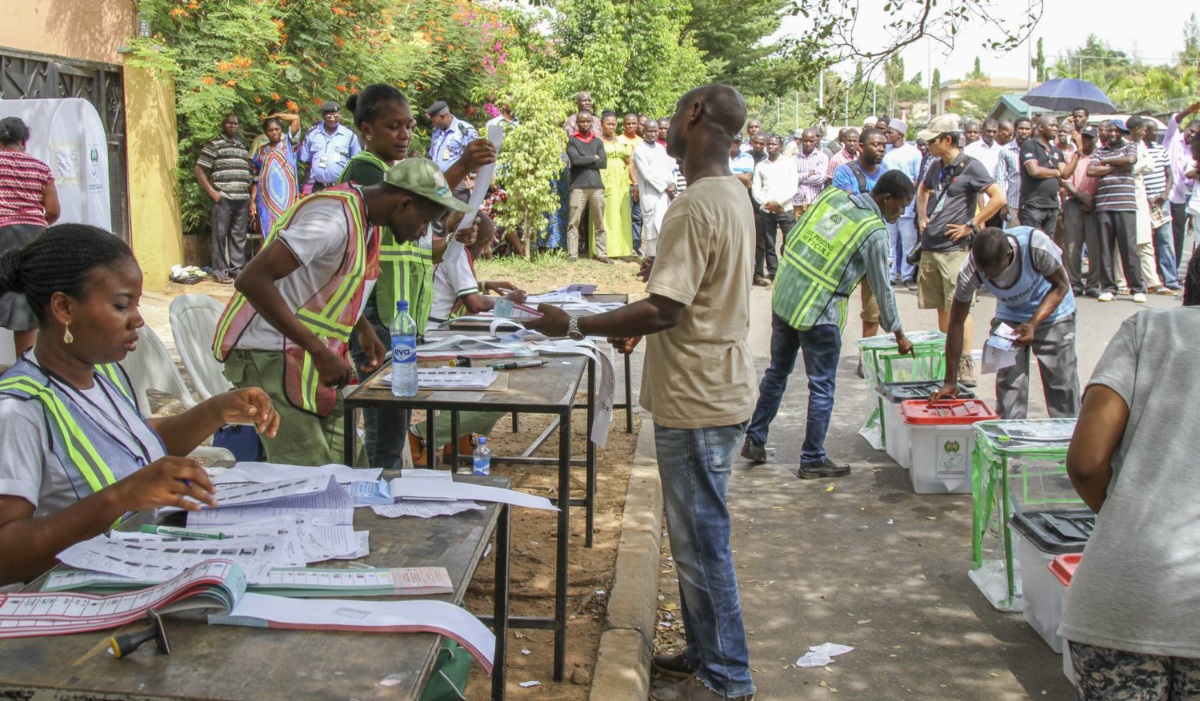
The European Union (EU) has delivered a major blow to Nigeria’s 2027 election preparations after announcing it will not deploy a full-scale observer mission for the general elections.
The bloc said growing security threats across the country and the alleged hostile treatment of its officials after its controversial 2023 election report forced the decision.
The move brings to an end more than two decades of full EU election monitoring missions in Nigeria, dating back to 2003.
The EU’s decision was contained in a response to an invitation from the Independent National Electoral Commission (INEC), which had requested the bloc’s participation in observing the 2027 polls.
But instead of sending hundreds of election monitors across the country as it did in previous elections, the EU said it would only maintain a small team of officials in Abuja to track developments and send reports back to its headquarters in Brussels.
Sources familiar with the communication said the team could be made up of just about three officials.
Unlike previous exercises, there will be no long-term observers stationed across the 36 states and the Federal Capital Territory, no election-day observers and no chief observer appointed to lead the mission.
The decision marks a dramatic shift from the EU’s previous involvement in Nigeria’s elections.
The bloc monitored presidential elections in 2003, 2007, 2011, 2015, 2019 and 2023, with its 2023 mission described as its seventh since Nigeria returned to democratic rule in 1999.
During the 2023 election, the EU deployed a massive team, beginning with 11 experts who arrived in Abuja weeks before the presidential poll. Forty long-term observers were later sent across the states, while short-term observers joined ahead of election day.
The mission eventually had 110 accredited observers drawn from EU member states, Norway, Switzerland and Canada.
The EU Parliament also sent a delegation to monitor the presidential and National Assembly elections, with the team remaining in Nigeria until April 2023 before the final report was released in June.
That report sparked controversy after it highlighted what the EU described as major weaknesses in Nigeria’s electoral system.
The document contained 25 recommendations and accused shortcomings in electoral laws and administration of undermining credible elections and weakening public confidence in the Independent National Electoral Commission.
The findings triggered protests at the EU office in Abuja, with demonstrators accusing the bloc of meddling in Nigeria’s affairs and demanding that the report be withdrawn.
Opposition parties and civil society groups later alleged that supporters of the ruling All Progressives Congress (APC) were behind the protests — a claim that was rejected.
The EU’s latest decision comes amid worsening security challenges, including violence in parts of the North-West, North-East, Middle Belt and South-East, where attacks and disruptions affected the 2023 elections.
Election observers typically travel to remote communities and polling centres, a task the EU said has become increasingly difficult due to security risks.
The withdrawal of a full mission is expected to raise fresh concerns over international scrutiny of the 2027 elections.
Although groups such as the National Democratic Institute, International Republican Institute, Commonwealth and African Union have monitored Nigerian elections in the past, stakeholders say none has matched the EU’s long-standing presence and level of deployment.
The development also comes after the EU committed millions of euros to support Nigeria’s democratic process. In 2022, the bloc approved €39 million for its Support to Democratic Governance in Nigeria programme covering the 2022–2027 electoral cycle, alongside €13 million specifically targeted at technical assistance for INEC ahead of the 2023 polls.
It remains unclear whether the observer mission decision will affect those funding commitments.
Political analysts said the move could further fuel concerns about the credibility of the 2027 elections, coming at a time when voter confidence and participation remain major issues.
The 2023 presidential election recorded a turnout of about 27 per cent — the lowest since Nigeria’s return to democracy.
With INEC already preparing for the February 2027 elections, including voter registration activities and a review of polling arrangements, attention will now turn to how other international bodies respond to the EU’s withdrawal from full election monitoring.
Don’t Miss Out! Join our WhatsApp Channel for instant news updates. Click here to join
ALSO READ:
LATE FOOD, NIGHTMARE! Minister Mocks Adeleke, Drags Governor’s Wife Into Osun Poll
OSUN POLL BATTLE: Accord Party Alleges APC Harbouring Election Hackers In Hotel