

The National Industrial Court of Nigeria sitting in Port Harcourt has ordered the Central Bank of Nigeria (CBN) to remove the name of Miss Blessing Ogechi Nnaji from its financial sector blacklist, holding that her inclusion was not supported by the substantive and procedural requirements of the applicable regulatory framework.
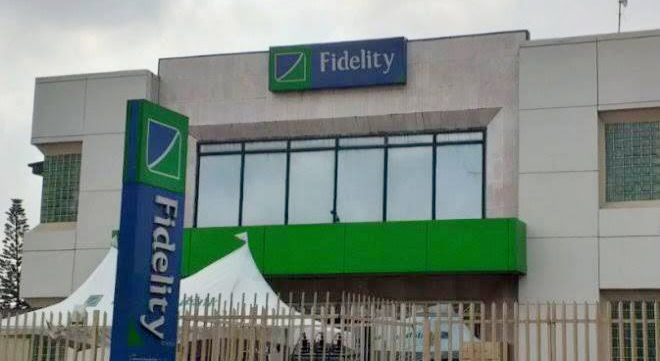
Delivering judgment in Suit No. NICN/PHC/53/2025, Justice Z. M. Bashir held that neither Fidelity Bank Plc nor the CBN complied with the provisions of the CBN Revised Guidelines for Blacklisting for Banks and Other Financial Institutions in Nigeria (March 2024) before the claimant’s name was listed.
The court also dismissed preliminary objections filed by both defendants challenging the competence of the suit and the jurisdiction of the court, describing them as lacking merit.
Miss Nnaji had approached the court seeking a declaration that there was no record of fraud, financial misconduct, or any offence capable of justifying her inclusion on the CBN blacklist, which bars affected individuals from employment in Nigeria’s financial sector.
She also sought an order directing the CBN to remove her name from the blacklist and restore her eligibility for employment.
Fidelity Bank opposed the suit, arguing that the claimant was involved in an integrity-related incident during her employment in 2017, which raised concerns about trust and led to her disengagement and subsequent reporting to regulatory authorities.
The CBN, in its defence, challenged the jurisdiction of the court and argued that the dispute fell within the exclusive jurisdiction of the Federal High Court due to its involvement as a federal agency.
Resolving the jurisdictional issue, Justice Bashir held that although the CBN is a federal agency, the subject matter of the suit was rooted in employment and labour relations, bringing it squarely within the jurisdiction of the National Industrial Court under Section 254C of the Constitution of the Federal Republic of Nigeria, 1999 (as amended).
The court further held that Section 254C overrides Section 251 in matters relating to employment.
The court also rejected the argument that the case was wrongly commenced by originating summons, holding that procedural irregularities do not rob the court of jurisdiction and that the appropriate remedy would have been an order directing the parties to file pleadings.
On the merits of the case, the court held that Fidelity Bank failed to provide sufficient evidence to justify the claimant’s inclusion on the blacklist.
The bank relied on internal documents, including a 2017 memo and an integrity test report alleging a cash discrepancy incident, but the court found that these did not meet the threshold required under the CBN Guidelines.
Justice Bashir held that while the incident may amount to an internal disciplinary matter, it did not constitute fraud, financial crime, or any serious misconduct capable of triggering blacklisting under Clause 7.0 of the Guidelines.
The court further held that the mandatory procedures under Clause 8.0—including investigation, disciplinary hearing, notification, and independent review—were not complied with.
The court noted that there was no evidence of a disciplinary committee, no formal hearing, and no independent review panel before the claimant’s name was reportedly forwarded for blacklisting.

It also observed that the CBN did not directly deny that the claimant was blacklisted, instead adopting a non-committal position, which the court held amounted to an unchallenged assertion under the law.
In conclusion, the court found that the defendants failed to establish any fraud, financial malfeasance, or misconduct sufficient to justify the claimant’s continued inclusion on the blacklist.
It therefore ordered the CBN to remove Miss Nnaji.