

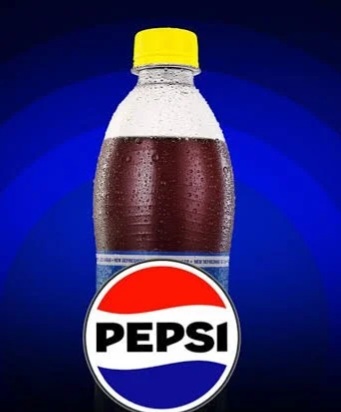
The sudden appearance of yellow-capped Pepsi bottles in Nigerian markets has triggered confusion and fears of counterfeit drinks, with consumers accusing Seven-Up Bottling Company of failing to announce the packaging change before rolling out the products.
The unfamiliar yellow caps have raised suspicion among buyers accustomed to Pepsi’s traditional blue caps, with some reportedly refusing to purchase the drinks for fear of buying fake products.
The change affects plastic bottles of Pepsi, Mirinda, 7UP, Teem and Supa Komando, all produced by Seven-Up Bottling Company.
The controversy erupted on social media after consumers spotted the new packaging in circulation without any prior public announcement explaining the change.
A LinkedIn user, Okafor Gambo, raised the alarm on Tuesday, October 13, 2026, after coming across a yellow-capped Pepsi bottle being sold to the public.
Questioning the authenticity of the product, Gambo tagged Seven-Up Bottling Company and PepsiCo, asking why consumers were not informed if the change was an official packaging decision.
He warned buyers to be cautious until the company clarified the situation.
The bottler subsequently confirmed that the yellow caps were part of a new initiative covering its plastic-bottled beverage brands, insisting that the drinks remained unchanged in taste and contents.
In its response, the company thanked Gambo for raising the issue and assured consumers that the new caps were simply a fresh packaging detail.
It added that further information about the initiative would be released soon.
But the explanation did little to stop the backlash, as consumers questioned why the company allowed the new packaging to reach the market before informing the public.
Gambo welcomed the clarification but suggested that the information should have been made public earlier.
Another LinkedIn user, Nnamdi Gabriel, criticised the company for waiting until consumers raised concerns before explaining the change, describing the communication gap as damaging to its image.
Margaret Ejiro-Edoja also urged the bottler to adopt a more proactive approach, warning that unexpected changes to familiar packaging could undermine consumer confidence and influence purchasing decisions.
She argued that clear communication was particularly important at a time when counterfeit products remained a concern in the Nigerian market.

Another user, Okechukwu Nwabuko, said companies had a responsibility to keep consumers informed whenever changes were made to their products.
Gambo further disclosed that he had contacted the company privately before making his concerns public but received no response.
The confusion has reportedly gone beyond online complaints, with some buyers allegedly rejecting the drinks outright.
One consumer, Raphael Echiye, said he and four other people had declined to buy the yellow-capped Pepsi on a particular day because they doubted its authenticity.
He urged the company’s marketing team to do more to educate the public about changes affecting its products.
Seven-Up Bottling Company later published a more detailed explanation on its LinkedIn page, describing the yellow caps as part of an initiative designed to engage, surprise and delight consumers.
The company maintained that the products consumers knew and loved remained the same, promising to reveal more details about the initiative.
However, the announcement again drew criticism, with Onyeka Amanze arguing that the company had put the cart before the horse by introducing the new packaging before explaining it to consumers.
He said the communication should have preceded the products’ appearance in shops to prevent doubts about their integrity.
Gabriel also described the yellow-capped Pepsi bottles as strange-looking and warned that the confusion could inadvertently benefit competing brands if customers switched to alternatives they considered more familiar or trustworthy.
The complaints were not limited to LinkedIn, as consumers also sought clarification on Pepsi Nigeria’s X account.
On October 9, a user identified as Adeleke Ifeoluwa posted a photograph of a yellow-capped Pepsi bottle and asked the company to confirm whether the product was genuine.
In response, Pepsi Nigeria assured the user that the yellow-capped bottles contained the same Pepsi consumers were familiar with, adding that something exciting was in the works.
On Facebook, Godfrey Daniel recounted how someone he had bought four packs of the drink for allegedly sent him back to exchange them for bottles with the familiar blue caps.
He said his explanation that the product carried the Standards Organisation of Nigeria (SON) logo failed to convince the recipient.
Another user, Prince Adeniti, said he had also mistaken a yellow-capped Pepsi bottle for a fake product.
The episode has highlighted the importance of communicating packaging changes clearly, particularly in a market where consumers are increasingly wary of counterfeit goods.
Although Seven-Up Bottling Company has assured buyers that the drinks remain the same, the reaction suggests that the unfamiliar caps have created a trust problem the company must address through sustained public awareness.
For many consumers, the question is no longer just why Pepsi’s caps have turned yellow, but why they had to raise the alarm before receiving an explanation.
Don’t Miss Out! Join our WhatsApp Channel for instant news updates. Click here to join