

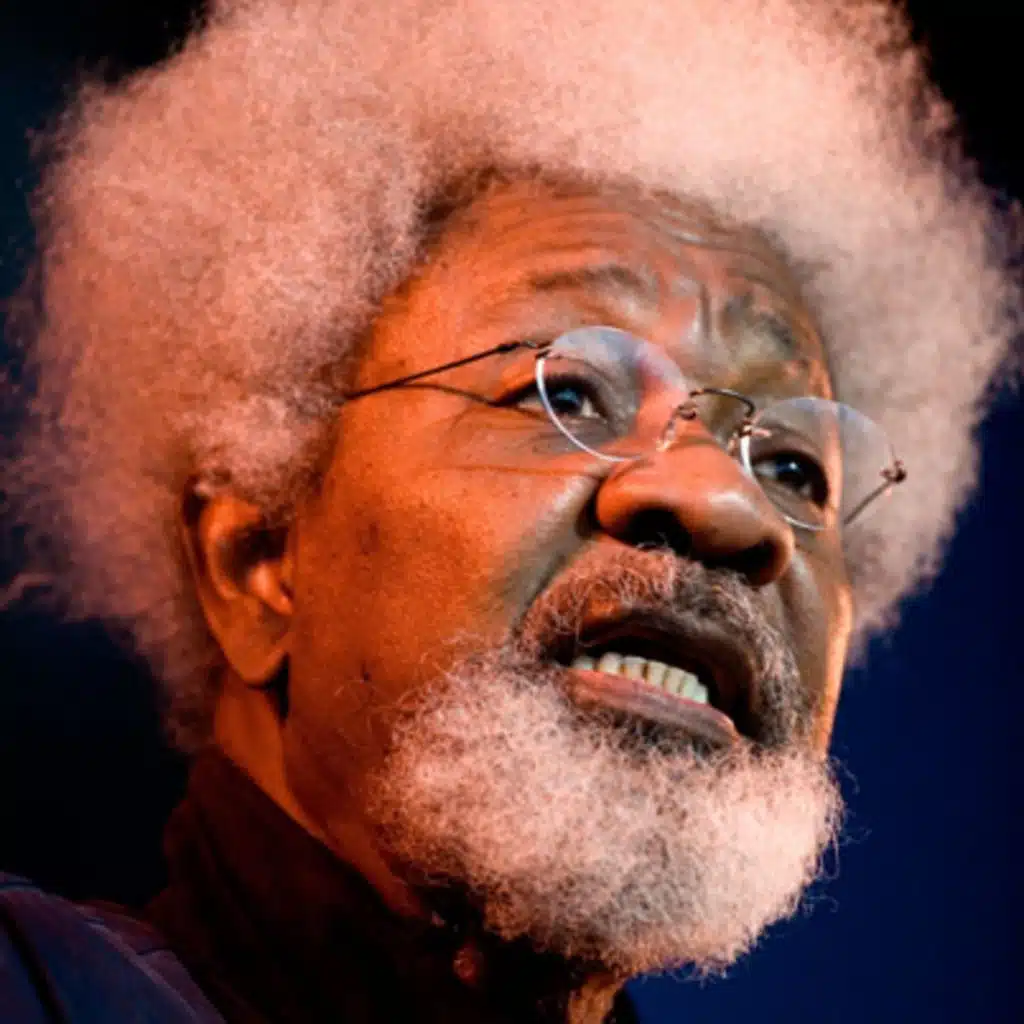
Nobel Laureate Prof. Wole Soyinka has made a scathing remarks about President Bola Tinubu’s speech on the hunger protest and the police handling of the issue.
Soyinka’s censure was passed through a statement he released titled, ‘The hunger march as universal mandate’ in which he said the President failed to address the manhandling of the protesters by the police saying, “an area in which the presidential address fell conspicuously short.”
He also tore into the police.
According to him: “The tragic response to the ongoing hunger marches in parts of the nation, and for which notice was served, constitutes a retrogression that takes the nation even further back than the deadly culmination of the watershed ENDSARS protests.
“Live bullets as a state response to civic protest – that becomes the core issue. Even tear gas remains questionable in most circumstances, certainly an abuse in situations of clearly peaceful protest.
“It evokes pre-independence – that is, colonial – acts of disdain, a passage that induced the late stage pioneer Hubert Ogunde’s folk opera BREAD AND BULLETS, earning that nationalist serial persecution and proscription by the colonial government.
“Such short-changing of civic deserving, regrettably, goes to arm the security forces in the exercise of impunity and condemns the nation to a seemingly unbreakable cycle of resentment and reprisals.
“The serving of bullets where bread is pleaded is ominous retrogression, and we know what that eventually proves – a prelude to far more desperate upheavals, not excluding revolutions.’’
Berating the state agencies further, the playwright added, “The time is long overdue, surely, to abandon, permanently, the anachronistic resort to lethal means by the security agencies of governance.
“No nation is so under-developed, materially impoverished, or simply internally insecure as to lack the will to set an example. All it takes is to recall its own history, then exercise the will to commence a lasting transformation, inserting a break in the chain of lethal responses against civic society.”