
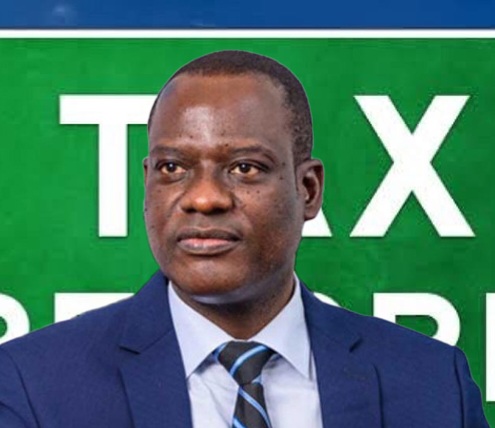
One-third of Nigeria’s workforce across both the public and private sectors would be exempted from paying personal income tax if the proposed reforms on tax come into force from January 1, 2026.
Chairman of the Presidential Committee on Fiscal Policy and Tax Reforms, Mr Taiwo Oyedele, made this known at the weekend in an interview he granted newsmen to further create awareness for the reforms.
Oyedele said under the proposed reforms, low-income earners earning N100,000 or less per month would no longer be required to pay personal income tax from January next year.
The move, according to him would boost workers’ take-home pay, strengthen household purchasing power and help ease the rising cost-of-living pressures faced by millions of Nigerians.
He remarked that if the reforms become operative the exemption would affect roughly one in every three workers nationwide.
“These are Nigerians who are barely surviving, yet we still tax them.
“Instead of taxing people who cannot meet their basic needs, we should be supporting them,” he said.
Oyedele dismissed the argument that Nigeria no longer has a middle class, noting that while the segment has shrunk over the years, it remains a critical pillar of economic stability that must be protected. “If you destroy the middle class, you weaken consumption, savings and long-term growth,” he said.
Quoting him further, high-income earners, by contrast, would shoulder a slightly higher share of the tax burden.
Oyedele said only about two per cent of Nigeria’s working population falls into this category, explaining that under the reforms, a top personal income tax rate of 25 per cent will apply exclusively to individuals earning N120 million or more annually.
He stressed that the increase is marginal and targeted, aimed at restoring balance and fairness rather than punishing success.
In his account, the reforms extended beyond personal income tax to address deep-seated structural issues in Nigeria’s business taxation system.
He declared that Nigeria ranks among the top 10 countries globally with the highest tax burden on businesses, despite its urgent need for domestic and foreign investment to drive job creation and reduce poverty.
“We are not the United States or China, where capital is abundant,” he said. “Nigeria is searching for investment, yet we operate one of the most complex and punitive tax systems in the world,” he added.