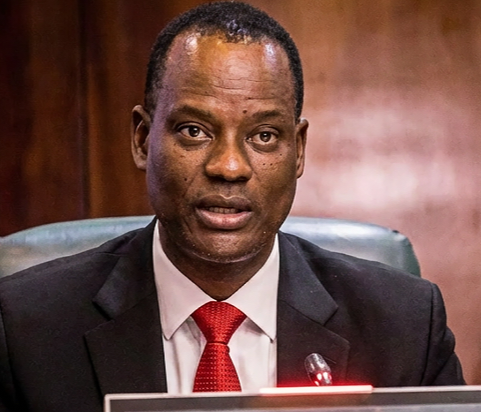
Finance Minister and Coordinating Minister of the Economy, Taiwo Oyedele, has revealed how the Federal Government spent billions of naira saved from the removal of petrol subsidy, insisting the money was used to keep the country afloat after ending years of deficit financing.
Speaking at the Seventh Africa Emerging Market Forum in Abuja, Oyedele said a large portion of the savings went into servicing rising debts, implementing the new N70,000 minimum wage, funding student loans and sustaining key social intervention programmes.
He admitted that Nigerians have repeatedly demanded answers on what happened to the subsidy savings, describing the question as a legitimate one.
According to him, the government will soon publish a detailed account of how the funds were spent.
Explaining why the savings were needed, Oyedele said the government had stopped relying on the Central Bank to print money to finance public spending.
“Before the reforms, we were printing money to spend. If you stop printing, the spending doesn’t disappear. You need to finance the money you were printing before,” he said.
He added that debt servicing costs also soared after the reforms, with interest rates climbing from about eight per cent to as high as 24 per cent.
The minister said another major share of the savings funded the new national minimum wage, which doubled workers’ salaries from N30,000 to N70,000.
He also disclosed that the Nigerian Education Loan Fund (NELFUND) has received significant funding, enabling more than 1.5 million students to access tuition support and monthly stipends.
Defending President Bola Tinubu’s economic reforms, Oyedele insisted that fuel subsidy removal and foreign exchange liberalisation were painful but necessary decisions to end corruption, waste and long-standing distortions in the economy.
He rejected claims that the reforms had failed because poverty initially worsened, arguing that the hardship was temporary and part of rebuilding the economy.
According to him, Nigeria recorded nearly 10 per cent real per capita income growth in dollar terms in 2025, expressing confidence that poverty would decline as the reforms continue to take effect.
Oyedele also defended the government’s borrowing, saying loans remain necessary whenever expenditure exceeds revenue and are justified if invested in projects that generate higher returns.
Looking ahead, he disclosed that the Federal Government is working on measures to reduce borrowing costs for businesses, create better-paying jobs and improve the ease of doing business.
He added that cash transfers have now reached 15 million vulnerable households, while about 7.5 million Nigerians have been lifted out of extreme poverty through government intervention programmes.
Calling on investors to seize the opportunities created by the reforms, the minister said Nigeria remains committed to building a $1 trillion economy by 2030.
“A reform that shows up on national statistics but not on the household dining table hasn’t finished its job,” Oyedele said.