
The Federal Executive Council (FEC) has moved to end the criminalisation of attempted suicide in Nigeria, while approving a string of massive healthcare projects running into hundreds of billions of naira.
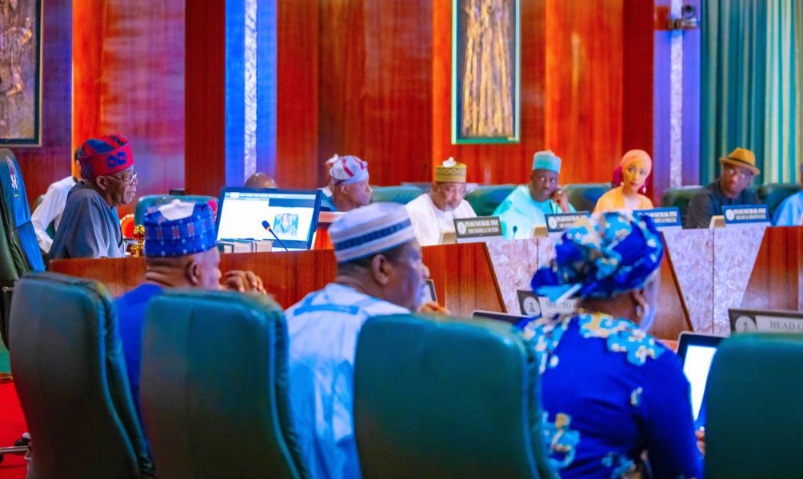
The Coordinating Minister of Health and Social Welfare, Prof. Muhammad Ali Pate, disclosed this on Wednesday after the fourth FEC meeting of the year, presided over by President Bola Ahmed Tinubu at the State House, Abuja.
Pate said FEC had approved an executive bill seeking to amend Nigeria’s mental health law and remove the criminal penalties attached to attempted suicide.
Under the proposed reform, people who survive suicide attempts would be treated as individuals in need of medical and psychological support rather than as criminals facing prosecution.
The bill is expected to be forwarded to the National Assembly for consideration.
Pate said the proposed amendment was designed to remove what he described as outdated colonial-era provisions that criminalise attempted suicide under the Criminal Code and Penal Code.
He said the current legal framework could discourage distressed Nigerians from seeking help for fear of arrest or prosecution.
The minister cited World Health Organisation figures indicating that more than 7,000 Nigerians die by suicide annually, while about 300,000 suicide attempts are recorded every year.
He added that more than 450,000 Nigerians require psychosocial support annually, stressing that suicide remains a major public health concern, particularly among young people.
According to him, the proposed change is intended to shift the country’s response from punishment to treatment, counselling and other forms of professional support.
He said the reform followed consultations involving mental health advocates and a task force established after the House of Representatives backed efforts to review the existing legal provisions.
The Ministries of Health and Justice subsequently worked on the amendment before it was presented to FEC.
The government, Pate said, hopes the reform will help reduce suicide attempts and deaths, with a target of cutting the incidence by 15 per cent by 2030.
FEC Approves National Oral Health Centre
FEC also approved an executive bill seeking to establish a National Centre for Oral Health as a major referral, research and training institution.

Pate said the proposed National Centre for Oral Health Establishment Bill 2026 would now be sent to the National Assembly.
He said plans for such a centre dated back to 1982, when an international oral health research congress held in Lagos recommended the establishment of a regional training and research facility.
Although the Federal Government later established a centre, the minister said it lacked the legal framework required to operate as a fully established national institution.
The proposed law is expected to provide the centre with a clear legal mandate and strengthen Nigeria’s capacity to tackle oral diseases.
Pate noted that oral healthcare had remained a major gap in the country’s specialised health system despite the existence of teaching hospitals and several specialist medical institutions.
N18.7bn National Hospital Building
In another major decision, FEC approved several contracts for the massive redevelopment of the National Hospital, Abuja.
Among them is the construction of a new administrative and management block at a cost of about N18.74 billion.
The contract was awarded to Visible Construction Limited.
The council also approved about N64.92 billion for modular clinics and theatres covering different medical specialties.
Pate said the National Hospital, established about 25 years ago, had not received the level of investment required to transform it into the quaternary healthcare institution originally envisaged.
He said the latest projects were part of the Tinubu administration’s drive to overhaul healthcare infrastructure and provide Nigerians with facilities capable of delivering advanced medical services.
N103bn High-End Wing, N69bn Neuroscience Institute
The council further approved the construction of a high-end wing at the National Hospital at a cost of N103 billion, with the project expected to be completed within 24 months.
Another N69 billion was approved for a Neuroscience Institute at the hospital.
According to Pate, the institute will provide specialised facilities for the treatment of neurological conditions, including strokes, brain tumours and other diseases affecting the brain and nervous system.
It is expected to bring together neurosurgery, advanced radiology, interventional medicine and rehabilitation services under one specialised facility.
Pate said the huge investments reflected the government’s decision to stop treating healthcare infrastructure as a secondary priority.
He argued that building a modern health system would require substantial investment, just as the government commits large sums to roads and other critical infrastructure.
N302bn Cancer Institute Approved
The biggest of the healthcare projects approved by FEC is the proposed National Institute for Cancer Research and Treatment facility, with an estimated cost of N302.3 billion.
The project covers the design, construction, furnishing, equipping, supervision and commissioning of the facility and is expected to be completed within 36 months.
CBC Global Civil and Building Construction Nigeria Limited was awarded the contract.
Pate said the project would strengthen cancer research, treatment, innovation and specialist training in Nigeria.
He recalled that the Federal Government had previously approved the development and upgrading of cancer centres, with facilities in Katsina, Benin and Enugu already completed.
The new institute, he said, would provide a flagship national platform for cancer research and treatment under the National Institute for Cancer Research and Treatment (NICRAT).
The minister said funds for the project had been provided in the 2025 and 2026 budgets, while the procurement process passed through the Bureau of Public Procurement.
‘Nigeria Can’t Keep Delaying Health Investment’
Pate defended the size of the contracts, saying the projects went through competitive procurement procedures and the successful companies were selected based on their capacity to deliver specialised healthcare infrastructure.
He said the projects had received the necessary procurement clearances and no-objection from the Bureau of Public Procurement.
The minister, however, acknowledged that securing financing and ensuring timely execution would remain critical to delivering the projects.
He argued that Nigeria could no longer afford to postpone investments in healthcare simply because the projects were expensive.
Pate said the administration was seeking to reverse years of inadequate investment that had left many healthcare facilities with ageing buildings, obsolete equipment and limited capacity.
He also linked the infrastructure push to the fight against medical tourism.
According to him, Nigeria has a large pool of highly trained doctors and other health professionals, but many require modern facilities and equipment to practise at the level expected of them.
The government, he said, wants to create a health system where Nigerians can access sophisticated treatment at home instead of travelling abroad.
Pate added that the long-term ambition was not only to stop Nigerians from seeking treatment overseas but to build a healthcare system capable of attracting patients from other countries.
The combined approvals for the National Hospital and cancer projects represent one of the administration’s most significant recent commitments to healthcare infrastructure, with the government betting heavily on modern facilities to improve specialist care and strengthen Nigeria’s health system.
Don’t Miss Out! Join our WhatsApp Channel for instant news updates. Click here to join
ALSO READ:
Cement Shock! FG Probes Why Nigerians Pay More Than African Neighbours