

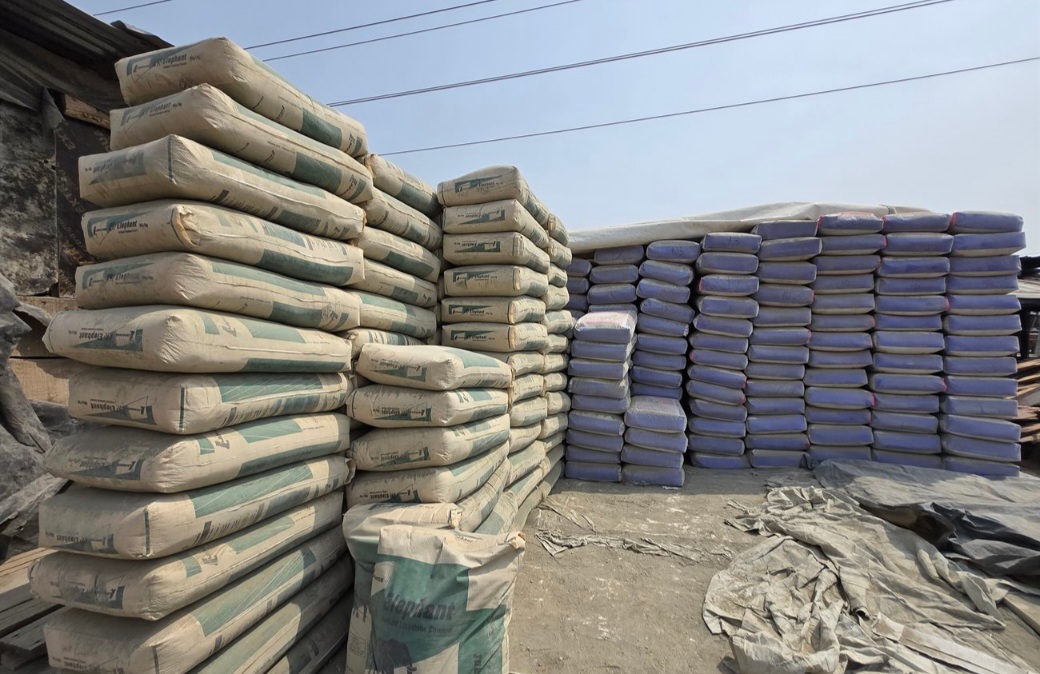
Nigeria’s cement market has come under fresh scrutiny as the Federal Competition and Consumer Protection Commission (FCCPC) launches a major probe into possible price manipulation, after finding that Nigerians may be paying more for the building material than citizens of several African countries.
The commission’s preliminary investigation revealed a puzzling price gap — despite Nigeria’s huge limestone deposits, massive production capacity and status as a cement exporter, the commodity remains significantly more expensive locally.
The FCCPC said its three-month cross-border study compared Nigeria’s cement market with those of Kenya, Tanzania, South Africa, Egypt, Morocco, Algeria and Togo, with findings suggesting that prevailing market conditions may not fully explain the soaring prices.
According to the commission, the investigation was triggered by mounting complaints from Nigerians over the rising cost of cement, a product considered vital to housing development, infrastructure projects and the construction industry.
In a statement issued by its Director of Corporate Affairs, Ondaje Ijagwu, the FCCPC said the preliminary findings showed “possible manipulation of prices” in the cement sector.
The commission revealed that Nigeria currently has installed cement production capacity estimated at between 60 million and 65 million metric tonnes annually, while domestic consumption stands at about 25 million to 30 million metric tonnes.
Despite this huge surplus capacity, the FCCPC said cement prices have continued to climb, leaving consumers and builders struggling with increased construction costs.
The commission’s market intelligence showed that the price of a 50kg bag of cement, which sold between N9,300 and N9,700 in January, jumped to between N10,500 and N13,000 by mid-year. By July, some parts of the country were recording prices between N13,000 and N15,000 per bag.
But in other African countries, prices were reportedly lower.
The FCCPC found that in Kenya, a 50kg bag of cement sold for about $5.40 (approximately N7,344), while Tanzania recorded about $4.80 (N6,528) per bag. Even Togo, a country without limestone deposits, sold cement at about $6.75 (N9,180) per bag.
The findings have raised questions over why Nigeria’s abundant raw materials and large-scale production capacity have failed to translate into cheaper cement for consumers.
Cement producers have blamed rising energy costs, the depreciation of the naira, expensive imported machinery and spare parts, as well as transportation and logistics expenses for the price surge.
However, the FCCPC said it was examining those explanations against verified data on production costs, pricing structures, capacity utilisation and market conditions.
The commission said the ongoing probe would determine whether cement prices are driven by genuine economic factors or anti-competitive practices such as market dominance abuse, coordinated pricing, supply restrictions or unfair distribution methods.
As part of the investigation, the FCCPC has issued notices of commencement of investigation and summons to key players in the industry, demanding documents relating to pricing methods, production levels, exports, capacity utilisation and commercial dealings.

FCCPC Chief Executive Officer, Tunji Bello, said the probe became necessary because of the importance of cement to the Nigerian economy.
He said the price of cement directly affects the cost of building homes, commercial properties, public infrastructure and doing business in the country.
Bello, however, stressed that the investigation was not targeted at punishing businesses or preventing companies from making legitimate profits.
He explained that the commission’s responsibility was to ensure that competition remained fair and that prices were not controlled by unlawful practices.
The investigation comes amid growing concerns in Nigeria’s construction sector, where the rising cost of cement has pushed up housing expenses and made infrastructure development more expensive nationwide.
Don’t Miss Out! Join our WhatsApp Channel for instant news updates. Click here to join
ALSO READ:
Fuel: FG accuses Dangote, Others of exploiting consumers
NO MORE SILENCE! FG Urges Nigerians To Fight For Their Rights As 15,000 Cases Are Settled