
President Bola Tinubu has vowed to revive Nigeria’s moribund government-owned refineries, but warned that the plants must do more than simply come alive—they must make money.
The President made the declaration on Thursday when he received the Executive President of the Nigeria Union of Petroleum and Natural Gas Workers, Salimon Oladiti, and other union leaders at the Presidential Villa, Abuja.
Tinubu, responding to concerns over the prolonged delay in getting the state-owned refineries fully operational, said the plants would return to work as part of his administration’s ongoing economic reset.
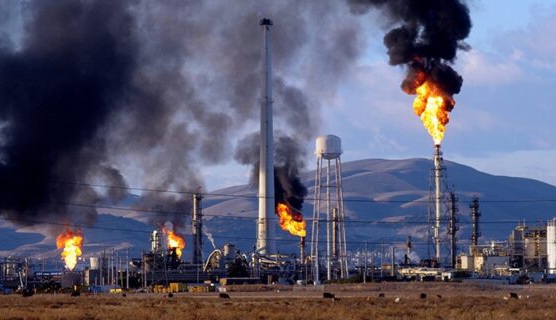
But he made it clear that the era of celebrating a refinery merely because it is producing smoke and flames is over.
According to the President, a refinery cannot be described as working simply because there is activity around the plant. Its real test, he said, is whether it can operate profitably and deliver the economic value for which it was built.
The declaration is coming amid years of efforts to revive Nigeria’s struggling government-owned refineries, including the plants in Warri, Port Harcourt and Kaduna.
NUPENG had earlier commended the administration for its efforts to bring the Warri and Port Harcourt refineries back to life through partnerships with Chinese firms.
However, the union wants the government to go beyond the refineries and tackle Nigeria’s ageing petroleum storage infrastructure.
Oladiti urged Tinubu to extend the rehabilitation drive to the deteriorating depot network of the Nigerian Pipelines and Storage Company, suggesting that the facilities be handed to private investors under an equity arrangement.
The NUPENG leader also praised the Federal Government’s road rehabilitation programme, saying improved highways had made travelling safer for tanker drivers and other petroleum workers.
Tinubu, meanwhile, linked the planned refinery revival to his broader economic reforms, insisting that the country must focus on productivity and value rather than wasteful activities.
He said his administration had accepted responsibility for fixing the economy and would continue with the reforms despite the difficulties they might bring.
The President also defended the removal of petrol subsidy, recalling that he had told labour leaders years ago that no threat of industrial action would force him to restore the subsidy.
Tinubu said he had accepted both the “assets and liabilities” inherited from previous administrations and was determined to make the economy work for Nigerians.
His message on the refineries was clear: no more plants that merely produce smoke—Nigeria wants refineries that produce results and profits.

Don’t Miss Out! Join our WhatsApp Channel for instant news updates. Click here to join
ALSO READ:
TINUBU TO TRANSPORTERS: CUT FARES!
‘Tinubu Approved It!’ ADC Points Finger At President Over Fadahunsi Storm