
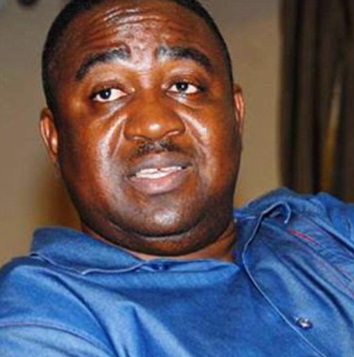
More than 11 years after the Economic and Financial Crimes Commission (EFCC) arraigned former Benue State Governor Gabriel Suswam and his former Commissioner for Finance, Omodachi Oklobia, over an alleged N3.1 billion fraud, the high-profile case remains unresolved amid a series of adjournments, judicial reassignments and procedural delays.
The case, which is currently before Justice Peter Lifu of the Federal High Court, Abuja, has become one of the longest-running corruption trials involving a former state governor in Nigeria.
The EFCC first arraigned Suswam and Oklobia on November 4, 2015, on allegations bordering on money laundering and the diversion of funds realized from the sale of Benue State Government shares in Dangote Cement Plc through the Benue Investment and Property Company Limited (BIPC).
The anti-graft agency alleged that the proceeds of the sale, amounting to N3.1 billion, were unlawfully diverted through various channels for personal use.
Over the years, the matter has experienced repeated delays arising from changes in trial judges, interlocutory applications and appeals.
The case was initially assigned to Justice Ahmed Mohammed, who withdrew from the proceedings in 2016 following reports alleging that he had been compromised to grant Suswam a favourable outcome.
However, following interventions by parties in the case through the then Chief Judge of the Federal High Court, Justice Ibrahim Auta (retd.), Justice Mohammed resumed hearing the matter.
In 2019, the judge again stepped aside after another publication questioned his impartiality.
The case was subsequently reassigned to Justice Okon Abang, who commenced hearing and received evidence from some prosecution witnesses.
However, following an appeal filed by Suswam challenging the withdrawal of Justice Mohammed from the case, the Court of Appeal ordered that the case file be returned to the original trial judge.
The matter suffered another setback in 2023 when Justice Mohammed was elevated to the Court of Appeal, necessitating a fresh reassignment of the case to Justice Peter Lifu.
Despite the prolonged proceedings, the EFCC eventually closed its case after calling nine witnesses, including investigators, officials of the Benue State Ministry of Finance, stockbroking representatives and a bureau de change operator.
On July 23, 2025, Justice Lifu dismissed a no-case submission filed by the defendants and held that the prosecution had established a prima facie case requiring them to enter their defence.
The court thereafter fixed September 25, 2025, for the commencement of defence.
However, proceedings failed to advance as expected.
On November 25, 2025, the matter was adjourned to January 20, 2026, for the adoption of final written addresses.

The case was later shifted to May 29, 2026, but could not proceed as the court did not sit.
The matter was subsequently adjourned to July 17, 2026.
The prolonged trial has drawn attention because it has remained pending despite the prosecution having closed its case and the court having rejected the defendants’ no-case submission.
Legal observers note that the delays highlight the challenges confronting the timely determination of corruption cases in Nigeria’s judicial system.
Meanwhile, Suswam, who governed Benue State between 2007 and 2015, has continued to remain active in politics and has reportedly secured a ticket to contest for a senatorial seat in the next election while the criminal proceedings remain pending.
The EFCC maintains that the former governor and his co-defendant have questions to answer regarding the alleged diversion of public funds, while the defendants continue to deny any wrongdoing.
With the matter now scheduled for further proceedings before Justice Lifu, attention will be focused on whether the court can finally bring the decade-old prosecution to a conclusion.