
A whopping N400bn has been earmarked by about 78 Federal Government Ministries, Departments and Agencies (MDAs) for the construction and rehabilitation of community halls, mosques, traditional rulers’ palaces, village market squares and civic centres in the 2026 budget.
The massive allocation has sparked questions over the government’s spending priorities, with analysts warning that scarce public funds are being spread across hundreds of small projects with limited developmental impact.
Findings show that more than half of the N400bn is tied to projects described by critics as non-developmental, including the distribution of grains and motorcycles, sponsorship of community thrift societies, construction of museums and mini-stadia, and the supply of tricycles, popularly known as Keke Marwa, to communities.
Among the MDAs whose budget proposals were examined are the Defence Headquarters, Nigerian Air Force, Air Power Centre of Excellence, Nigerian Defence Academy, Technical Aid Corps, Foreign Mission, Federal Ministry of Information and National Orientation, Federal College of Land Resources, Owerri, Institute of Agricultural Research and Training, Ibadan, and the Office of the Auditor-General for the Federation.
Others include the Federal Ministry of Industry, Trade and Investment, Federal Institute of Industrial Research, Oshodi, National Building and Road Research Institute, National Productivity Centre, Industrial Arbitration Panel, Industrial Training Fund, National Agricultural Extension and Research Liaison Services, Zaria, and Federal Cooperative College, Kaduna.
But the biggest shock, according to analysts, is the inclusion of projects that appear to have little connection with the core mandates of some of the agencies proposing them.
N4bn Palace, Mosque Projects
The National Building and Road Research Institute, Lagos, is among the agencies whose budget has come under scrutiny.
Its 2026 allocation reportedly contains projects ranging from the construction of village halls in Akukwa, Anambra State, to an international market in Birniwa, Jigawa State.
The list also includes the construction of traditional rulers’ palaces at Sarkin Wuse, Osokodoko and Osana in Rivers State, as well as the construction and refurbishment of the palace of the Agbana of Isanlu in Kogi State.
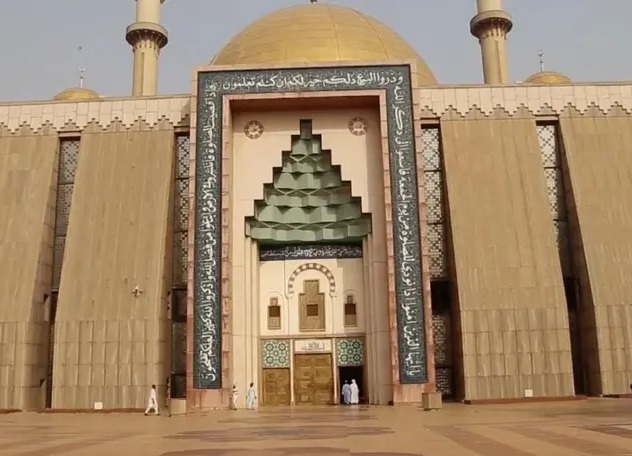
Other projects include market stalls in Gubio, a multipurpose hall in Sanga, Kaduna State, and the remodelling of five mosques at Izalla and Zawiya Centre in Kebbi State, Ikole in Ekiti State, and Mangadu and Samani in Jigawa State.
The projects are estimated to gulp more than N4bn.
Critics have questioned why an institute principally associated with building and road research should be responsible for funding such projects.
Musicians, Palaces, Abattoir In Budget
The National Productivity Centre has also attracted attention over unusual projects contained in its 2026 budget.

Among them are support for Ijaw musicians, construction of an Emir’s palace covering Nguru, Yusufari, Machina and Karasuwa in Yobe State, and the construction of an econometrics laboratory in Ekiti State.
The list further includes the construction and refurbishment of Obas’ palaces at Ado Odo, Yewa and Ajilefe in Ogun State, as well as an abattoir in Akko, Gombe State.
Another eyebrow-raising item is contained in the budget of the National Mathematical Centre, Nigeria’s apex institution for mathematical research and training.
The centre is set to finance the construction of a Sociology Department building at Ahmadu Bello University, Zaria—a project critics say appears unrelated to its core mandate.
‘Nigeria Can’t Afford This’
Economic analysts have warned that the proliferation of such projects could worsen Nigeria’s fiscal challenges and weaken the government’s ability to fund critical national priorities.
They argue that the hundreds of billions of naira being scattered across fragmented projects could instead be channelled into healthcare, education, security, roads, electricity and other infrastructure with wider and more lasting benefits.
According to the analysts, the opportunity cost is enormous, as limited public resources are diverted from transformational projects to schemes that may have little measurable developmental impact.
Experts have also questioned the transparency and oversight surrounding some of the allocations, warning that projects outside the statutory responsibilities of MDAs could undermine fiscal discipline.
With Nigeria battling competing demands for limited resources, the budget allocations have raised a fundamental question: Should billions of naira go into community halls, palaces and mosques when critical national infrastructure remains in dire need of funding?